Sohni Mahiwal
Sohni Mahiwal is a tragic legend from Gujrat, Pakistan, dated to ~1000 AD (Middle Ages). It connects to 6 other myths and legends in the Mythosjourney atlas.
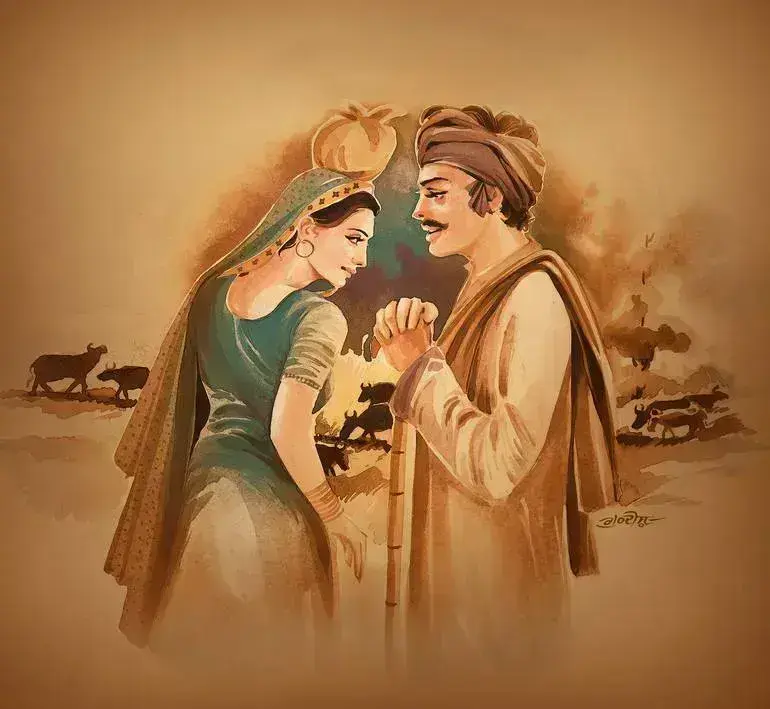
Sohni Mahiwal (also known as Suhni Mehar) is one of the great tragic romances of Punjab and Sindh. The story varies by region, with some versions set in central Sindh and others in northern Punjab, but all recount the doomed love of two people separated by family and custom, whose passion ultimately ends in tragedy.
In Sindh, the romance is remembered as one of the Seven Queens of Sindh celebrated by Shah Abdul Latif Bhittai, alongside Umar Marvi, Momal Rano, Sassui Punnhun, Lilan Chanesar, Sorath Rai Diyach, and Noori Jam Tamachi. In Punjab, Sohni Mahiwal is one of the four classic folk romances, together with Heer Ranjha, Mirza Sahiban, and Sassui Punnhun.
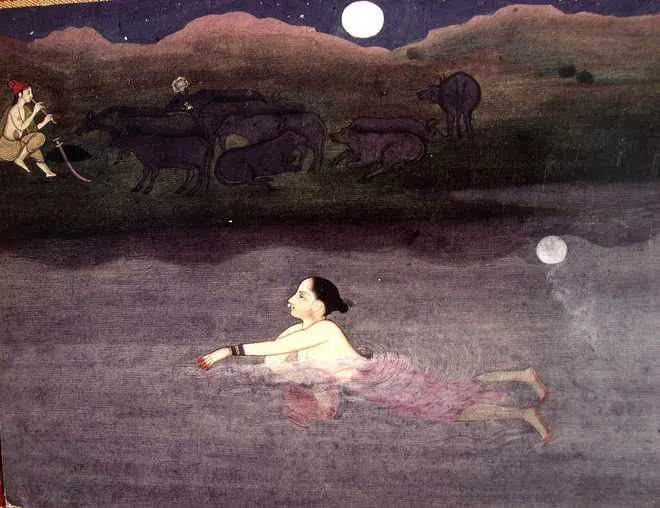
The tale inverts the classical motif of Hero and Leander. Each night, Sohni risks her life to swim across a dangerous river to meet her beloved Mahiwal, using a baked clay pitcher to keep herself afloat. One night, her sister-in-law replaces the sturdy pitcher with one made of unbaked clay. As Sohni attempts her nightly crossing, the vessel dissolves in the current and she drowns. In some versions, Mahiwal throws himself into the river to join her, and both perish in the waters.
The origins of the legend trace back to the Soomra dynasty period in the 10th century. In early Sindhi traditions, Suhni was said to belong to the Samtia clan and was married to Dam of the Wahucho clan. Her love for Mehar, a buffalo herder from the Nagamro clan, began when she drank milk from his herd during her wedding journey and felt drawn to him.
Despite being forbidden to meet him, she continued her nightly visits across the river, until the fatal night when her sister-in-law sabotaged her pitcher. Mehar buried Suhni at Shahdadpur in Sindh, where a shrine still stands today, and he himself was later buried nearby.
In Punjab, a more elaborate 18th-century version is remembered. Sohni, the daughter of a potter named Tulla of Gujrat, decorated her father’s pottery with exquisite designs and sold them in their riverside shop. A wealthy trader, Izzat Baig, fell in love with her and abandoned his caravan to remain close, even taking work in her household as a buffalo herder.
Because of this, he became known as Mahiwal. When Sohni was married off to another potter, Izzat Baig withdrew from the world and lived as a hermit across the Chenab River. At night, Sohni would secretly swim across the river with the help of her upturned clay pitcher to meet him.
Their love only deepened when Sohni discovered that, unable to catch a fish for her, Mahiwal had once cut flesh from his own thigh to feed her.
But suspicion grew. One night Sohni’s sister-in-law replaced her baked pitcher with an unbaked one. As Sohni entered the deep waters, the clay dissolved and she was swallowed by the Chenab. From the far bank, Mahiwal leapt into the river in a desperate attempt to save her, but drowned as well. United in death, the lovers’ story endures in both Sindh and Punjab as a symbol of passion, devotion, and the defiance of love against rigid social boundaries.