Nysa
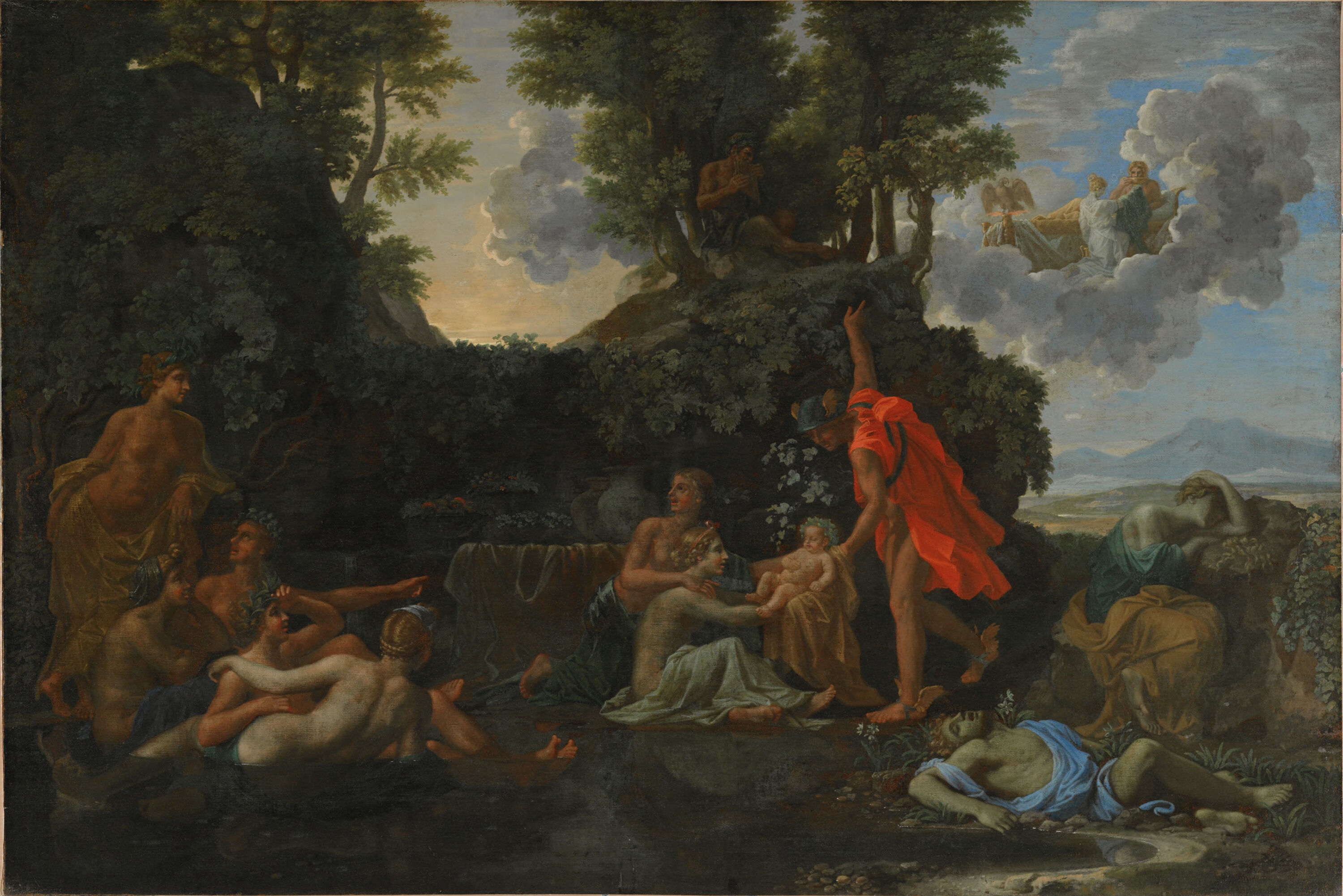
In Greek mythology, Nysa (Ancient Greek: Νῦσα, romanized: Nûsa) was a mountainous and mystical region where the rain nymphs known as the Hyades raised the infant god Dionysus, who consequently earned the epithet "God of Nysa." Greek mythographers variously located Nysa in wildly different regions including Ethiopia, Libya, Boeotia, Thrace, India, and Arabia, reflecting the essential ambiguity and legendary nature of this sacred place in Greek religious imagination. Though worship of Dionysus is sometimes presumed to have arrived in Mycenaean Greece from Asia Minor, where the Hittites called themselves "Nesi" and which suggests possible etymological connections, the diverse and contradictory locations assigned to Nysa likely represent literary conventions to indicate a romantically remote, exotic, and mythical land rather than attempts to identify an actual geographical location. The name "Nysa" itself may even be a reverse etymological invention created specifically to explain the god's alternative name Dionysus, which was interpreted as "Dios-Nysos" or "Zeus of Nysa," demonstrating how place names in mythology sometimes arise from divine epithets rather than vice versa.
Even Homer, the earliest Greek literary source, mentions Mount Nyseion as the place where Dionysus grew up under the protective care of nymphs. The fifth-century Byzantine lexicographer Hesychius of Alexandria compiled an extensive list of locations proposed by various ancient Greek and Roman authors as possible sites for Mount Nysa, demonstrating the extraordinary geographical confusion or flexibility surrounding this mythical place. His catalog includes Arabia, Ethiopia, Egypt, Babylon, the Erythraean Sea or Red Sea region, Thrace, Thessaly, Cilicia, India, Libya, Lydia, Macedonia, the island of Naxos, the area around the mythical island of Pangaios, which was supposedly located south of Arabia, and Syria, essentially spanning from the western Mediterranean to the Indian subcontinent.
This bewildering array of locations suggests Nysa functioned as a floating mythical geography that could be placed wherever suited particular narrative, political, or theological purposes. According to Dionysian mythology, upon returning from his nurture at Nysa to join his fellow Olympian deities on Mount Olympus, Dionysus brought with him the entheogenic substance wine, the fermented beverage that would become central to his cult and that possessed mind-altering properties allowing communion with the divine, liberation from normal consciousness, and religious ecstasy. The eighteenth-century British philologist and orientalist Sir William Jones, who was a pioneer of comparative Indo-European linguistics, noted intriguing parallels between Greek and Indian traditions when he observed that "Meros is said by the Greeks to have been a mountain in India on which their Dionysos was born, and Meru, though it generally means the north pole in Indian geography, is also a mountain near the city of Naishada or Nysa, called by the Greek geographers Dionysopolis, and universally celebrated in the Sanskrit poems." This comparison suggests that Greek traditions about Dionysus's birth on a sacred mountain may have been influenced by or shared origins with Indian traditions about Mount Meru as a cosmic axis and sacred geography.
When Alexander the Great arrived at a city called Nysa during his campaigns in the eastern regions, possibly in modern Afghanistan or Pakistan, representatives of the city met him and pleaded that he should not capture the city and its lands because the god Dionysus himself had founded the city and had named it Nysa after a nymph. This appeal to shared Greek religious heritage reportedly moved Alexander, who saw himself as a new Dionysus conquering the East just as the god had done in mythological times, and he granted the city favorable treatment in recognition of its supposed Dionysian foundations. During the Hellenistic period following Alexander's conquests, when Greek culture spread throughout the eastern Mediterranean and Near East, "Nysa" became personified as a specific nymph who served as Dionysus's nursemaid rather than merely being a place name, and this personified Nysa was said to be buried at the town of Scythopolis in the Jordan Valley, which claimed Dionysus as its founder and which promoted cults of the wine god as part of its civic identity.
Dionysus has been called the "masked god," "wine god," and "god of theater" due to his androgynous appearance and his ability to hide his true nature beneath facades, disguises, and divine enthusiasm that overwhelms rational consciousness. Many Greek myths present Dionysus as the son of Zeus and the mortal woman Semele, and according to these traditions, Zeus separated the infant Dionysus from his mother and placed him in the care of the Nysa nymphs in a remote location as an attempt to protect the child from Hera's murderous anger toward Zeus's illegitimate offspring. The nymphs raised Dionysus in secret on Mount Nysa until he reached maturity and left for Greece to gather followers, collecting a cult of misfits, outsiders, women, slaves, and those seeking escape from restrictive societal expectations and conventional social order.
The Thracian king Lycurgus, who opposed the spread of Dionysian worship and viewed the god's ecstatic cult as a threat to traditional order and masculine authority, wished to persecute Dionysus for spreading his unruly religion on Mount Nysa. His violent opposition forced Dionysus and his followers to flee by jumping into the sea and seeking shelter with the sea goddess Thetis in her underwater realm. Lycurgus's sacrilegious actions against a god inspired Dionysus and the Nysa nymphs to curse him with madness as divine punishment, which resulted in the crazed king murdering his own son in a delusional frenzy, mistaking him for an enemy or a grapevine, demonstrating the terrible fate that awaited those who rejected or opposed the wine god and his liberating but dangerous mysteries.