Bayinnaung
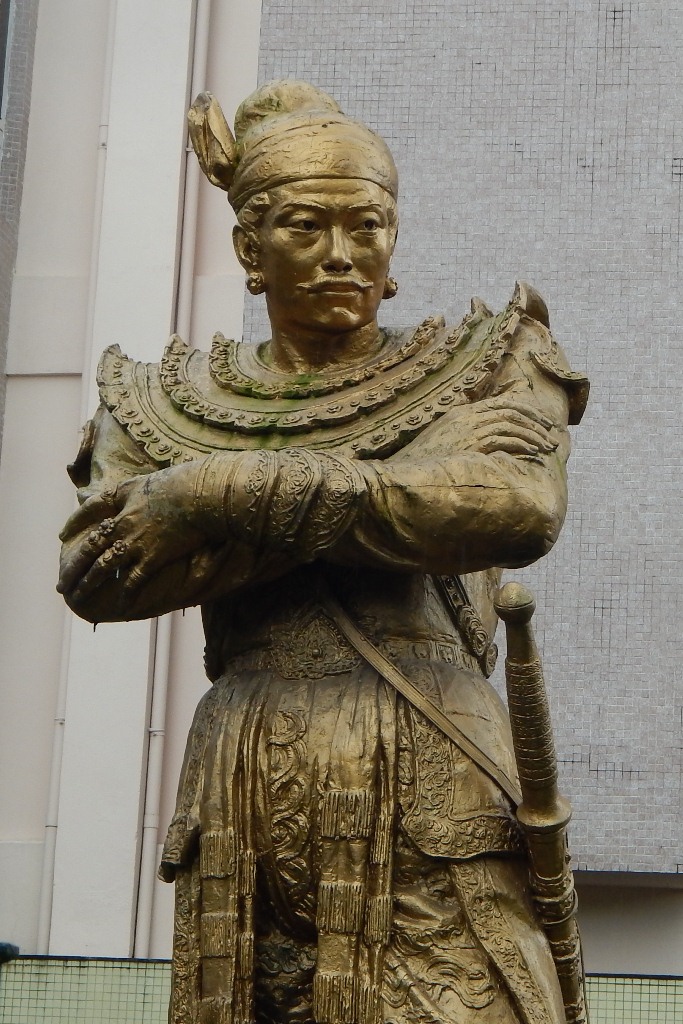
Bayinnaung Kyawhtin Nawrahta (January 16, 1516 – October 10, 1581) was King of Burma from April 30, 1550, until his death in 1581, during the Toungoo dynasty, and stands as one of the most formidable conquerors and state-builders in Southeast Asian history. His reign is considered among the most momentous in Burmese history, famously described by historian G.E. Harvey as "the greatest explosion of human energy ever seen in Burma." During his thirty-one-year rule, Bayinnaung assembled the largest empire in Southeast Asian history, which at its peak encompassed much of present-day Myanmar, the Chinese Shan States, Lan Na (northern Thailand), Lan Xang (Laos), Manipur (northeastern India), and the powerful Ayutthaya Kingdom (central Thailand).
This vast territorial expanse represented an extraordinary achievement for a mainland Southeast Asian power and briefly unified under a single ruler regions that had never before been controlled by one state and would never again be so united. Though Bayinnaung is best remembered for his spectacular military conquests and empire-building, his most enduring legacy was the permanent integration of the Chinese Shan States into the Irrawaddy valley administrative system, fundamentally altering the political geography of Burma. After systematically conquering the numerous Shan principalities between 1557 and 1563 through a series of difficult mountain campaigns, Bayinnaung implemented comprehensive administrative reforms designed to reduce the autonomous power of hereditary Shan rulers known as saophas and to align Shan governance structures and customs with lowland Burmese norms and institutions.
These reforms effectively eliminated the persistent threat of Shan raids into Upper Burma, which had been a source of chronic instability and devastation since the Mongol invasions of the thirteenth century weakened centralized Burmese control over highland regions. By establishing permanent administrative mechanisms that subordinated Shan principalities to Burmese royal authority while still respecting certain local autonomy, Bayinnaung created a durable framework for managing highland-lowland relations. His integration policy proved so successful that it served as the model for all successive Burmese monarchs, who continued implementing his administrative approach to the Shan States until the final collapse of the Burmese monarchy in 1885 following British conquest.
However, beyond the specifically reformed Shan territories, Bayinnaung largely followed the prevailing mandala administrative model across his vast and culturally diverse empire. This traditional Southeast Asian system of governance emphasized personal loyalty and tributary relationships rather than direct bureaucratic administration or institutional control. Under this model, conquered kingdoms retained their existing ruling dynasties, legal systems, and internal governance structures, but acknowledged Bayinnaung as supreme overlord and provided periodic tribute, military support when requested, and symbolic recognition of his paramount authority.
Contemporary descriptions characterized his rule over the First Toungoo Empire as that of "an emperor without an empire"—holding authority through personal allegiance to Bayinnaung as Chakravartin (Universal Monarch or World Conqueror) from vassal sub-kingdoms, rather than through institutionalized administrative mechanisms, professional bureaucracy, or permanent military garrisons that could enforce compliance regardless of personal relationships. While this personalized system of imperial authority functioned effectively during Bayinnaung's lifetime—when his military reputation, personal charisma, and demonstrated capacity to swiftly punish rebellion maintained subordinate rulers' loyalty—it proved fatally vulnerable to succession transitions. The structure rapidly unraveled following his death in 1581, revealing the fundamental weakness of mandala systems that depended on individual rulers' personal qualities rather than institutional continuity.
His son and successor Nanda Bayin lacked his father's military genius, personal prestige, and political skill, and vassal states quickly recognized the opportunity to reassert independence. The Kingdom of Ava revolted within two years of Bayinnaung's death, and Ayutthaya launched its successful rebellion shortly thereafter. By 1599, barely eighteen years after Bayinnaung's death, every vassal state had declared independence, resulting in the complete and catastrophic collapse of the empire he had spent three decades building.
This dramatic disintegration illustrated both the extraordinary personal achievement Bayinnaung represented in holding such diverse territories together and the inherent instability of imperial systems based primarily on individual authority rather than institutional structures. Bayinnaung is universally regarded as one of the three greatest monarchs in Burmese history (alongside Anawrahta, who unified Burma in the eleventh century, and Alaungpaya, who founded the Konbaung Dynasty in the eighteenth century) and is commemorated through major landmarks bearing his name throughout modern Myanmar, including Bayinnaung Bridge in Yangon and numerous monuments and place names. His legacy embodies Burmese military prowess, national glory, and the golden age of Burmese imperial power, making him a central figure in Myanmar's national historical consciousness and a symbol of the country's historical greatness and regional influence.
Bayinnaung is also remarkably well known and remembered in Thailand, where he is called "Conqueror of the Ten Directions" (Phra Chao Sip Thit) in recognition of his conquest of Ayutthaya and his campaigns throughout the region. Despite being a former adversary who conquered and temporarily subjugated the Thai kingdom—an experience that might typically generate only negative historical memory—his prominent place in Thai historical consciousness demonstrates the profound impression his military achievements and personal capabilities made even on his enemies. Thai historical works acknowledge him as one of the most formidable opponents Ayutthaya ever faced, and his campaigns against Thailand have become legendary episodes in Thai historical literature and popular culture.
This recognition across both Burmese and Thai traditions stands as testament to the exceptional scale, power, and historical significance of Bayinnaung's reign, which left an indelible mark on the collective memory of multiple Southeast Asian peoples and fundamentally shaped the region's subsequent political development.