Kitezh
Kitezh is a legendary place from Lake Svetloyar, Russia, dated to ~1200 AD (Middle Ages). It connects to 2 other myths and legends in the Mythosjourney atlas.
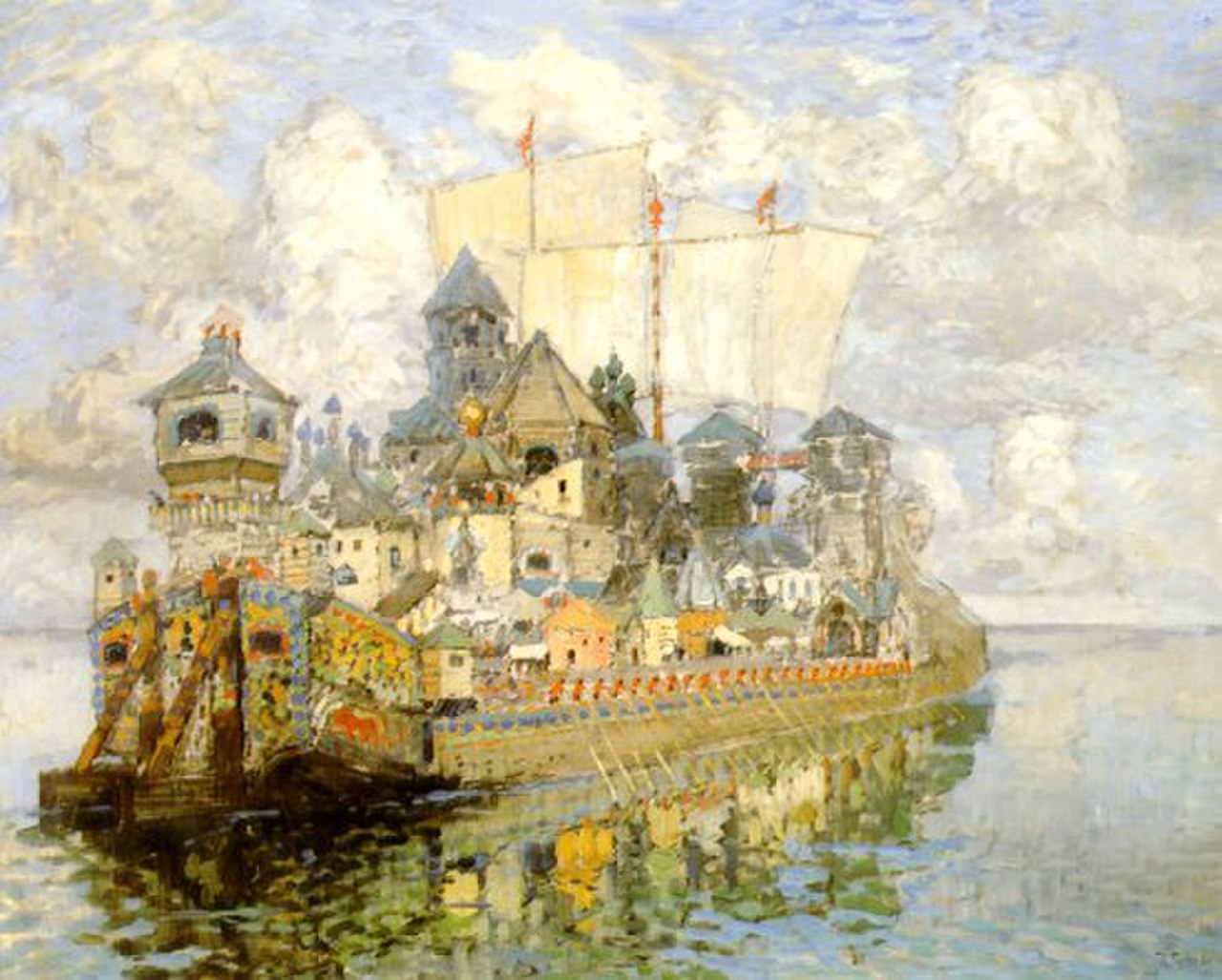
Kitezh (Russian: Ки́теж) is a legendary city traditionally believed to lie beneath the waters of Lake Svetloyar in the Nizhny Novgorod region of Russia. Often referred to as the "Russian Atlantis," the city first appeared in written records in the late 18th-century Kitezh Chronicle, a text likely authored by members of the Old Believers sect. According to the foundational myth, the city was established by Georgy II, the Grand Prince of Vladimir, who first built "Maly Kitezh" (Little Kitezh) on the Volga before discovering the idyllic shores of Lake Svetloyar.
Captivated by the beauty of the site, the prince commissioned the construction of "Bolshoy Kitezh" (Great Kitezh), which was intended as a sacred and architecturally magnificent refuge.The transformation of Kitezh from a physical city into a mystical legend is set against the backdrop of the 13th-century Mongol invasions. As Batu Khan’s Golden Horde advanced through Russian territories, they captured Maly Kitezh and pursued Prince Georgy into the dense forests. After a prisoner revealed the secret paths to the shores of Svetloyar, the Mongol army arrived at the walls of Bolshoy Kitezh, only to find the city entirely without fortifications.
Rather than preparing for battle, the citizens were reportedly engaged in fervent prayer, seeking divine protection. As the invaders launched their attack, massive fountains of water allegedly erupted from the earth, and the city began to submerge. The final sight recorded by the attackers was the glittering cross on the dome of the cathedral disappearing beneath the rising lake.In the centuries following its disappearance, Kitezh became a spiritual beacon for those seeking a realm untouched by worldly corruption.
Local lore maintains that the city remains perfectly preserved beneath the lake, yet it is invisible to all but those who are entirely pure in heart and soul. The forest trail leading to the water’s edge is still referred to as the Batyeva tropa (Path of Batu), marking the historical route of the invasion. On calm days, travelers and pilgrims claim that the muffled chiming of church bells and the ethereal singing of a choir can be heard rising from the depths, serving as a sign of the city's hidden presence.Belief in the submerged city persists through modern religious processions, during which pious individuals occasionally report seeing the shimmering lights of icons or the outlines of buildings at the bottom of the lake.
Whether interpreted as a symbolic narrative of spiritual resistance against conquest or a literal "lost city," Kitezh remains a potent symbol of Russian identity and the search for an indestructible, sacred reality. Its legacy continues to inspire artists and seekers, standing as a reminder of the thin veil that many believe separates the physical landscape from the divine.