George Washington
George Washington (February 22, 1732 [O.S. February 11, 1731] – December 14, 1799) was a Founding Father of the United States and the nation's first president, serving from 1789 to 1797 in a role that established fundamental precedents for American governance and defined the presidency as an institution. As commander-in-chief of the Continental Army from 1775 to 1783, Washington led Patriot forces to ultimate victory in the American Revolutionary War against the British Empire despite facing overwhelming disadvantages in resources, training, and military power throughout most of the conflict.
His leadership during the Revolution and his subsequent service as president earned him recognition as the "Father of His Country" (Pater Patriae) for his indispensable role in achieving American independence, establishing the constitutional framework of the United States, and setting the nation on a stable course during its most vulnerable early years. Born into a moderately prosperous Virginia planter family in the Colony of Virginia, Washington received limited formal education but gained practical experience in surveying and land management before embarking on a military career. He first achieved public prominence as commander of the Virginia Regiment during the French and Indian War (1754–1763), the North American theater of the global Seven Years' War, where he gained valuable military experience despite suffering several defeats and witnessing the limits of colonial military capabilities against professional European forces.
After the war, Washington returned to civilian life as a wealthy plantation owner at Mount Vernon, married the widow Martha Dandridge Custis (bringing substantial additional wealth and property to the union), and was elected to the Virginia House of Burgesses, the colonial legislature, where he gradually became involved in the growing political opposition to what he and other colonists perceived as increasingly oppressive policies imposed by the British Crown and Parliament, particularly taxation without colonial representation and restrictions on westward expansion. When tensions between Britain and the American colonies finally erupted into armed conflict with the battles of Lexington and Concord in April 1775, the Second Continental Congress appointed Washington as commander-in-chief of the newly formed Continental Army in June 1775. This appointment reflected multiple considerations: Washington's prior military experience, his Virginia origins (crucial for securing Southern support for what began as a New England conflict), his imposing physical presence and dignified bearing that commanded respect, his substantial personal wealth that suggested he would not use his position for personal enrichment, and his demonstrated commitment to the Patriot cause.
Washington accepted this command knowing he would face an almost impossible task: directing a poorly organized, inadequately equipped, and undisciplined force of state militias and volunteer soldiers against the professional, well-trained, and well-supplied British Army supported by the world's most powerful navy. Washington's military leadership during the Revolutionary War demonstrated both significant accomplishments and serious limitations. His first major success came at the Siege of Boston from April 1775 to March 1776, where his forces eventually compelled British evacuation of the city without a catastrophic battle.
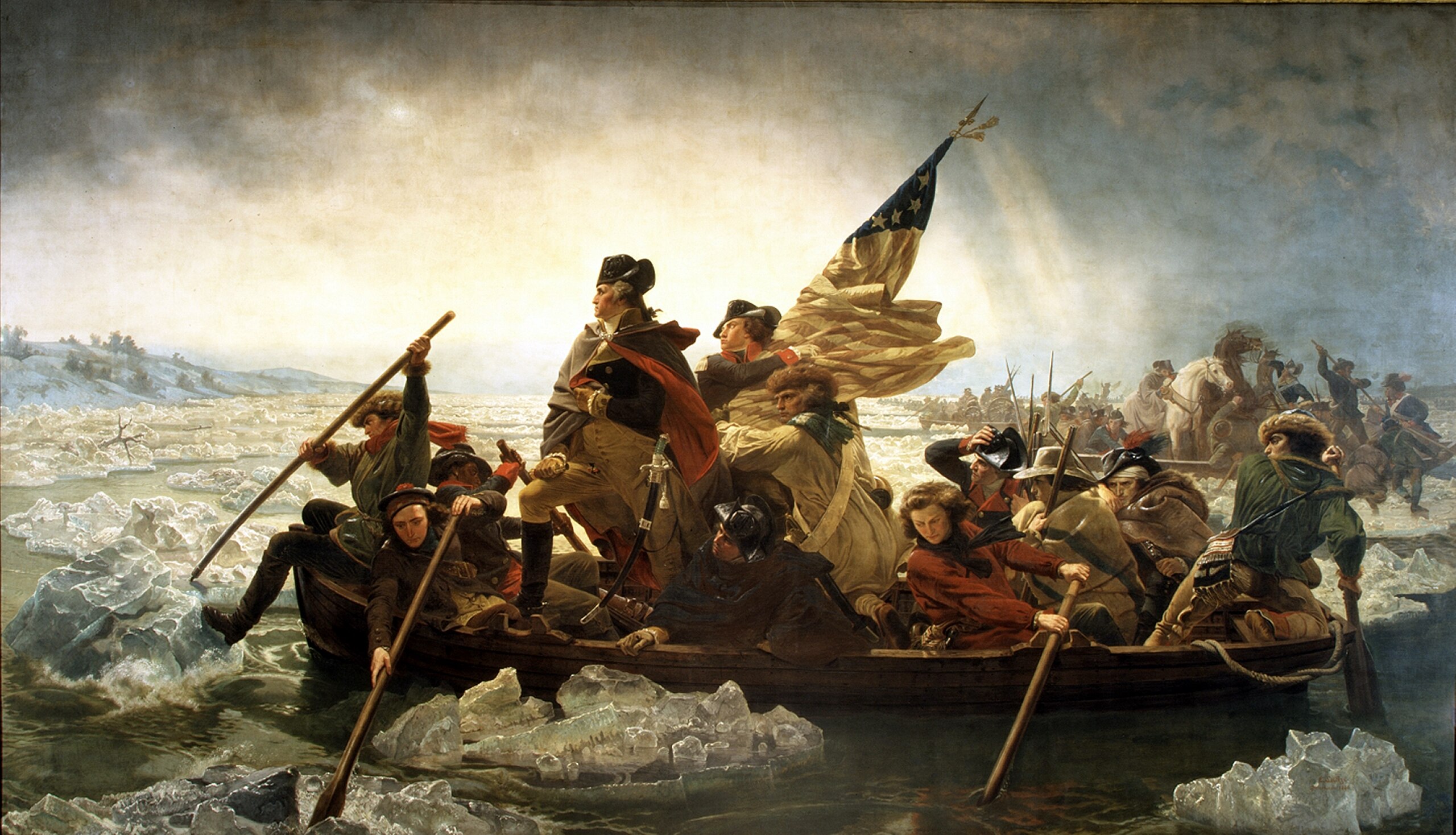
However, he was subsequently forced into a humiliating retreat from New York City in November 1776 after suffering a series of defeats that nearly destroyed the Continental Army and brought the Revolution to the brink of collapse. In desperate circumstances, with enlistments expiring and morale disintegrating, Washington achieved two crucial morale-boosting victories by launching surprise attacks: crossing the icy Delaware River on Christmas night 1776 to capture Trenton, and subsequently defeating British forces at Princeton in early January 1777. These victories, though tactically modest, proved psychologically and politically vital by demonstrating that the Continental Army could fight and win, encouraging reenlistments and continued French covert support.
The war continued with mixed results for Washington's forces. He suffered defeats at Brandywine and Germantown in 1777 during campaigns around Philadelphia, leading to criticism of his command abilities from political rivals and some military officers who questioned whether he was the right leader for the Continental Army. Throughout the war, Washington faced constant challenges including chronically low troop morale, inadequate food, clothing, medical care, and pay for his soldiers, lack of sufficient gunpowder and ammunition, difficulties with the state militias that made up much of his forces, political interference from Congress, and the overwhelming material and military superiority of British forces.
His greatest achievement may have been simply keeping the Continental Army in existence as a functioning military force through these years of deprivation and defeat, maintaining cohesion and discipline through sheer force of will and personal example even during the desperate winter encampment at Valley Forge in 1777-1778, where thousands died from disease, exposure, and malnutrition. Washington's military strategy ultimately relied on avoiding catastrophic defeat rather than seeking decisive victory, understanding that the Continental Army's continued existence posed sufficient political challenge to British control to make the war increasingly expensive and unpopular in Britain while waiting for foreign intervention. This strategic patience was vindicated when France entered the war as an American ally in 1778, providing naval power, professional troops, military supplies, and diplomatic support that transformed the strategic balance.
In 1781, Washington led a combined French and American force to achieve a decisive victory over British forces under Lord Cornwallis at Yorktown, Virginia, a siege in which French naval supremacy prevented British evacuation by sea while American and French ground forces prevented escape by land. This victory effectively ended major military operations and forced Britain to negotiate. The resulting Treaty of Paris signed in 1783 formally recognized American independence and established the United States as a sovereign nation, vindicating Washington's eight-year struggle and securing his reputation as the hero of American independence.
Following the war, Washington resigned his military commission in December 1783 and returned to private life at Mount Vernon—an act that astonished European observers accustomed to revolutionary generals who seized political power for themselves. This voluntary relinquishment of military authority established Washington's reputation for republican virtue and selfless service that would prove crucial to his subsequent political influence. However, he did not remain entirely retired from public affairs.
Deeply concerned about the weakness and dysfunction of the national government under the Articles of Confederation, Washington supported efforts to strengthen federal authority and presided over the Constitutional Convention in Philadelphia in 1787, lending his enormous prestige to the controversial project of drafting and ratifying a new Constitution that substantially increased central government powers while threatening state sovereignty that many Americans valued. His presence at the convention and his support for ratification proved essential to the Constitution's acceptance, as many Americans who distrusted concentrated power were willing to support the new framework precisely because they trusted Washington to wield presidential power responsibly. Washington was unanimously elected as the first president of the United States by the Electoral College in both 1788 and 1792, receiving every electoral vote cast—a unique achievement never repeated by any subsequent presidential candidate and reflecting the universal recognition of his indispensability to the new nation's survival.
As president from 1789 to 1797, Washington faced the enormous challenge of transforming constitutional theory into functioning government, establishing precedents that would shape the presidency and federal system for centuries. He assembled a brilliant but contentious cabinet including Secretary of State Thomas Jefferson and Secretary of the Treasury Alexander Hamilton, whose fierce ideological rivalry over the proper scope of federal power, economic policy, and foreign affairs crystallized the emerging division between Democratic-Republican and Federalist political factions. Washington attempted to remain above these partisan battles while implementing a strong, well-financed national government primarily following Hamilton's vision of federal activism, commercial development, and financial stability through assumption of state debts, creation of a national bank, and encouragement of manufacturing.
In foreign policy, Washington navigated extremely dangerous waters during the tumultuous years of the French Revolution and the subsequent European wars. Despite passionate American divisions between Francophiles who supported revolutionary France and Anglophiles who feared revolutionary chaos and favored commercial ties with Britain, Washington proclaimed and maintained a policy of neutrality, insisting that the fragile young United States could not afford involvement in European conflicts and should focus on internal development. He controversially supported the Jay Treaty with Britain in 1795, which resolved lingering disputes from the Revolutionary War and established commercial relations, despite fierce opposition from Jefferson and others who saw the treaty as shamefully deferential to Britain and betraying America's French ally.
This decision prioritized pragmatic national interests over revolutionary idealism and established the precedent that American foreign policy should serve American interests rather than ideological commitments. Washington set numerous enduring precedents for the office of president that shaped American governance and political culture. He established republicanism as the operating principle of the presidency, rejecting monarchical trappings and ceremonial excess while maintaining sufficient dignity to command respect; he demonstrated the possibility of peaceful transfer of power through regular elections rather than through hereditary succession or violent revolution; he insisted on the democratic title "Mr.
President" rather than more grandiose alternatives some proposed; and most importantly, he established the two-term tradition by voluntarily declining to seek a third term in 1796 despite probable victory, setting a precedent (later formalized in the 22nd Amendment) that limited presidential tenure and prevented the development of a quasi-monarchical presidency for life. Washington's Farewell Address, published in September 1796 as he prepared to leave office, became one of the most influential documents in American political thought—a preeminent statement on republican principles and the threats to the American experiment. In this address, primarily drafted by Hamilton but expressing Washington's core convictions, he emphasized the supreme importance of national unity and warned against the dangers that sectionalism, partisan political divisions, and foreign entanglements posed to the republic's survival.
He urged Americans to think of themselves primarily as citizens of a single nation rather than as Virginians, New Yorkers, or members of sectional interests, and he cautioned that excessive partisanship and foreign influence could destroy the constitutional system and popular liberties that the Revolution had secured. This address shaped American political discourse for generations and provided arguments invoked by countless political leaders seeking to justify national unity or warn against perceived threats to republican government. Washington's personal life and economic circumstances were inextricably bound to the institution of slavery that pervaded Virginia plantation society.
As a planter cultivating tobacco and later wheat at his Mount Vernon estate, Washington owned enslaved people throughout his adult life, with his holdings eventually including over 300 enslaved individuals whose forced labor generated the wealth that supported his genteel lifestyle and public service. For most of his life, Washington apparently accepted slavery as a normal and necessary feature of Virginia's economic and social system. However, during his later years, influenced by Revolutionary rhetoric about liberty and natural rights, by his observations of slavery's economic inefficiency compared to free labor, by his exposure to Northern critics of slavery, and perhaps by moral qualms that he rarely articulated publicly, Washington gradually developed private opposition to the institution.
Unlike Jefferson and many other Southern slaveholders who expressed antislavery sentiments while doing nothing practical to end their own slaveholding, Washington provided in his will for the eventual emancipation of the enslaved people he personally owned (though not those belonging to his wife Martha's family, over which he lacked legal control) upon Martha's death. This act, while limited and coming only after his own death eliminated any personal cost or inconvenience, nevertheless made Washington the only major Founding Father from the South to free his slaves, even through this posthumous and partial manumission. Washington died on December 14, 1799, at Mount Vernon at age 67, probably from a severe throat infection (acute epiglottitis or bacterial tracheitis) exacerbated by the aggressive medical treatments of bloodletting and purging that were standard but often fatal medical practice in that era.
His death plunged the nation into profound mourning, with memorial services, eulogies, and commemorations occurring throughout the United States and even in foreign countries recognizing the passing of one of the era's most significant political and military figures. Washington's image and legacy have been extensively memorialized and mythologized to the point that he functions as much as an icon and symbol as a historical person in American culture. The national capital, Washington, D.C., bears his name, as does the State of Washington in the Pacific Northwest, along with countless counties, cities, streets, schools, monuments, and institutions across the United States and around the world.
His image appears on the one-dollar bill and the quarter, making his face the most frequently seen of any American in daily commerce. Monuments ranging from the towering Washington Monument in Washington, D.C., to Mount Rushmore in South Dakota have transformed him into a quasi-sacred founding figure whose marble and granite representations dominate American civic spaces. This mythologization has sometimes obscured the complex, flawed, slaveholding historical Washington beneath layers of hagiography that present him as impossibly virtuous, transcendently wise, and mythically heroic—a demigod rather than a human being who achieved greatness through particular circumstances, personal qualities, and consequential decisions within a specific historical context.
Nevertheless, in both popular opinion polls and scholarly assessments by historians and political scientists, Washington is consistently ranked among the greatest American presidents—typically in the top three alongside Abraham Lincoln and Franklin D. Roosevelt—reflecting consensus that his leadership during the Revolution, his role in creating and implementing the Constitution, and his precedent-setting first presidency were indispensable contributions to American nationhood and that without Washington's unique combination of military leadership, political vision, personal integrity, and voluntary relinquishment of power, the American Revolution and the subsequent establishment of stable constitutional government might well have failed, making him as close to an irreplaceable figure as historical contingency allows.