The Buddha
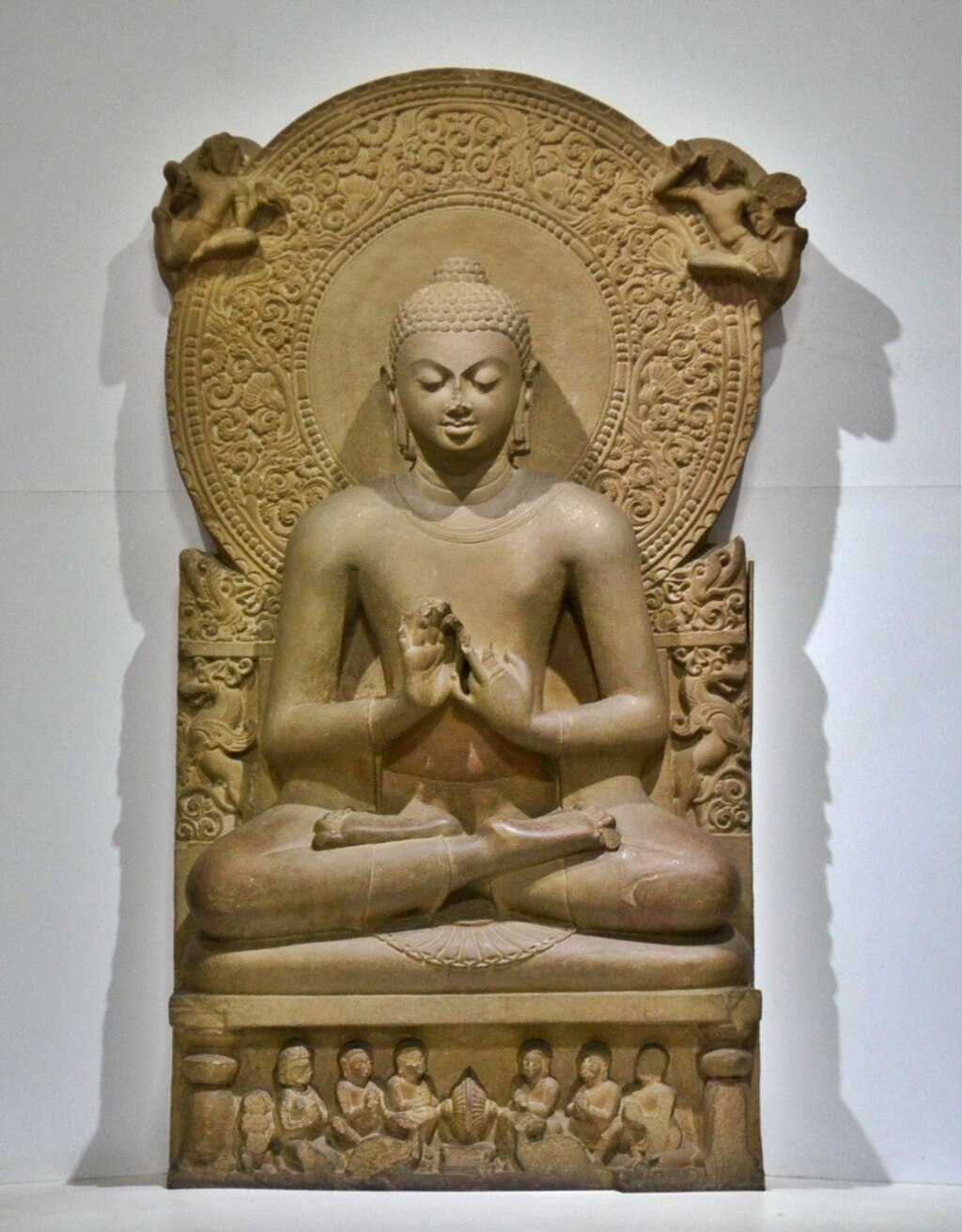
Siddhartha Gautama, most commonly referred to as the Buddha (literally 'the awakened one'), was a wandering ascetic and religious teacher who lived in South Asia during the sixth or fifth century BCE and founded Buddhism, one of the world's major religions with hundreds of millions of adherents today. According to Buddhist biographical traditions, he was born in Lumbini in what is now Nepal to royal parents of the Shakya clan, enjoying a privileged aristocratic upbringing. However, he renounced his comfortable home life, princely status, wife, and young son to live as a wandering ascetic in pursuit of spiritual liberation from suffering and the cycle of rebirth.
After years of mendicancy, extreme asceticism that nearly killed him, and intensive meditation, he attained nirvana (enlightenment) at Bodh Gaya in what is now the Indian state of Bihar, experiencing a profound awakening that resolved his spiritual quest. Following his enlightenment, the Buddha spent the remaining decades of his life wandering through the lower Indo-Gangetic Plain, teaching his insights to diverse audiences, gathering disciples, and building a monastic community (sangha) that would preserve and transmit his teachings. Buddhist tradition holds that he died at approximately age eighty in Kushinagar and reached parinirvana ("final release from conditioned existence"), the ultimate liberation that follows physical death for one who has already achieved nirvana during life.
According to Buddhist tradition, the Buddha taught a Middle Way between the extremes of sensual indulgence (which he had experienced during his princely youth) and severe self-mortification (which he had practiced as an ascetic and found ineffective), advocating instead a balanced path leading to freedom from ignorance, craving, rebirth, and suffering. His core teachings are systematically presented in the Four Noble Truths—which diagnose the human condition as characterized by suffering, identify craving as suffering's cause, assert that suffering can cease, and prescribe a path to that cessation—and the Noble Eightfold Path, which provides practical training encompassing ethical conduct (right speech, action, and livelihood), mental discipline (right effort, mindfulness, and concentration), and wisdom (right view and intention). This comprehensive training system includes ethical guidelines emphasizing kindness, compassion, and harmlessness toward all beings, and meditative practices such as sense restraint, mindfulness of bodily and mental phenomena, and dhyana (deep meditative absorption).
Another fundamental element of his teachings involves the concepts of the five skandhas (aggregates that constitute what we mistakenly perceive as a permanent self) and dependent origination (pratityasamutpada), which describes how all dharmas—both mental states and concrete phenomena—arise interdependently and cease based on conditions, lacking any inherent, independent existence (svabhava). This doctrine of emptiness of inherent existence challenges commonsense notions of permanent, independently existing entities and undermines the metaphysical assumptions underlying attachment and suffering. In the earliest Buddhist texts, the Nikayas (collections of discourses), the Buddha frequently refers to himself using the enigmatic title Tathagata (often interpreted as "Thus-Gone One" or "Thus-Come One"), though the earliest clear attestation of the title "Buddha" dates from the third century BCE.
The term means "Awakened One" or "Enlightened One," emphasizing his spiritual realization rather than miraculous or divine status. His teachings were systematically compiled by the Buddhist monastic community into several textual collections: the Vinaya, containing detailed codes regulating monastic conduct and community governance; and the Sutta Pitaka (Basket of Discourses), an extensive compilation of teachings based on sermons and dialogues attributed to the Buddha and his prominent disciples. These foundational texts were transmitted orally for several centuries in Middle Indo-Aryan dialects (Pali and various Prakrits) through sophisticated memorization techniques before eventually being committed to writing.
Later Buddhist generations composed numerous additional texts that expanded and systematized the Buddha's teachings, including the Abhidharma—sophisticated philosophical and psychological treatises analyzing mental states, consciousness, and reality; biographical narratives of the Buddha's life that incorporated miraculous and devotional elements; Jataka tales recounting the Buddha's previous lives across countless rebirths as he accumulated the merit and perfections necessary for Buddhahood; and the Mahayana sutras, which presented new teachings and emphasizing the bodhisattva ideal of compassionate engagement with the world rather than individual liberation alone. Over the centuries following the Buddha's death, Buddhism evolved into a remarkable variety of traditions, practices, philosophical schools, and cultural expressions, represented primarily by three major vehicles: Theravada (the "Teaching of the Elders," dominant in Sri Lanka and Southeast Asia), Mahayana (the "Great Vehicle," prevalent in East Asia including China, Korea, Japan, and Vietnam), and Vajrayana (the "Diamond Vehicle," characteristic of Tibet, Mongolia, and Bhutan). Buddhism spread far beyond the Indian subcontinent where it originated, becoming deeply embedded in the cultures of Southeast Asia, East Asia, and Central Asia through missionary activity, trade routes, and royal patronage.
Ironically, while Buddhism flourished abroad, it gradually declined in its Indian homeland and had mostly disappeared from the subcontinent by the eighth century CE due to multiple factors including lack of sustained popular and economic support, competition from resurgent Hindu devotional movements, Muslim conquests that disrupted Buddhist institutions, and the destruction of major monastic universities. However, Buddhism has grown increasingly prominent and numerically significant in Southeast and East Asia over the past two millennia, and has experienced a modest revival in India in recent centuries, while also gaining substantial followings in the West during the twentieth and twenty-first centuries, demonstrating the enduring appeal and adaptability of the Buddha's teachings across vastly different cultural contexts.