sha
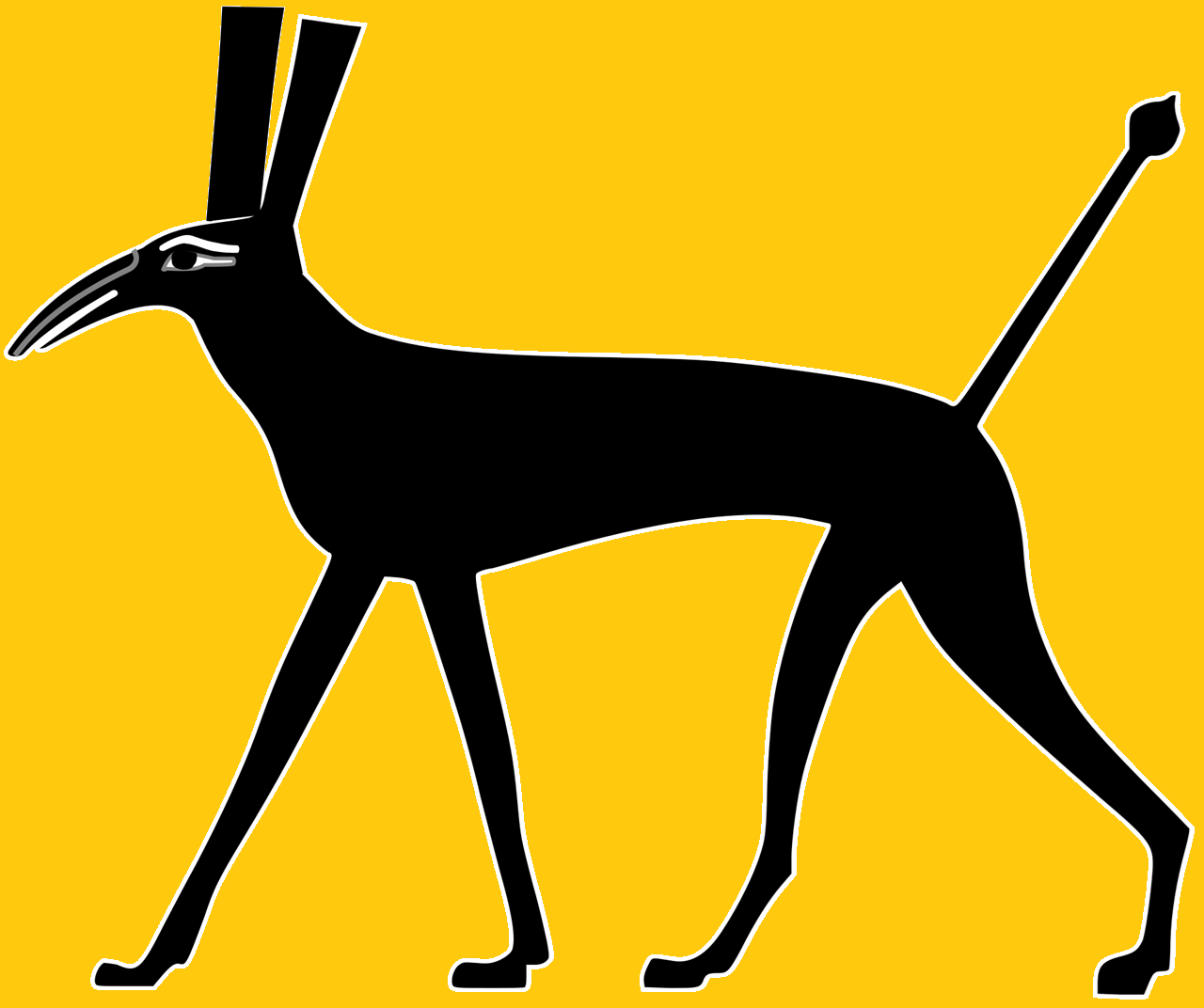
In ancient Egyptian art, the Set animal, or sha, is the distinctive creature associated with the god Set. Because the Egyptians later identified Set with the Greek monster Typhon, it is also referred to as the Typhonian animal or Typhonic beast.
Unlike most sacred animals in Egyptian religion, the Set animal cannot be matched with any known species today. Modern Egyptologists generally agree that it was not based on a real creature but was instead an entirely mythical figure. Even so, zoologists have repeatedly tried to identify it in nature, proposing a variety of candidates.
Whether or not it ever existed in the physical world remains uncertain, yet it played an important symbolic role for the ancient Egyptians. It appears frequently as an animal determinative in hieroglyphic writing. Some Egyptian texts also describe Set as taking the form of dangerous creatures such as a bull or a crocodile.
The sha is typically portrayed as a slender, dog-like animal with three key features: a stiff tail, often forked at the tip, that stands upright or at an angle in every posture; tall, squared or triangular ears that are widest at the top; and a long, slightly curved muzzle. It is most often shown with black fur, though reddish coloration also appears in depictions. In form it resembles animals such as a greyhound, jackal, or fennec fox, yet with unique traits that set it apart.
The head shape sometimes recalls that of a giraffe, which can cause confusion between the two signs, although the general body structure is canine. The Set animal is usually shown at rest, either seated or lying down.
Over the years, scholars have suggested that the Set animal might be a stylized rendering of various real animals, including the oryx, donkey, fennec fox, jerboa, camel, okapi, elephant shrew, aardvark, giraffe, pig, or elephant-snout fish. Some of these creatures were known to the ancient Egyptians but would have been rare sights, possibly contributing to the creature’s mysterious image. Another possibility is that the Set animal represents an extinct species.
From the Late Period onward, Set himself was often depicted as a donkey or as a man with a donkey’s head, suggesting that the donkey may have influenced the original concept of the Set animal.