Rape of Persephone
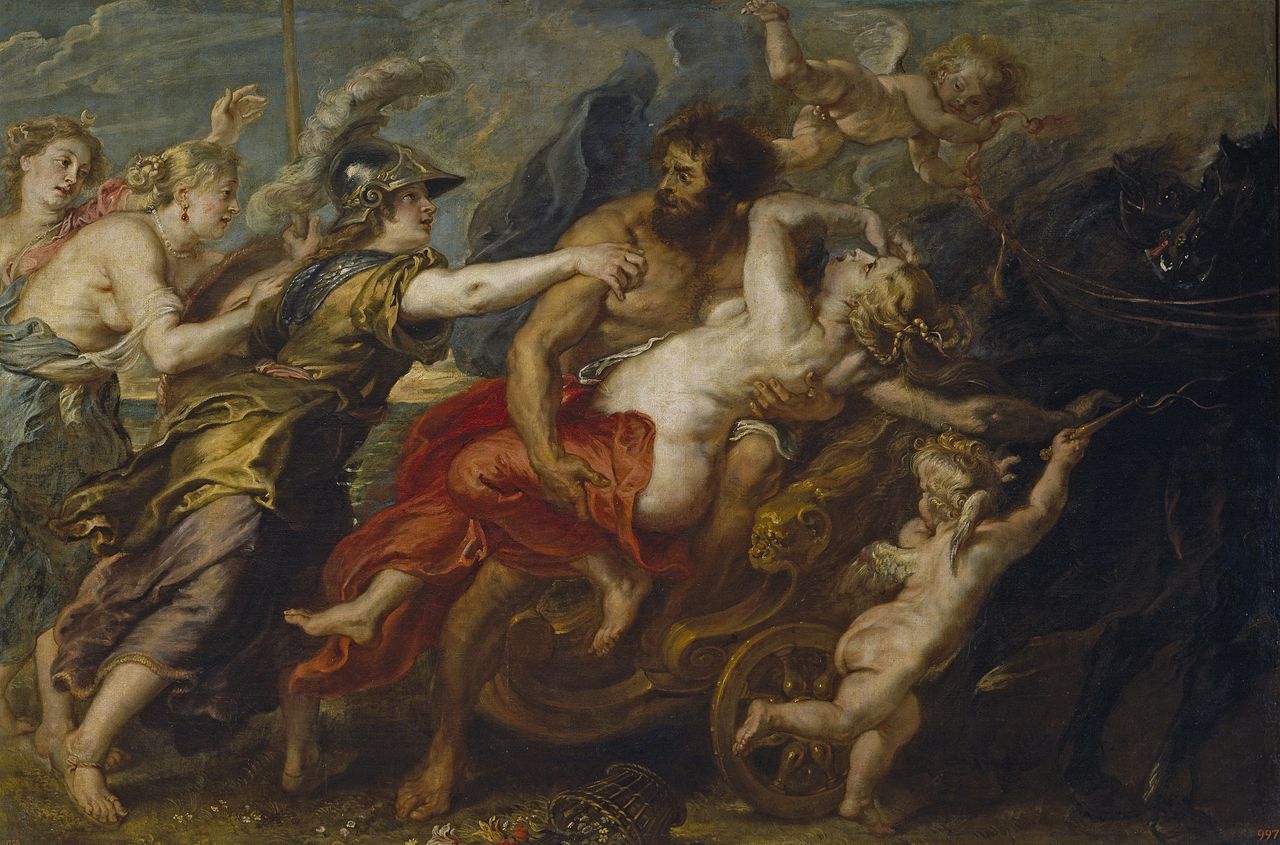
The Abduction of Persephone, famously depicted in Western art as the Rape of Persephone, is a seminal Greek myth detailing the forced relocation of the goddess of spring to the Underworld to serve as the queen of Hades. In this classical and art-historical context, the term "Rape" is a traditional translation of the Latin raptus, meaning "seized" or "carried off," which specifically denotes the ancient motif of bride kidnapping rather than modern connotations. As the daughter of Zeus, the king of the gods, and Demeter, the goddess of agriculture, Persephone’s disappearance serves as the primary mythological catalyst for the cyclical nature of the harvest and the seasons.
The abduction was orchestrated as a divine arrangement between brothers; Hades, seeking a consort, secured the permission of Zeus to take his daughter as a wife. To facilitate the capture, Gaia (the Earth) assisted by causing a breathtakingly beautiful flower to bloom in a secluded field, luring the young goddess away from her companions. While Persephone was distracted picking flowers, the ground suddenly fractured, and Hades emerged from the chasm in a chariot drawn by immortal dark horses.
He seized the unwilling goddess and descended back into the subterranean realm before her cries for help could be answered.
Although the event occurred in a moment of isolation, it did not go entirely unobserved. Hecate, the goddess of the crossroads, heard Persephone’s terrified screams from her cave, while Helios, the all-seeing sun god, witnessed the entire abduction from his high transit across the sky. Their eventual testimony provided the grieving Demeter with the truth regarding her daughter's whereabouts, sparking a divine conflict that would ultimately result in Persephone spending a portion of each year in the Underworld—bringing about winter—and returning to the surface to herald the arrival of spring.