Panchaia
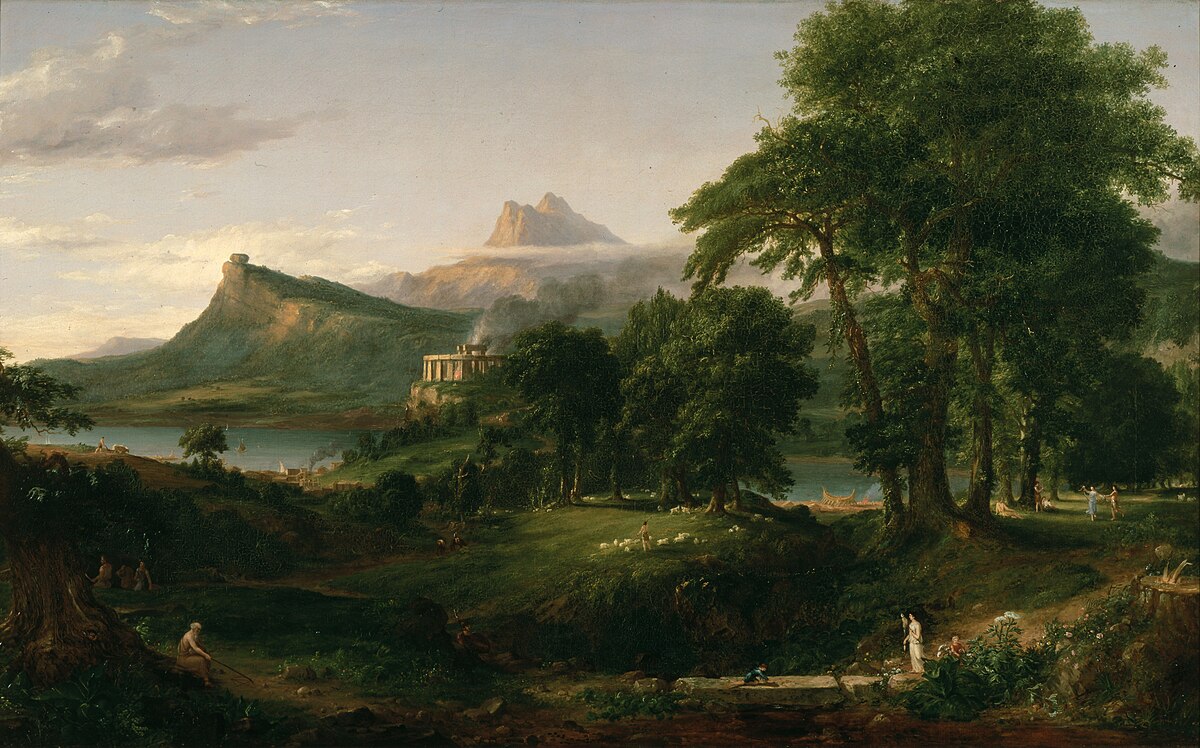
Panchaia, also spelled Panchaea and pronounced /ˌpæŋˈkeɪə/ in English, from the Greek Παγχαία, is a legendary island first mentioned by the ancient Greek philosopher and mythographer Euhemerus in the late fourth century BC. Euhemerus describes this place as home to a utopian society composed of multiple different ethnic tribes living together harmoniously under a collective or communistic economic system where property was shared rather than privately owned, and he claimed to have personally visited this remarkable island during travels he recounted in his major work "Sacred History," though unfortunately only fragments of this text survive through quotations and summaries preserved by later ancient writers. The fragments preserved by followers and later writers, particularly the Greek historian Diodorus Siculus, who lived in the first century BC and who provided extensive summaries of Euhemerus's ideas in his universal history, and the fourth-century AD Christian writer Eusebius of Caesarea, who was interested in Euhemerus's rationalistic approach to mythology as supporting Christian arguments against pagan gods, describe Panchaia as a rational island paradise located somewhere in the Indian Ocean and characterized by prosperity, social harmony, and religious sophistication.
According to Euhemerus's account as preserved by these later sources, he reached Panchaia by traveling south through the Red Sea and then sailing eastward around the Arabian Peninsula into the waters beyond, eventually discovering this hidden island that few outsiders had ever reached. The most significant discovery Euhemerus claimed to have made on Panchaia occurred in the island's magnificent temple dedicated to Zeus Triphylius, where he allegedly found an ancient register or sacred chronicle inscribed on a golden column that recorded the births, reigns, deeds, and deaths of the gods worshipped throughout the Greek world. This register supposedly proved that the gods were not immortal divine beings at all but merely historical figures, great kings, heroes, inventors, and benefactors from humanity's distant past who had been deified and elevated to divine status after their deaths by grateful populations who remembered their accomplishments, transforming human biography into divine mythology over generations.
This rationalistic interpretation of mythology, which reduced gods to euhemerized historical persons, became known as "euhemerism" after its inventor and profoundly influenced later Greek philosophical theology and early Christian apologetics, which used similar arguments to discredit pagan deities as mere mortal men falsely worshipped. The island Panchaia is also mentioned by Lygdamus, one of the elegiac poets whose works were included in the collection attributed to Tibullus and who wrote during the Augustan period, in his third elegy, where at line 23 he references Panchaia as a proverbially rich and exotic place producing valuable aromatic substances from which he hopes admirers will bring gifts to adorn his grave after death, indicating that by the late first century BC Panchaia had become a standard literary reference for remote eastern luxury and wealth. The great Roman poet Virgil similarly invoked Panchaia in his agricultural didactic poem the "Georgics," written in the 30s BC, where at book 2, line 139 he called the island "incense-bearing, rich with aromatic sands," using the Latin phrase "totaque turiferis Panchaia pinguis harenis," which emphasized the island's association with frankincense, myrrh, and other precious aromatic resins and spices that grew abundantly there and that were among the most valuable trade commodities in the ancient Mediterranean world, making Panchaia symbolize the luxurious, fragrant riches of the distant East.
Various scholars have speculated about possible real geographical locations that might have inspired Euhemerus's fictional Panchaia or that ancient readers might have identified with it. Some have suggested North Pagai, one of the Mentawai Islands off the western coast of Sumatra in modern Indonesia, though this identification faces serious difficulties given that ancient Greek geographical knowledge of Southeast Asia was extremely limited and the distance would have been extraordinary for the fourth century BC. Other proposed identifications have included Socotra Island in the Arabian Sea, which was famous for its aromatic resins including the dragon's blood tree and which lay on ancient trade routes, or various locations along the Omani or Yemeni coasts of Arabia, or even entirely fictional composite locations created by combining travelers' reports about multiple different places into one imaginary utopian island that served Euhemerus's philosophical purposes of demonstrating that gods were merely deified humans and that ideal societies based on reason and collective ownership were possible, making Panchaia less a real place than a literary device for religious rationalism and utopian political philosophy.