Leif Erikson
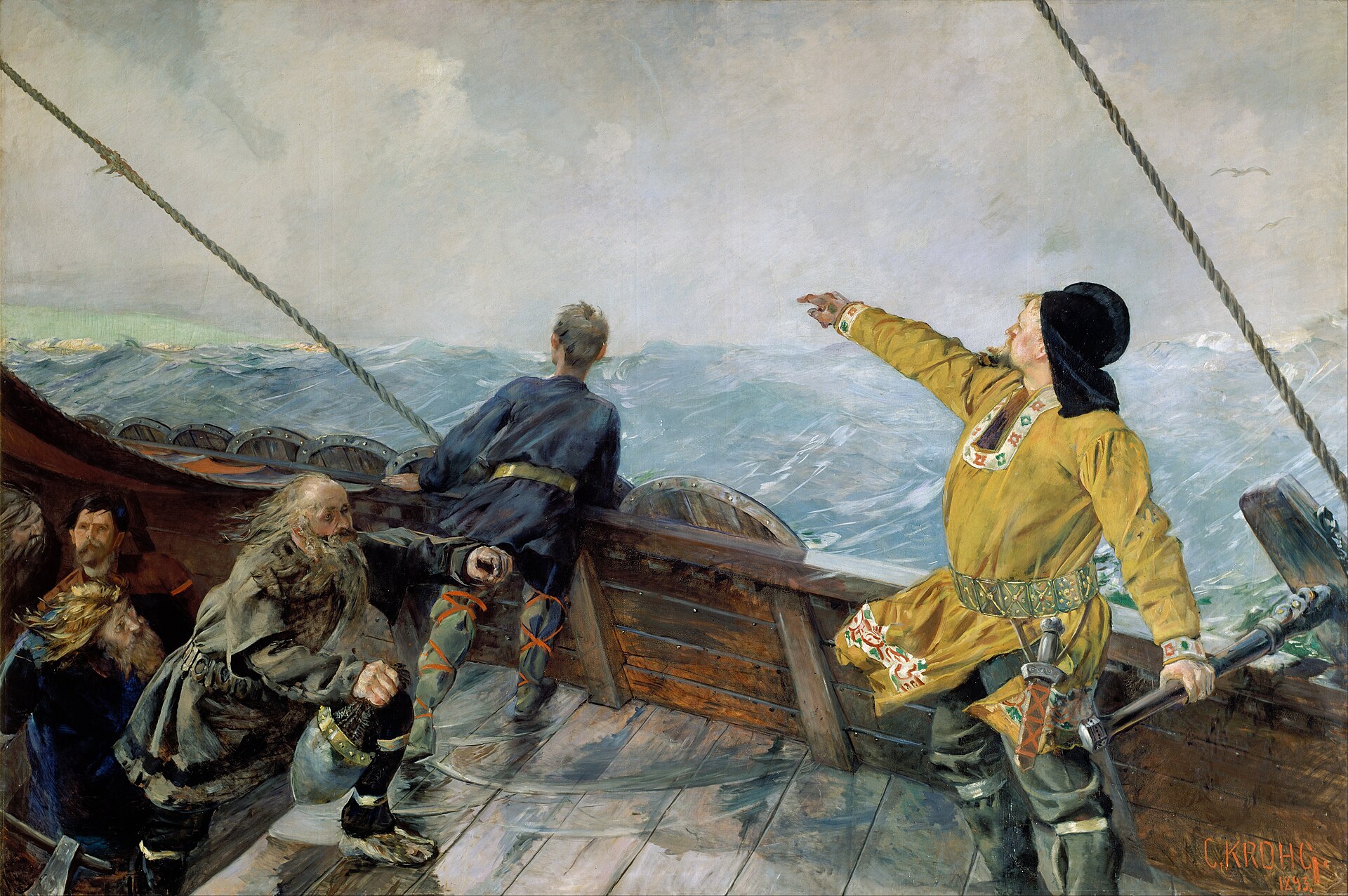
Leif Erikson, also known as Leif the Lucky (c. 970s–c. 1018 to 1025), was a Norse explorer widely believed to have been the first European to reach continental North America, approximately half a millennium before Christopher Columbus.
According to the Icelandic sagas, he established a Norse settlement at Vinland, generally understood to be coastal North America. Ongoing scholarly discussion suggests that the settlement established by Leif and his crew may correspond to L'Anse aux Meadows, a Norse site in Newfoundland, Canada, that was occupied roughly 1,000 years ago. Leif's exact birthplace remains unknown, though scholars generally assume he was born in Iceland.
His father, Erik the Red, founded the first Norse settlement in Greenland, where Leif spent his formative years. Following his voyage to Vinland and his father's subsequent death, Leif assumed leadership of the Greenland settlement. He had two known sons: Thorgils, born in the Hebrides, and Thorkell, who eventually succeeded him as chieftain of Greenland.
The Norse achievement of reaching North America centuries before sustained European contact represents a remarkable feat of navigation and seafaring. While Leif's expedition did not lead to permanent Norse colonization of the continent, archaeological evidence at L'Anse aux Meadows has confirmed the historical reality behind the saga accounts, demonstrating that Norse explorers ventured far beyond Greenland and established at least temporary footholds on North American soil. The brevity of Norse presence in North America—likely due to the distance from Norse homelands, limited resources, and potential conflicts with indigenous populations—meant that knowledge of these lands faded from broader European consciousness until rediscovered centuries later through different routes of exploration.