Kernosivsky idol
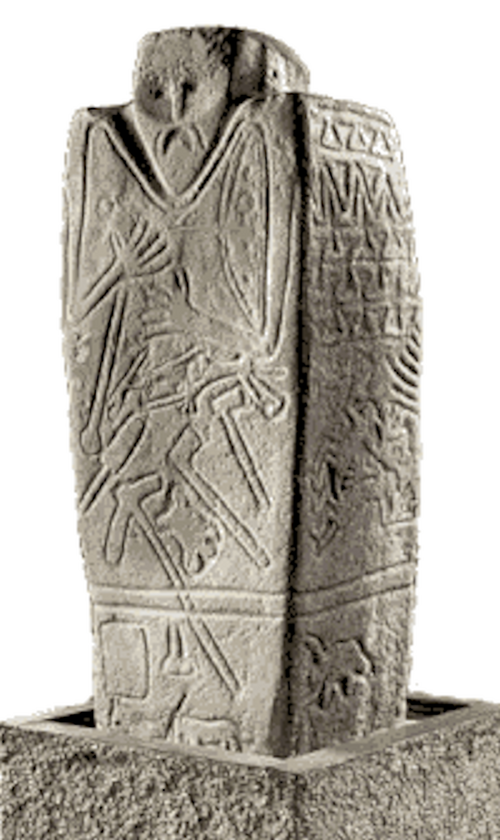
Kernosivsky idol is a deity from Kernosivka, Ukraine, dated to ~2500 BC (Prehistoric era).
The Kernosivka Idol was created in the mid-3rd millennium BC by the Indo-European tribes of the Yamna culture. It was designed as a central cult object, representing either a supreme deity or a deified ancestor. The complex carvings covering the stone suggest it was used in rituals related to fertility, war, and the protection of the tribe.
For thousands of years, the idol remained hidden within a burial mound (kurgan). It was found lying horizontally, which indicates it might have been intentionally "buried" or hidden during a period of conflict or a change in religious practices. This burial protected the soft sandstone from erosion, preserving the intricate details for five millennia.
The artifact was rediscovered in 1973 in the village of Kernosivka. Workers digging a trench for a water pipeline hit the stone and alerted the Dnipro National Historical Museum. This discovery was a major breakthrough because no other stela from that era possessed such a high level of anatomical and symbolic detail, including depictions of internal organs and specific tools of the Bronze Age.
Since its discovery, the idol has been recognized as a primary source for studying the beliefs and daily life of early nomadic societies. It is currently the most famous exhibit in the Dnipro National Historical Museum, serving as a unique "visual document" of pre-literate history in the Ukrainian steppe.