Cauld Lad of Hylton
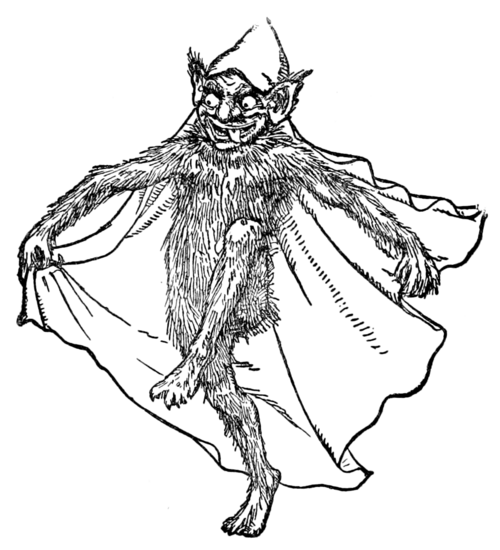
The Cauld Lad of Hylton is said to be the ghost of a murdered stable boy named Robert Skelton, who haunts the ruins of Hylton Castle near Sunderland in northern England. The haunting is thought to date back to the 16th or 17th century, and over time, several versions of the tale have emerged to explain the origin of the restless spirit.
In one telling, the boy had been caught in a forbidden romance with the daughter of Baron Hylton. Upon discovering the affair, the baron flew into a rage and killed him.
Another account paints a picture of a different crime. In this version, the baron had instructed Skelton to ready his horse for an important journey. But when the boy overslept, the baron’s fury turned deadly. Some say the baron struck him on the head with a riding crop—fatally hitting an old wound. Others claim he stabbed the boy with a pitchfork or even cut off his head in a fit of wrath. Afterward, the body was allegedly hidden in a deep pond or tossed down a disused well.
Months later, the corpse was discovered. Though the baron stood trial for murder, he was ultimately acquitted. A laborer testified that the boy had been injured in a fall while retrieving a tool from a high shelf at the baron’s command. The baron had tried to treat his wounds, the worker claimed, but the boy had died regardless. Records state that Robert Hylton, the 13th Baron Hylton, was officially pardoned in 1609.
Not long after, the castle became the site of strange occurrences. If the kitchen was left untidy at night, it would be found clean by morning. If left clean, it would be turned into a mess. Hot ashes would be scattered, sometimes bearing the shape of a human form—as if someone had lain down on them. Chamber pots were mysteriously overturned.
One night, a cook decided to stay up past midnight to catch the culprit. To his astonishment, he saw the ghostly figure of a naked boy, pale and shivering, whispering, “I’m cauld”—a cry that meant “I’m cold.” The cook and his wife took pity and left a warm cloak for the spirit. The following night, they heard a voice say:
“Here’s a cloak and here’s a hood, The Cauld Lad of Hylton will do no more good.”
After that, the disturbances ceased. Yet some say the lad’s mournful voice can still be heard echoing through the ruins.
Some traditions interpret the Cauld Lad as a poltergeist, a mischievous spirit lingering out of anger or sorrow. Others suggest he was not a ghost at all, but a fairy creature—perhaps a brownie, elf, or barghest—trapped under a spell that could only be broken by receiving a gift. The cloak, in these tales, was the key to setting him free.
One version even has the Cauld Lad singing a mournful prophecy of how long he expected to remain enchanted:
Wae’s me, wae’s me, The acorn’s not yet fallen from the tree, That’s to grow the wood, That’s to make the cradle, That’s to rock the bairn, That’s to grow to the man That’s to lay me!
Though poetic, this lament proved unnecessary—his freedom came not with time but with a simple act of compassion.