Boudica
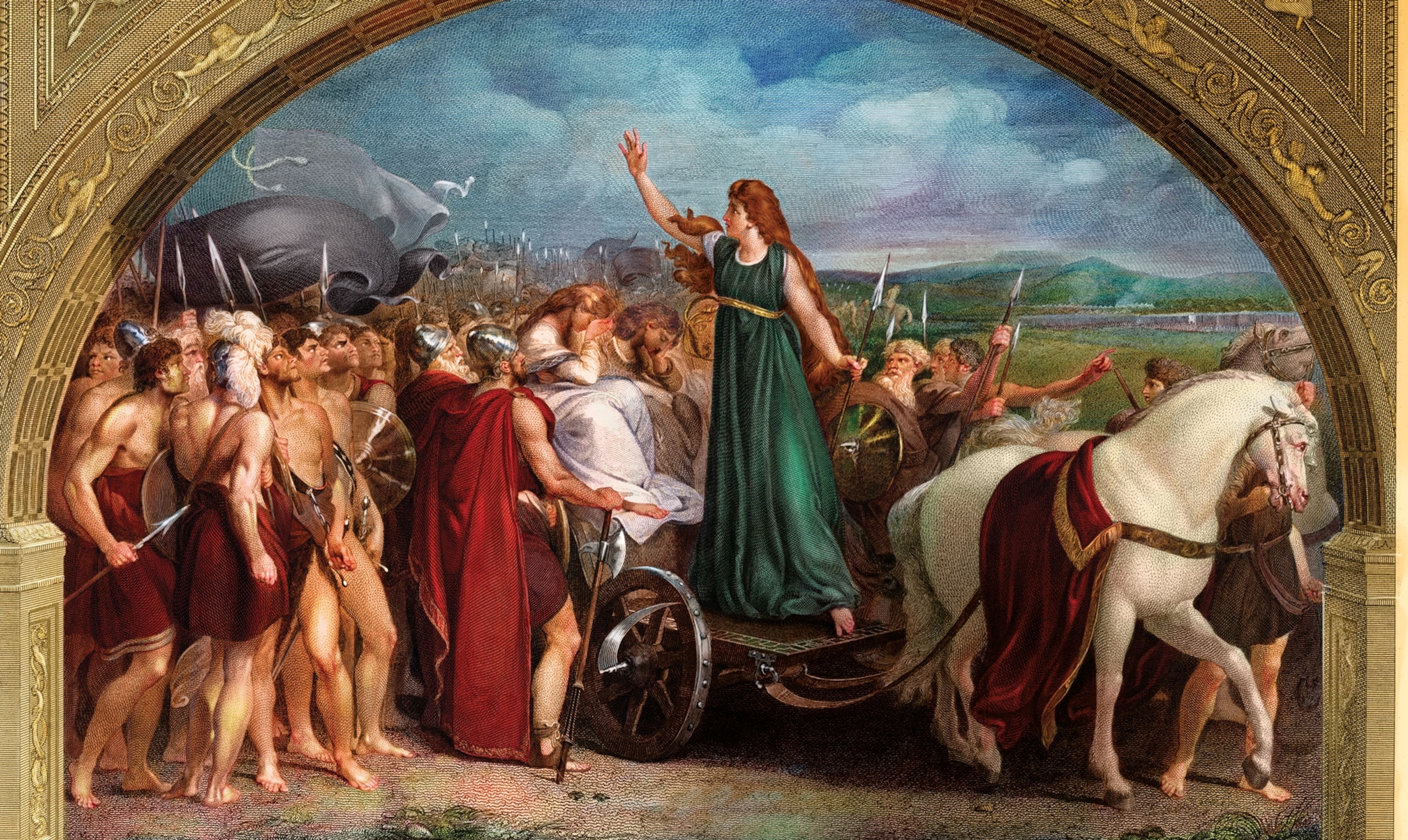
Boudica is a legendary figure from Norfolk, United Kingdom, dated to ~60 AD (Classical antiquity).
Boudica (also spelled Boudicca) was a warrior queen of the Iceni, an ancient British tribe, who led a major rebellion against Roman occupation around AD 60-61. Her name derives from the Brythonic word for "victory" (boudi), marking her as the "Victorious Woman." Romans knew her as Boadicea or Boudicea, while in Welsh tradition she appears as Buddug. Today, she stands as an enduring British icon of resistance and the fight for freedom.
Her story begins with tragedy. Boudica's husband, King Prasutagus, ruled the Iceni as a Roman client state. Upon his death, he attempted to secure his family's future by naming both his daughters and the Roman emperor as co-heirs.
Rome, however, had other plans. Imperial authorities seized the kingdom, confiscating property and treating the royal family with brutal contempt. The Roman historian Tacitus records that Boudica herself was publicly flogged while her daughters suffered rape.
Cassius Dio adds that Rome revoked previous gifts to British nobles, and the philosopher Seneca aggressively demanded repayment of loans he had imposed on unwilling Britons. These outrages sparked a furious uprising. Boudica united the Iceni with other British tribes and swept across the province in a campaign of vengeance.
Her forces first razed Camulodunum (present-day Colchester), then a Roman colony housing retired soldiers. When news reached the Roman governor, Gaius Suetonius Paulinus, he rushed back from his campaign in Mona (Anglesey) toward Londinium—a thriving commercial hub barely twenty years old. Recognizing he couldn't hold the town, Suetonius made the harsh decision to abandon it to the rebels.
Boudica's army crushed part of the Ninth Legion, then burned both Londinium and Verulamium to the ground. The death toll was staggering: an estimated 70,000 to 80,000 Romans and British collaborators perished in the revolt. Yet the rebellion's success was short-lived.
Suetonius rallied his scattered forces, likely somewhere in the West Midlands, and prepared for a final confrontation. Though vastly outnumbered, the disciplined Roman legions crushed Boudica's forces in a decisive battle. In the aftermath, Boudica herself died—whether by her own hand or from illness remains uncertain.
The revolt had shaken Rome so severely that Emperor Nero briefly considered abandoning Britain altogether, but Suetonius's victory ensured the province would remain under Roman control. Boudica's legend faded for centuries before resurging during the English Renaissance. By the Victorian era, she had become a powerful symbol of British courage and defiance, a reputation that endures in modern British culture.