Augustus
Augustus is a legendary figure from Nola, Italy, dated to ~0 AD (Classical antiquity). It connects to 5 other myths and legends in the Mythosjourney atlas.
Augustus, born Gaius Octavius on September 23, 63 BC, and also called Octavian (Latin: Octavianus), established the Roman Empire and served as its first emperor from 27 BC until his death on August 19, AD 14. His rule ushered in the imperial cult and the Pax Romana (or Pax Augusta)—an era of relative peace throughout the Roman world with minimal armed conflict. During his reign, Augustus created the Principate system of governance, which endured until the Crisis of the Third Century.
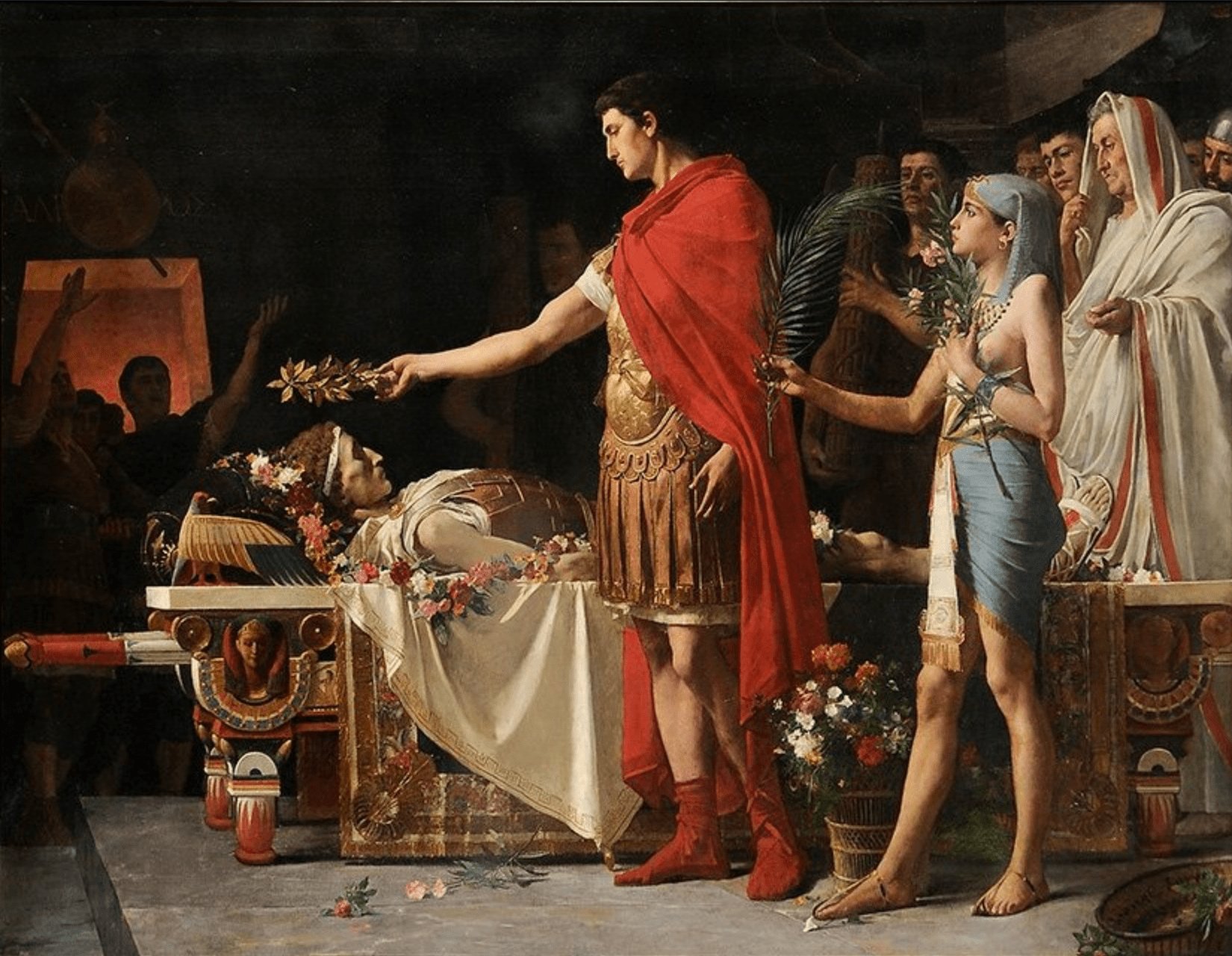
Born into an equestrian branch of the plebeian gens Octavia, Octavian's life changed dramatically when his maternal great-uncle Julius Caesar was assassinated in 44 BC. Caesar's will named Octavian as his adopted heir, granting him Caesar's name, fortune, and the allegiance of his legions. Octavian joined forces with Mark Antony and Marcus Lepidus to form the Second Triumvirate, dedicated to avenging Caesar's murder.
After crushing the conspirators at the Battle of Philippi in 42 BC, the three men divided the Roman Republic among themselves and governed as de facto oligarchs. However, internal rivalries eventually destroyed their alliance. Lepidus was sent into exile in 36 BC, while Antony met defeat at the hands of Octavian's naval commander Marcus Agrippa at the Battle of Actium in 31 BC.
Antony and his lover Cleopatra, Egypt's Ptolemaic queen, took their own lives as Octavian's forces invaded Egypt, which subsequently became a Roman province. Following the collapse of the Second Triumvirate, Augustus presented the appearance of restoring the republic, with power seemingly distributed among the Roman Senate, executive magistrates, and legislative assemblies. Yet he retained autocratic control by securing the Senate's grant of lifelong authority as commander-in-chief, tribune, and censor.
This same duality appeared in his choice of titles—he avoided overtly monarchical designations, styling himself Princeps Civitatis ('First Citizen') while simultaneously adopting the revered name Augustus. Augustus vastly expanded Roman territory, incorporating Egypt, Dalmatia, Pannonia, Noricum, and Raetia into the empire, extending holdings in Africa, and finalizing the conquest of Hispania. However, he experienced a significant defeat in Germania.
Along the empire's borders, he created stability through a network of client states and achieved diplomatic peace with the Parthian Empire. His domestic reforms transformed Rome: he overhauled the tax system, built extensive road networks with an official postal service, created a permanent standing army, founded the Praetorian Guard, and established Rome's first official police and fire brigades. He also undertook massive reconstruction projects throughout the capital.
Augustus died in AD 14 at the age of 75, most likely from natural causes, though persistent rumors—given some credence by suspicious deaths within the imperial family—suggested his wife Livia may have poisoned him. His adopted son Tiberius, who was both Livia's biological son and the former husband of Augustus's only natural child Julia, succeeded him as emperor.