Zhuge Liang
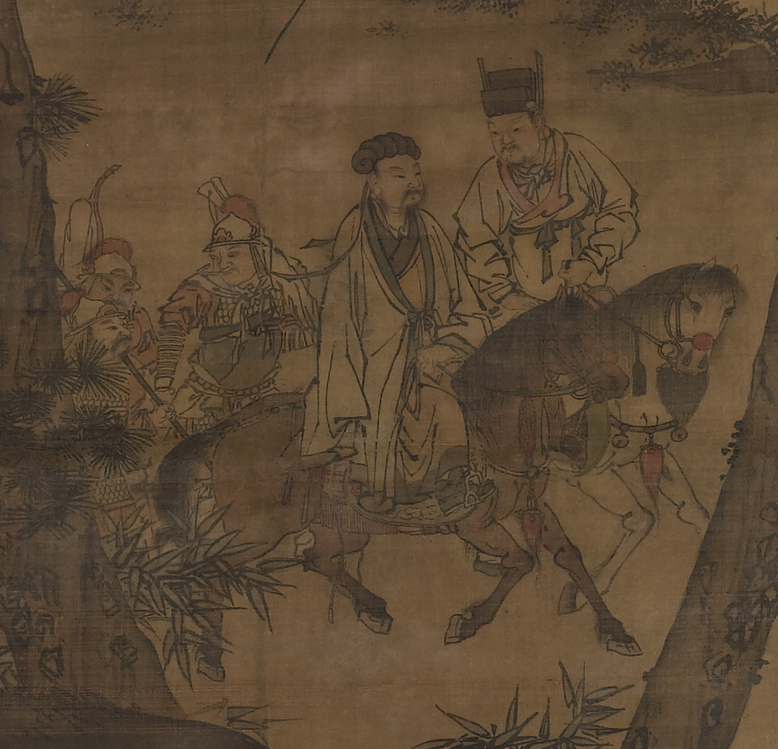
Zhuge Liang (181–234 AD), commonly known by his courtesy name Kongming, was a Chinese statesman, military strategist, and inventor who lived through the turbulent collapse of the Eastern Han dynasty (c. 184–220) and into the early Three Kingdoms period (220–280). He served as Imperial Chancellor of the state of Shu Han from its establishment in 221 and assumed the role of regent in 223, holding power until his death in September or October 234.
Zhuge Liang is widely regarded as the most brilliant strategist of his age. Even during his years of deliberate seclusion from public life, his reputation as a learned and perceptive scholar grew, earning him the evocative nickname "Wolong" or "Fulong," both meaning "Sleeping Dragon." His administrative philosophy drew from both Legalist and Confucian traditions, though he was critical of the harsh Legalist approach exemplified by Shang Yang. Instead, Zhuge advocated for governance rooted in benevolence and education as fundamental principles of rulership.
He modeled himself after the ancient statesman Guan Zhong, focusing on developing Shu's agricultural and industrial capacity to transform it into a regional power. Despite his Confucian leanings, he valued the administrative writings of Legalist thinkers Shen Buhai and Han Fei, refusing to grant special privileges to local elites and implementing laws that were strict yet fair and transparent. The people of Shu maintained shrines in his honor for generations after his death, testament to the lasting impact of his governance.
Zhuge is an uncommon two-character Chinese compound surname. In 760, when Emperor Suzong of the Tang dynasty constructed a temple honoring the ancient strategist Jiang Ziya, he commissioned sculptures of ten legendary military commanders and strategists to flank Jiang Ziya's statue. Among these immortalized figures stood Zhuge Liang alongside Bai Qi, Han Xin, Li Jing, Li Shiji, Zhang Liang, Sima Rangju, Sun Tzu, Wu Qi, and Yue Yi.