Zbruchskiy idol
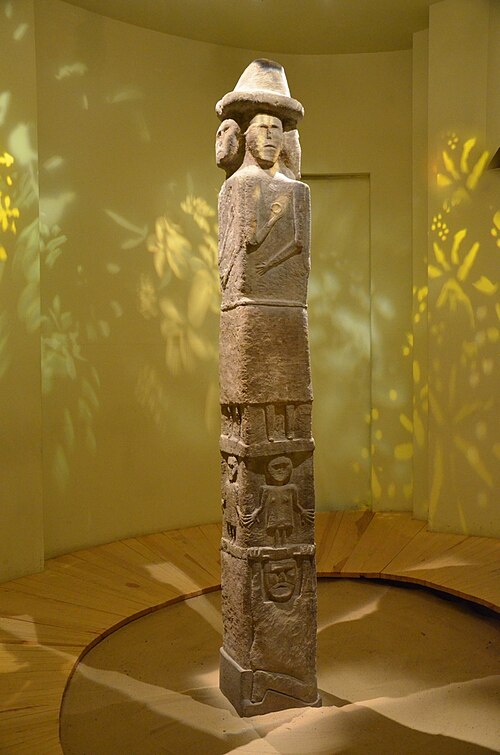
Zbruchskiy idol is a deity from Lychkivtsi (Ternopil region), Ukraine, dated to ~800 AD (Middle Ages).
The Zbruch Idol is a four-sided limestone pillar found in 1848 in the Zbruch River during a period of low water. Standing about 2.67 meters tall, the sculpture is carved into three distinct horizontal levels that represent the ancient Slavic view of the universe. The discovery caused a sensation, and the idol was eventually moved to the Archaeological Museum in Kraków, where it remains a central piece of the collection.
The top tier features four faces under a single stone hat, depicting high deities holding symbolic objects like a drinking horn, a ring, and a sword with a horse. The middle tier shows smaller human figures representing the earthly world, while the bottom tier depicts a kneeling figure, often identified as the god Veles, who supports the upper worlds on his back.
Historically, it was believed to be a central cult object of the 9th or 10th century, hidden in the river by pagans to save it from destruction during the Christianization of the region. However, modern researchers have raised questions about its origin, suggesting it might actually be a 19th-century creation inspired by the Romantic movement's fascination with Slavic antiquity. Despite these debates, the pillar remains the most famous visual representation of Slavic mythology, illustrating a complex hierarchy of gods, humans, and the underworld in a single monolithic structure.