Wen Tianxiang(文天祥)
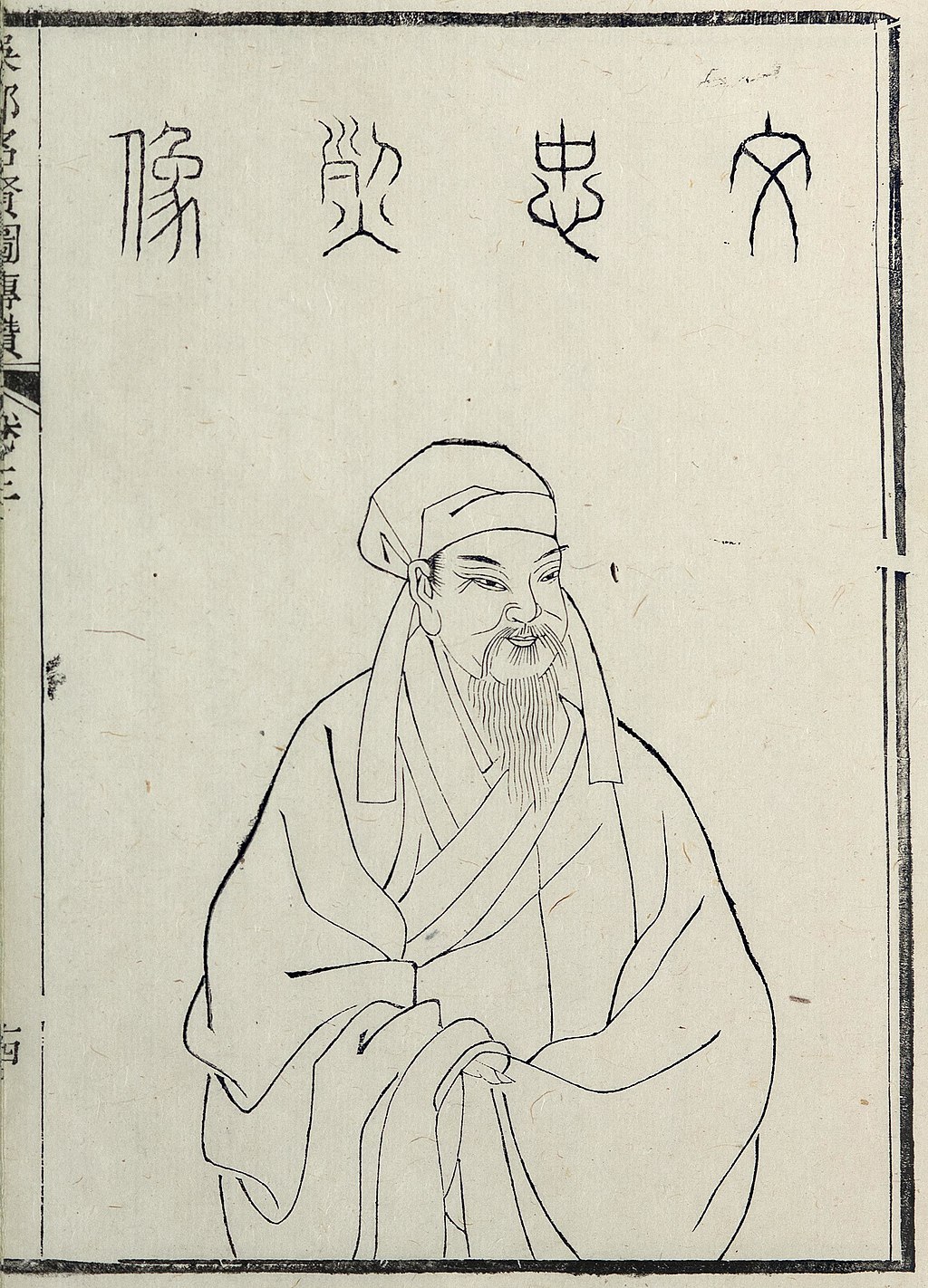
Wen Tianxiang (Chinese: 文天祥; pinyin: Wén Tiānxiáng), born June 6, 1236, and executed January 9, 1283, held the noble title Duke of Xin (信國公) and served as a prominent Chinese statesman, poet, and political leader during the final years of the Southern Song dynasty. His unwavering resistance to Kublai Khan's Mongol invasion of the Southern Song and his steadfast refusal to submit to the Yuan dynasty despite enduring capture, imprisonment, and torture have made him an enduring symbol of patriotism, moral righteousness, and resistance against tyranny in Chinese culture. He is honored as one of the "Three Loyal Princes of the Song" (大宋三忠王), alongside Lu Xiufu and Zhang Shijie—three officials who remained loyal to the Song dynasty until death rather than accept Mongol rule.
Wen Tianxiang's heroic stature was further immortalized through his inclusion in the Wu Shuang Pu (無雙譜, Table of Peerless Heroes), a collection compiled by Jin Guliang depicting China's most exemplary historical figures. Wen's continuing symbolic importance in Chinese political consciousness was vividly demonstrated by an event that occurred at his historical shrine in Haifeng (Haifeng County) in 1908, over six centuries after his death. There, the revolutionary leader Chen Jiongming persuaded more than thirty young men from the village to swear secret oaths supporting a national revolution to overthrow the Qing dynasty and establish a republic.
By conducting this revolutionary ceremony at Wen Tianxiang's shrine, Chen deliberately invoked the martyred official's legacy of resistance to foreign conquest, drawing a parallel between Wen's thirteenth-century opposition to Mongol rule and the twentieth-century struggle against Manchu imperial authority and foreign imperialism. This episode illustrates how Wen Tianxiang's sacrifice and principled defiance transcended his historical moment to become a timeless inspiration for Chinese patriots confronting what they perceived as illegitimate or oppressive rule, demonstrating the enduring power of his example across vastly different historical contexts.