Vytautas the Great
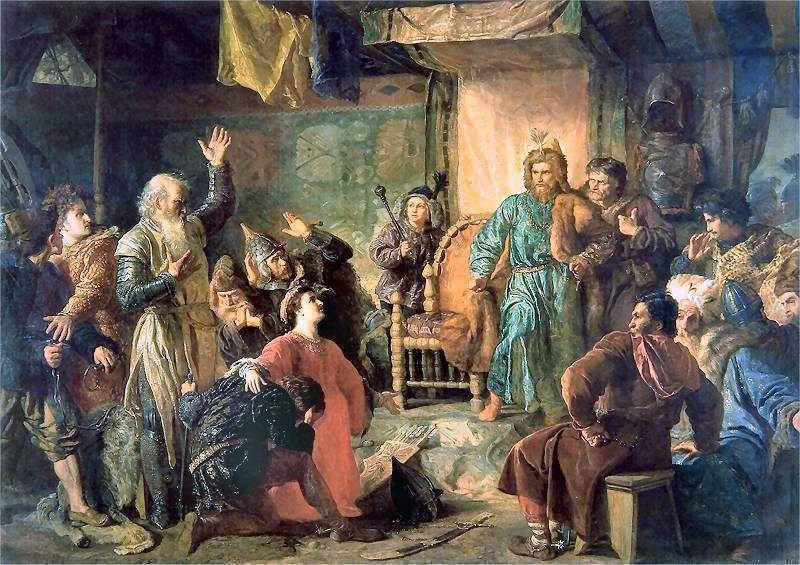
Vytautas the Great (c. 1350 – October 27, 1430) was a ruler of the Grand Duchy of Lithuania who transformed the state into one of the largest and most powerful polities in medieval Europe, extending Lithuanian territory from the Baltic Sea to the Black Sea. He also served as prince of Grodno (1370–1382), prince of Lutsk (1387–1389), and was offered the crown by the Hussites, though he never assumed that title.
Vytautas' long reign was marked by military expansion, diplomatic skill, decisive victory over the Teutonic Knights at the Battle of Grunwald in 1410, and the establishment of Lithuanian dominance over vast territories in Eastern Europe that would shape the region's political geography for centuries. In modern Lithuania, Vytautas is revered as the preeminent national hero and occupies a central position in Lithuanian historical consciousness and national identity. He became an especially important symbolic figure during the nineteenth-century Lithuanian national rebirth, when intellectuals and nationalists seeking to revive Lithuanian culture and assert national distinctiveness amid Russian imperial rule looked to Vytautas' reign as Lithuania's golden age of independence and power.
His legacy has been commemorated through numerous tributes: Vytautas remains a popular male given name in Lithuania, reflecting parents' desire to connect their sons with this heroic figure. In 1922, on the 500th anniversary of his death, Vytautas Magnus University in Kaunas was established and named in his honor, becoming one of Lithuania's most prestigious educational institutions. During the interwar period of Lithuanian independence from 1918 to 1939, monuments honoring Vytautas were erected in numerous towns throughout the country, visually reinforcing his status as the embodiment of Lithuanian statehood and national greatness.
Historical sources indicate that Vytautas knew and spoke the Lithuanian language with his cousin Jogaila (who became King of Poland), demonstrating his connection to Lithuanian ethnic and linguistic identity despite the multilingual and multicultural character of the Grand Duchy he ruled.