Vercingetorix
Vercingetorix (Latin: [wɛrkɪŋˈɡɛtɔriːks]; Ancient Greek: Οὐερκιγγετόριξ; c. 80–46 BC) was a Gallic king and chieftain of the Arverni tribe who united the disparate Gallic peoples in a dramatic but ultimately doomed uprising against Roman forces during the final phase of Julius Caesar's Gallic Wars. After his surrender to Caesar, he languished in captivity for nearly six years before being executed in Rome.
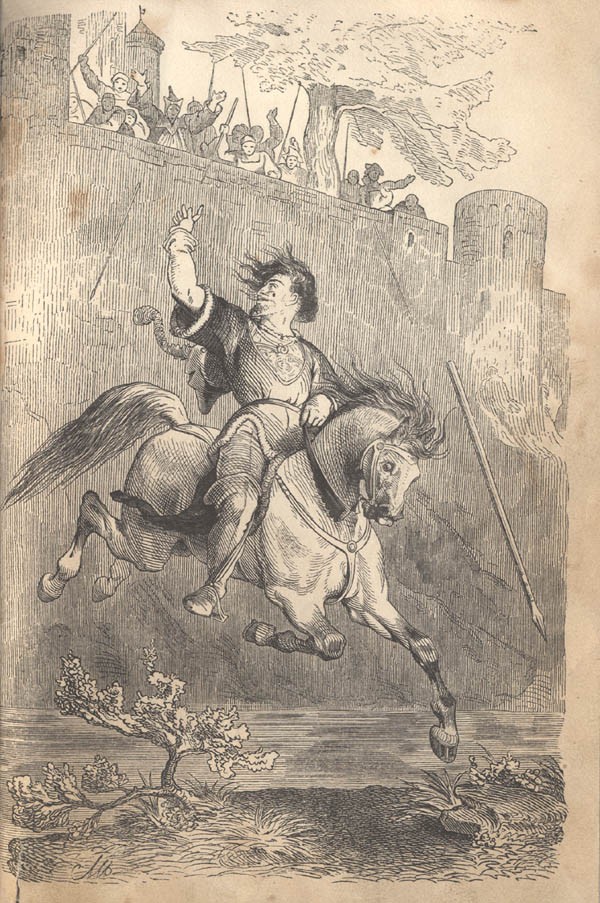
The son of Celtillus the Arvernian, a leader among the Gallic tribes, Vercingetorix rose to power following his formal designation as chieftain of the Arverni at the fortified settlement of Gergovia in 52 BC. He swiftly forged an alliance with other Gallic tribes, assumed supreme command of their combined forces, and led what became the most significant Celtic revolt against Roman domination. His leadership produced a stunning victory at the Battle of Gergovia, where Julius Caesar's legions suffered thousands of casualties among Romans and their allies, forcing a Roman withdrawal.
However, Vercingetorix's efforts to forge Gallic unity came tragically late. Caesar had already exploited the deep internal divisions among the Gallic tribes to subjugate much of the region with relative ease. At the decisive Battle of Alesia in 52 BC, Roman forces besieged and crushed Vercingetorix's army.
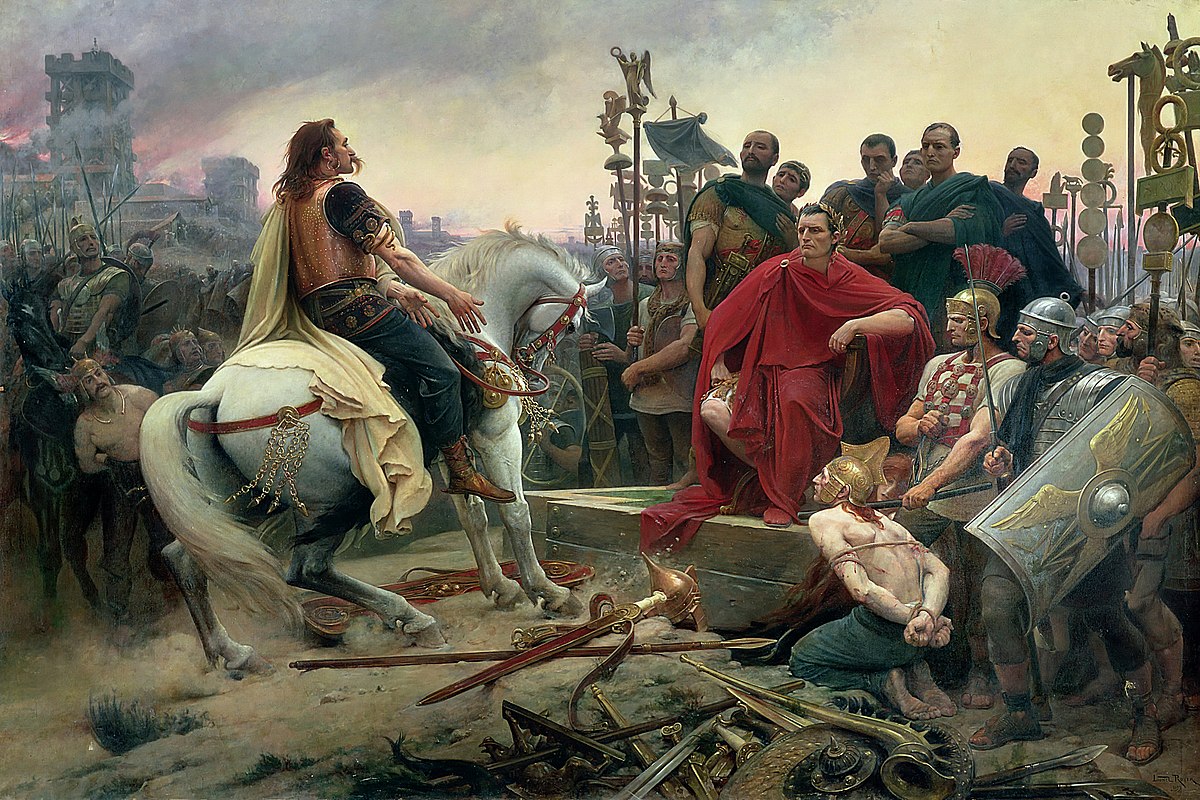
Hoping to spare as many of his warriors as possible, Vercingetorix surrendered himself to the Romans. He remained imprisoned for five years until 46 BC, when Caesar paraded him through the streets of Rome as part of his triumphal procession before having him executed by garrote. Most of what we know about Vercingetorix comes from Caesar's own account in his Commentarii de Bello Gallico (Commentaries on the Gallic War).
Despite his defeat, Vercingetorix has become a celebrated folk hero in France, particularly in Auvergne, the region of his birth.