Van Hunks and the Devil
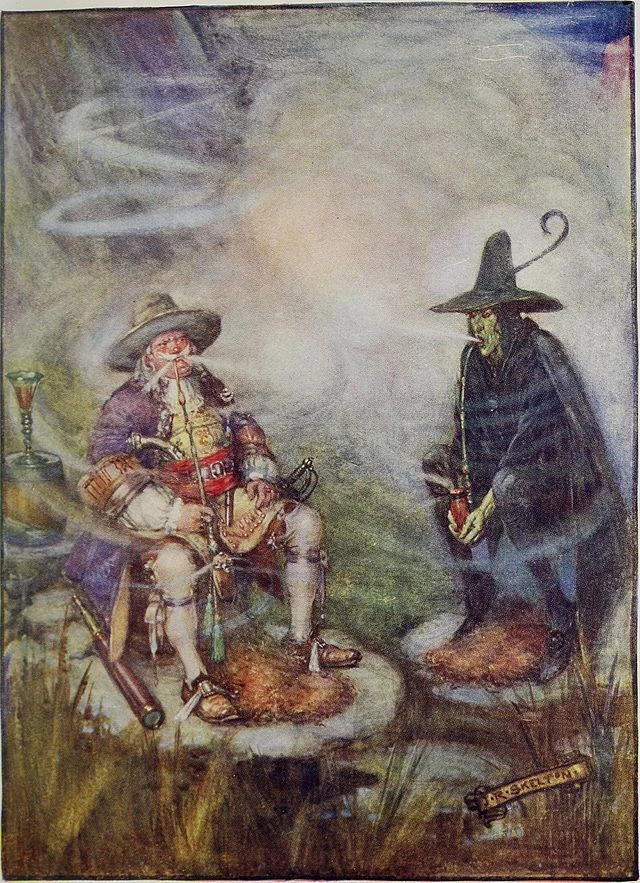
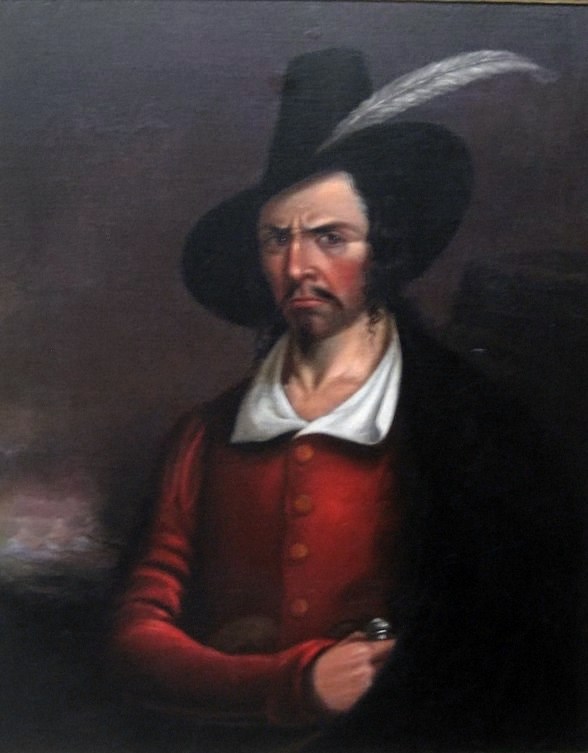
Long before it was known as Devil’s Peak, the jagged silhouette overlooking Cape Town was called Windberg or Charles Mountain, yet its most famous moniker is rooted in a legend as thick as the clouds that frequently drape its summit. At the heart of this folklore is Jan van Hunks, a retired Dutch pirate and formidable pipe smoker who lived at the mountain's base around the year 1700. Forced by his wife’s disdain for tobacco to smoke his pipe outdoors, Van Hunks spent his days on the slopes, eventually encountering a mysterious stranger dressed in black.
The two engaged in a boastful rivalry over their smoking endurance, culminating in a monumental contest that saw both men puffing so furiously that a massive white cloud began to spill over the mountain’s edge. This phenomenon, known today as the "Table Cloth," was said to be the byproduct of their duel. As Van Hunks began to gain the upper hand, his opponent’s identity was revealed—he was the Devil himself—and though the pirate technically won the wager, both vanished in a sudden flash of lightning, leaving behind only the smoke of their competition.
While the 19th-century poet Dante Gabriel Rossetti immortalized this struggle in his poem The Dutchman’s Wager, the timeline suggests the story may be more of an urban legend than an ancient truth, as the poem was published long after the name was established. Other theories offer a less supernatural perspective, such as the possibility that "Devil's Peak" is merely a linguistic corruption of Duifespiek, or "Dove's Peak," which sounds remarkably similar in Dutch. Alternatively, some point to the mountain’s physical appearance, arguing that its three-pronged shape resembles the trident or spear often associated with the Devil in religious iconography.
Perhaps the most compelling historical alternative involves the 1457 world map created by Venetian cartographer Fra Mauro for King Alfonso V of Portugal. Drawing on Arabian knowledge, Mauro labeled the southern tip of Africa Cabo de Diab, or the "Devil’s Cape." It is entirely possible that this ominous title migrated from the coastline to the peak over centuries of exploration. Whether the name was born from a cartographer’s pen, a linguistic slip, or the smoky exhaust of a pirate outwitting a demon, the legend of Jan van Hunks remains the most cherished explanation for the mountain’s enduring, misty shroud.