Ulubatlı Hasan
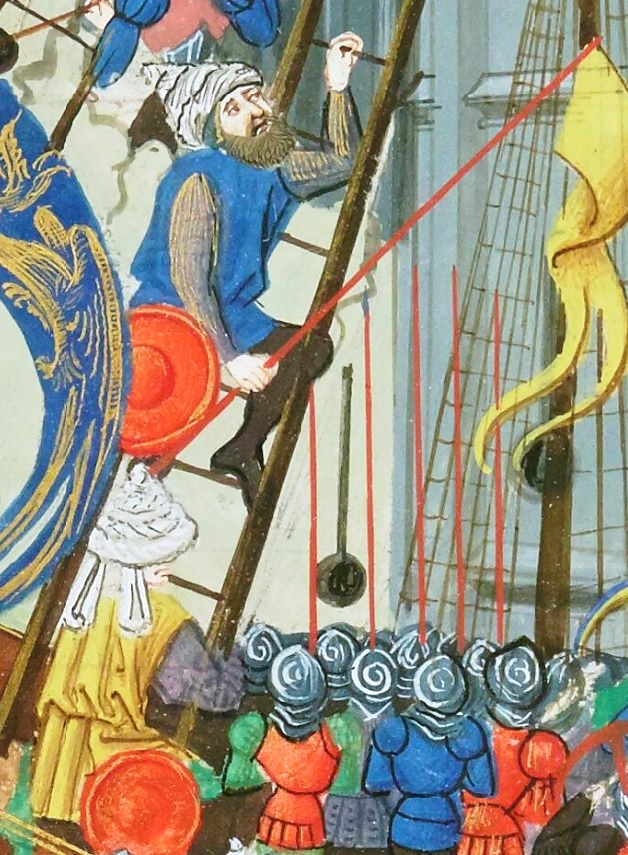
Ulubatlı Hasan (Ottoman Turkish: الوباطلى حسن), also known as Baba Hasan Ağa the Standard Bearer (Ottoman Turkish: سنجاقدار بابا حسن آغا) or Baba Hasan-ı 'Alemî (Ottoman Turkish: بابا حسنِ عَلَمِى), born approximately 1390 in Ulubat, Karacabey, Bursa, and killed May 29, 1453, in Constantinople, served as the sekbanbaşı (commander of auxiliary troops) who performed the legendary feat of planting the first Ottoman standard on the Byzantine walls during the final assault of the Conquest of Constantinople. His dramatic action became one of the most celebrated moments in Ottoman military history and symbolized the determination and sacrifice that secured the city's fall. Hasan was born in the small village of Ulubat near Karacabey in the province of Bursa.
By the time he participated in the Siege of Constantinople under Sultan Mehmed II's command, he was approximately sixty-three years old—an advanced age for a frontline soldier in medieval warfare, making his subsequent heroism even more remarkable. On the early morning of the siege's final day, May 29, 1453, following the morning prayer, the Ottoman military band began playing martial music as the signal for the general assault on the city. Ulubatlı Hasan was among the very first soldiers to attempt scaling Constantinople's formidable walls, followed closely by thirty of his companions.
He carried only an Ottoman kilij (curved sword), a small shield for minimal protection, and the crucial Ottoman flag. Under devastating defensive fire—arrows, stones, spears, and bullets rained down from the desperate Byzantine defenders—Hasan climbed the wall with extraordinary courage and determination. Despite the murderous barrage, he reached the summit and planted the Ottoman standard on the walls, a symbolic act of immense psychological and military significance.
He defended this position until twelve of his original thirty companions managed to reach the top and join him. After securing the flag's position, Hasan collapsed from his wounds, his body pierced by twenty-seven arrows. The sight of the Ottoman flag flying from Constantinople's walls provided tremendous inspiration to the attacking Ottoman forces, sustaining their morale and driving them forward, while simultaneously demoralizing the exhausted Greek defenders who recognized that the walls had been breached.
This pivotal moment contributed significantly to the Ottomans' final victory and the fall of Constantinople, ending over a thousand years of Byzantine rule and transforming the course of world history.