Tír na nÓg
Tír na nÓg is a legendary place from Ireland, dated to ~200 AD (Classical antiquity). It connects to 2 other myths and legends in the Mythosjourney atlas.
Tír na nÓg (Irish for "Land of the Young") is a supernatural realm in Irish mythology that serves as the most famous manifestation of the Celtic Otherworld. Often depicted as a parallel dimension where aging, decay, and death are nonexistent, it is the ancestral home of the Tuatha Dé Danann, the divine beings of early Irish tradition. This mystical land is frequently portrayed as a paradise located far to the west across the sea or accessible through specific gateways such as sidhe (fairy mounds) and underwater caves.
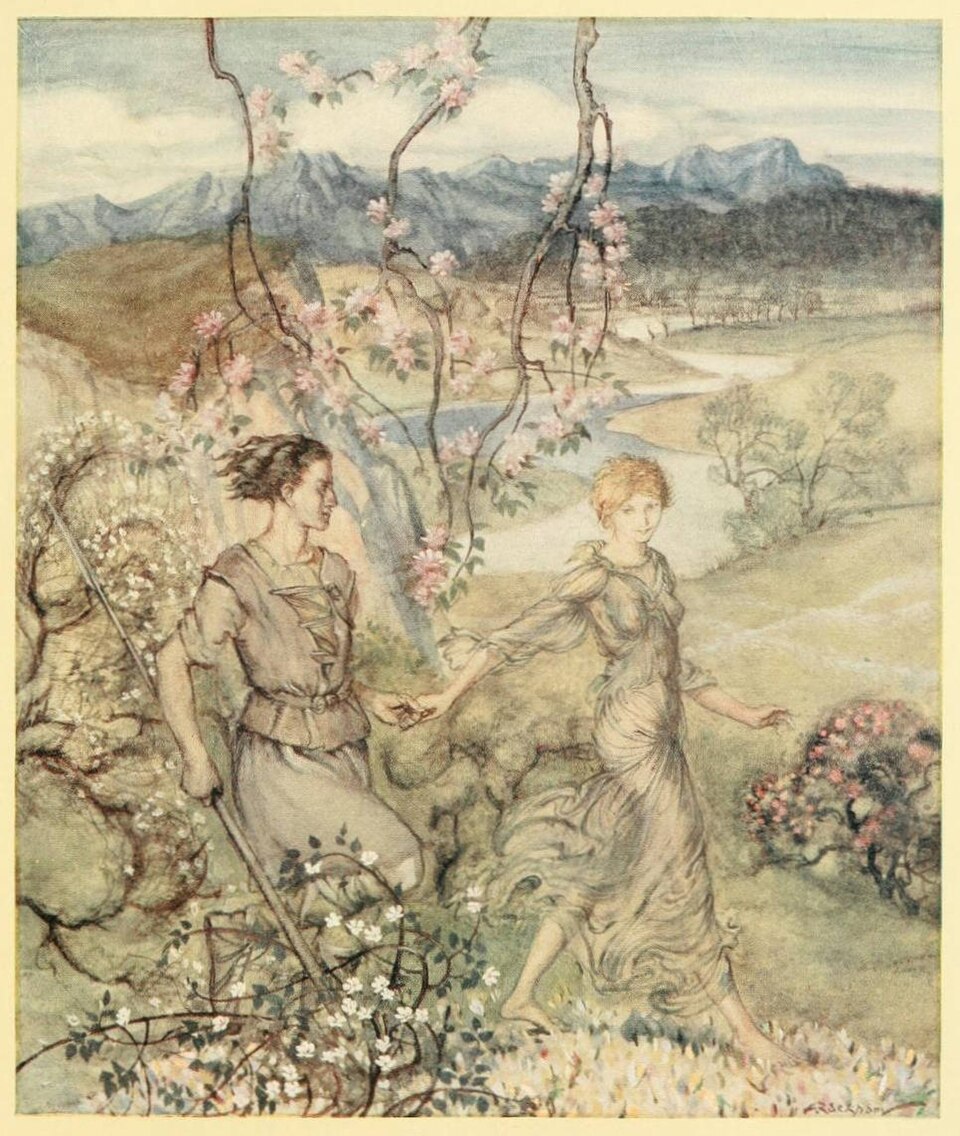
The narrative most synonymous with this land involves the warrior-poet Oisín and Niamh of the Golden Hair, the daughter of the king of Tír na nÓg. Enchanted by Oisín, Niamh carried him away on a white horse that galloped across the waves to her immortal home, where he remained for three years in a state of eternal bliss. The linguistic reach of this legend is evident in the shared Gaelic heritage, where the realm is identified as Tìr nan Òg in Scottish Gaelic and Cheer nyn Aeg in Manx.
However, the tale serves as a somber warning about the nature of time; while Oisín felt only a few years had passed, three centuries had actually elapsed in the mortal world of Ireland.
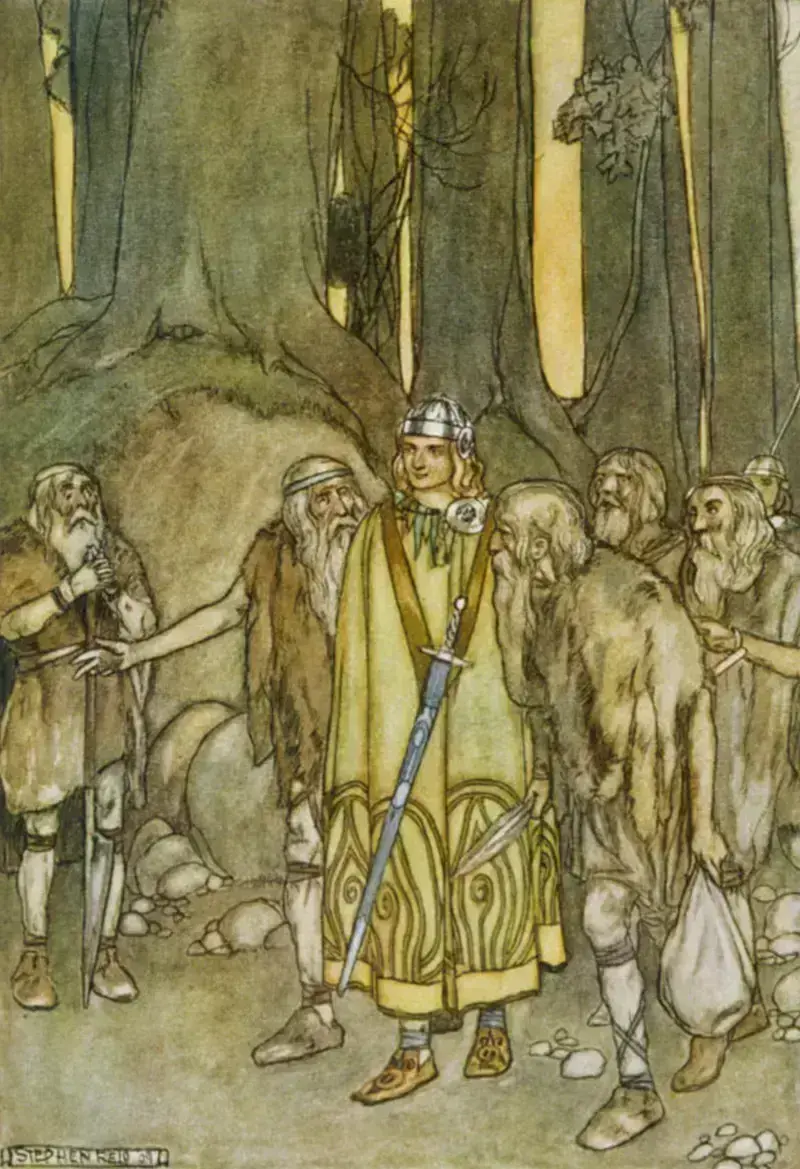
When Oisín eventually returned to the mortal realm to seek his father, Fionn mac Cumhaill, he was warned by Niamh never to dismount his horse. While attempting to assist some laborers, Oisín fell to the earth, and the moment he touched the soil, the weight of three hundred years descended upon him, transforming the young hero into a withered, blind old man. This tragic conclusion highlights the absolute nature of the Otherworld's separation from the human experience and the high cost of entering such a divine space.
The legend of Tír na nÓg continues to be a central pillar of Gaelic folklore, personifying the human longing for a lost golden age and the delicate veil that separates the mundane from the eternal.