Scipio Africanus
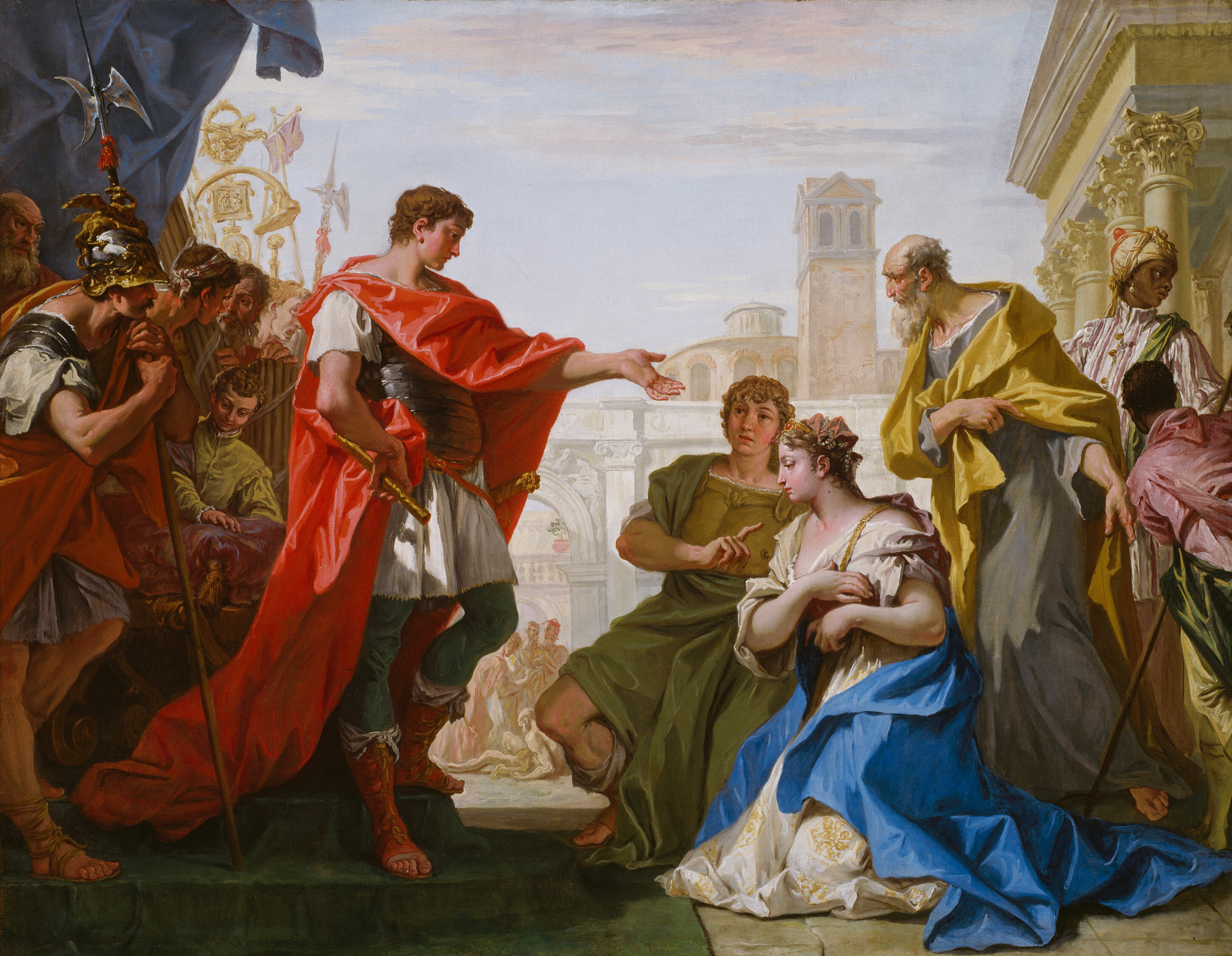
Scipio Africanus is a legendary figure from Liternum, Italy, dated to ~200 BC (Classical antiquity).
Scipio Africanus was born in 236 BC into the distinguished patrician family of the Cornelii Scipiones, one of the most prominent houses in the Roman Republic. His father, Publius Cornelius Scipio, and his uncle Gnaeus Cornelius Scipio Calvus were both notable generals who fought in the Second Punic War. From an early age, Scipio grew up surrounded by the language of command and the expectations of Roman duty. As a youth, he was known for his composure and courage, qualities that would later define his military career.
During the Second Punic War, when Hannibal invaded Italy and inflicted a series of devastating defeats on Rome, Scipio first distinguished himself. He was present at the Battle of Ticinus in 218 BC, where he reportedly saved his wounded father by charging into the midst of the enemy. The story, though later embellished, became a symbol of filial piety and valor. Rome, still reeling from defeats at Trebia, Trasimene, and Cannae, needed new leadership that could match Hannibal’s tactical brilliance.
After years of struggle, the Roman situation began to change through the emergence of a younger generation of commanders who had learned from Hannibal’s methods. Scipio was among them. In 211 BC, when his father and uncle were both killed in battle in Hispania, the Senate sought someone to take command of the Roman forces there. Few were willing to accept the position, for the Spanish front was considered a graveyard of legions. Scipio, then only twenty-four years old, volunteered. The Senate, hesitant to trust someone so young, finally agreed, partly because no other candidate was available.
In Spain, Scipio proved to be a commander of extraordinary talent. He began by striking directly at the Carthaginian stronghold of New Carthage (modern Cartagena) in 209 BC. The attack was audacious.
He used intelligence from local fishermen to exploit the ebb tide, allowing his men to cross a lagoon that protected one side of the city. The surprise was complete, and New Carthage fell within a single day. Scipio treated the captured population with restraint, freeing hostages and showing clemency that earned him the loyalty of many local tribes.
This victory not only gave Rome control of Carthage’s main Spanish base but also elevated Scipio’s standing among his soldiers and the Senate.
Over the following years, Scipio consolidated Roman control in Spain. He defeated Hasdrubal Barca, Hannibal’s brother, at the Battle of Baecula in 208 BC, and in 206 BC he crushed the combined Carthaginian forces at the Battle of Ilipa. His tactics there were masterful: he reversed the conventional Roman deployment, placing his strongest legions on the wings rather than the center, and lured the Carthaginians into extending their line before launching a double envelopment. Ilipa effectively ended Carthaginian power in Spain.
After his victories, Scipio returned to Rome in triumph. He was elected consul in 205 BC and immediately proposed to invade North Africa. Many senators opposed the idea, arguing that Hannibal was still active in Italy and that the risk of moving the war abroad was too great. Scipio insisted that the best way to defeat Hannibal was to threaten Carthage itself, forcing him to withdraw from Italy. Eventually, the Senate granted him permission, though it limited his authority and refused to provide him with fresh legions, compelling him to recruit volunteers from among veterans and allies.
In 204 BC, Scipio landed in Africa near Utica and formed an alliance with the Numidian prince Masinissa, a move that proved decisive. His first major engagement was at the Great Plains, where he defeated Hasdrubal Gisco and Syphax, the Numidian king allied with Carthage. Following this, he advanced toward Carthage itself. The Carthaginian Senate, now desperate, recalled Hannibal from Italy after more than fifteen years of campaigning.
The two generals met in 202 BC at Zama, southwest of Carthage. The battle was one of the most famous in antiquity. Hannibal fielded his war elephants and veteran infantry, but Scipio had anticipated his tactics. He arranged his lines with gaps through which the elephants could pass harmlessly, then countered with disciplined Roman infantry and Numidian cavalry led by Masinissa. The Roman cavalry routed Hannibal’s flanks and attacked from the rear, resulting in a complete Carthaginian defeat. Zama ended the Second Punic War.
Carthage was forced to surrender its fleet, pay a massive indemnity, and relinquish its empire outside Africa. Scipio’s victory was celebrated across Rome, and he received the cognomen “Africanus” in recognition of his achievement. His reputation reached near-legendary status. Unlike many generals, Scipio treated his defeated enemies with respect. He spared Carthage from destruction and even ensured Hannibal’s safety, believing that magnanimity was the mark of true greatness.
After the war, Scipio’s political fortunes became more complicated. His growing prestige aroused jealousy among other senators, particularly Cato the Elder, who accused him of corruption and of using his influence to enrich himself and his family. Scipio defended himself with dignity, reminding the assembly of his service to Rome. When he appeared in court, he tore up the account books and declared that the day after Zama should never be forgotten. The people rallied to his side, and the charges were dropped, but the episode left him disillusioned with Roman politics.
In his later years, Scipio withdrew from public life and settled on his estate at Liternum in Campania. He spent his remaining days away from the political turmoil of Rome, surrounded by friends and family. According to tradition, he requested that his tomb bear the inscription, “Ungrateful fatherland, you shall not possess my bones.” He died around 183 BC, possibly in the same year as Hannibal, marking the symbolic end of an era dominated by their rivalry.
Scipio Africanus left behind a legacy as one of Rome’s greatest commanders. His campaigns reshaped the balance of power in the Mediterranean, and his conduct combined military innovation with moral restraint. He demonstrated that Roman discipline could equal and surpass Carthaginian genius, and his victories laid the foundation for Rome’s eventual dominance over the known world.