Redmond O'Hanlon
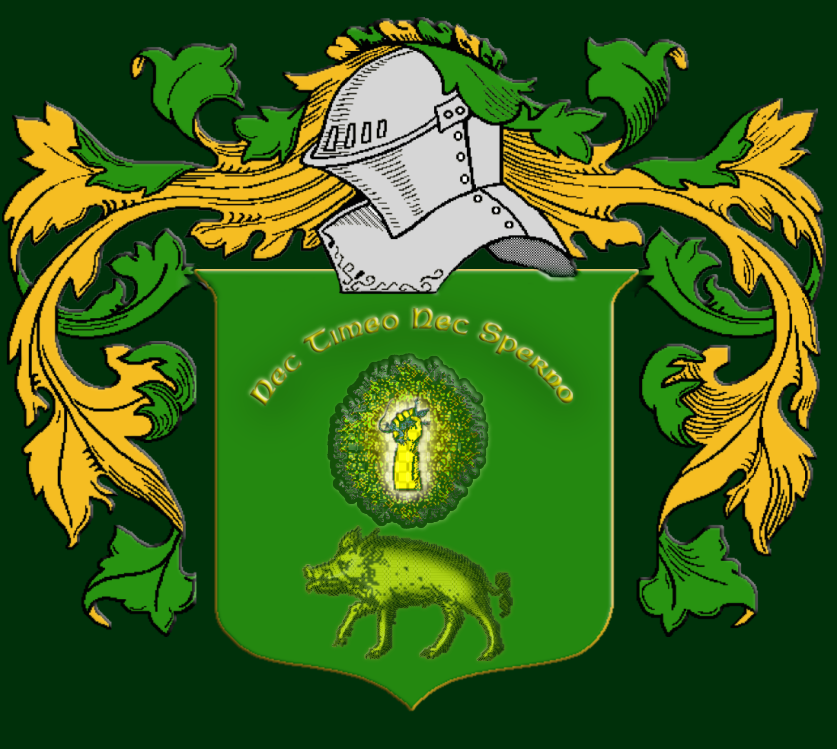
Count Redmond O'Hanlon (Irish: Réamonn Ó hAnluain), born approximately 1640 and killed April 25, 1681, was a seventeenth-century Irish tóraidhe or rapparee—terms referring to outlawed members of the Gaelic Irish nobility who had been dispossessed of their ancestral lands and titles by English colonization but who refused to submit to the new colonial order, instead turning to armed resistance, banditry, and guerrilla warfare against the English authorities and settlers who had usurped their traditional positions. O'Hanlon represented a particular type of Irish outlaw: a member of the ancient Gaelic nobility who, despite being officially stripped of legal status and property by the English conquest, continued to hold to the traditional code of conduct expected of Irish clan chiefs, including the obligation to protect their people, maintain their honor through martial prowess, and resist illegitimate authority that had seized power through conquest rather than earning it through the traditional Gaelic systems of kinship, loyalty, and demonstrated leadership. O'Hanlon's family background situated him within the traditional Irish aristocracy that had ruled Ulster for centuries before English colonization disrupted the Gaelic social and political order.
The O'Hanlon clan had been powerful chiefs in County Armagh, but like many Irish noble families, they lost their lands and status during the systematic English plantation schemes and land confiscations of the seventeenth century, which aimed to replace the Catholic Gaelic Irish elite with Protestant English and Scottish settlers loyal to the English crown. Rather than accepting this displacement and disappearing into poverty or exile, Redmond O'Hanlon took to the mountains and forests of Ulster, gathering followers and conducting a campaign of robbery, ambush, and resistance against the colonial authorities and Protestant settlers who had taken Irish lands. Operating primarily in the rugged terrain of south Ulster during the 1670s, O'Hanlon established himself as the most famous Irish outlaw of his era, leading a band of dispossessed Irish men who raided English settlements, robbed wealthy travelers, extracted "protection money" from those who paid him not to attack them, and generally made himself a persistent thorn in the side of English colonial administration.
Like other social bandits throughout history, O'Hanlon cultivated a Robin Hood-like reputation, claiming to rob primarily from the English colonizers and Protestant settlers who had stolen Irish lands, while protecting Catholic Irish peasants from excessive exploitation—though the historical reality was likely more complex and morally ambiguous than this romanticized image suggests. Nevertheless, among the displaced and oppressed Irish Catholic population, O'Hanlon became a folk hero who represented resistance to English oppression and embodied the hope that the old Gaelic order might yet be restored or avenged. O'Hanlon's career as an outlaw ended violently on April 25, 1681, when he was killed—according to most accounts, betrayed by his own foster brother Art O'Hanlon, who murdered him for the substantial reward the English authorities had placed on Redmond's head.
This betrayal by a close kinsman, which violated the deepest bonds of loyalty in Gaelic Irish culture where fosterage created obligations considered nearly as strong as blood kinship, added a layer of tragedy to O'Hanlon's story and made his death a tale not merely of English triumph over Irish resistance but of how colonial pressures and economic incentives could corrupt traditional Irish social bonds and turn Irishmen against each other. The English authorities displayed O'Hanlon's severed head publicly in various locations to demonstrate that even the most defiant Irish outlaw could be brought down and to discourage others from following his example. Historian John J.
Marshall has characterized Redmond O'Hanlon as Ireland's answer to Robin Hood and Rob Roy MacGregor, comparing him to the legendary English outlaw who robbed the rich to help the poor and to the Scottish Highland clan leader who became an outlaw and folk hero after being dispossessed and persecuted by more powerful enemies. This comparison situates O'Hanlon within the broader tradition of "social bandits"—outlaws who achieve heroic status in popular memory because they are perceived as fighting against unjust authority, protecting common people, and maintaining traditional values and social codes against oppressive modernizing or colonizing forces that seek to destroy older ways of life. The historian and artist Stephen Dunford has further elevated O'Hanlon's reputation by dubbing him "The Irish Skanderbeg," invoking the name of Gjergj Kastrioti Skanderbeg, the fifteenth-century Albanian nobleman and military commander who led a long and heroic resistance against the vastly more powerful Ottoman Empire, becoming Albania's greatest national hero and a symbol of Christian European resistance to Islamic expansion.
By comparing O'Hanlon to Skanderbeg, Dunford suggests that the Irish outlaw should be understood not merely as a bandit or criminal but as a patriotic resistance fighter who, despite operating on a much smaller scale than Skanderbeg, embodied similar qualities of courage, defiance against overwhelming odds, defense of his people and their traditional culture against foreign conquest, and willingness to sacrifice personal safety and ultimately his life in resistance to an empire that sought to subjugate and assimilate his nation. These comparisons to Robin Hood, Rob Roy, and Skanderbeg reflect how O'Hanlon has been remembered and mythologized in Irish historical consciousness and popular culture, where he serves as a symbol of Irish resistance to English colonialism, a representative of the dispossessed Gaelic nobility who refused to accept their subjugation, and an embodiment of the romantic but ultimately tragic struggle to preserve Irish independence, culture, and traditional social structures against the overwhelming military and economic power of English imperialism. His story has been told and retold in Irish folklore, ballads, historical writings, and popular culture, ensuring that Redmond O'Hanlon remains a recognized figure in Irish historical memory more than three centuries after his death, representing the enduring Irish cultural valorization of resistance, defiance, and refusal to submit to foreign domination even when victory is impossible and death is the inevitable outcome.