Popobawa
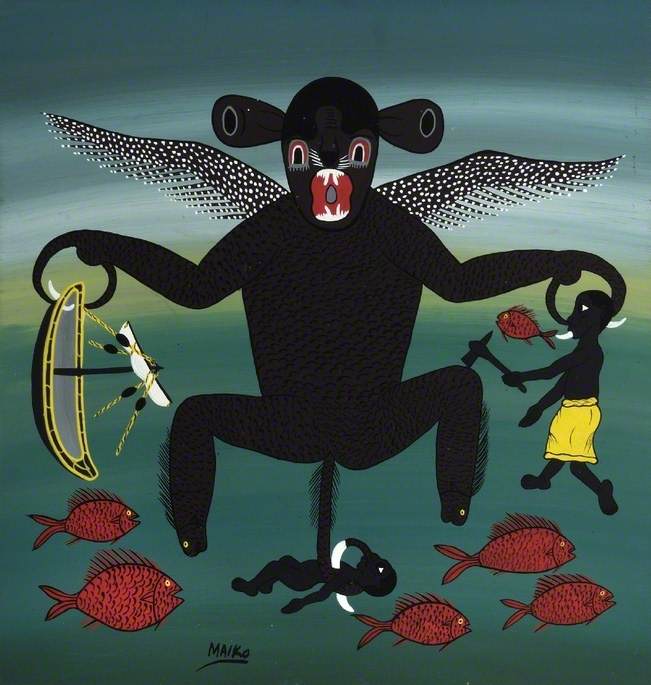
The Popobawa (Swahili for "bat-wing") was a malevolent and elusive shetani (spirit) of Zanzibari folklore, primarily believed to have originated on the Tanzanian island of Pemba in the mid-20th century. As a relatively recent addition to the East African supernatural canon, it attained profound notoriety during several outbreaks of mass hysteria, most significantly in 1995 when reports of the entity spread from the Zanzibar Archipelago to mainland urban centers like Dar es Salaam. The name Popobawa—derived from the Swahili words popo (bat) and bawa (wing)—refers not to a fixed physical form, but rather to the dark, bat-like shadow the spirit allegedly casts during its nocturnal visitations.
Despite the nomenclature, the entity is a notorious shapeshifter capable of manifesting as a human, an animal, or a chimeric hybrid, occasionally accompanied by a distinctive sulfurous odor.
The entity is defined by its terrifying nocturnal assaults on homesteads, where it is said to physically or sexually attack victims of any age or gender. A hallmark of the Popobawa mythos is the psychological demand it places upon its targets: victims are frequently urged to publicly disclose the details of their assault, under the threat that silence will invite a repeat visit from the spirit. This unique requirement for public acknowledgement often fuels widespread communal panic, leading residents to spend nights huddled together outside their homes around open fires to ward off the "Mapopobawa" (the plural form of the spirit).
These episodes of mass hysteria often peak during times of political or social tension, reinforcing the spirit's reputation as a harbinger of collective anxiety.
The origins of the Popobawa are frequently interpreted through both folkloric and sociological lenses. While one popular narrative suggests the spirit was a rogue jinn released by an embittered sheikh in the 1970s, historical records show the first sightings occurred around 1965, shortly after the Zanzibar Revolution. Anthropologists, such as David Parkin, have argued that the Popobawa serves as a modern articulation of "social memory," embodying the lingering trauma of the region's history with the Arab-run slave market and various colonial influences.
Whether viewed as a supernatural predator or a manifestation of historical trauma, the Popobawa remains a primary example of the "urban legend" motif, personifying the deep-seated fears and shifting social dynamics of the East African coast.