Panther
A panther is a creature from ancient legend and medieval bestiaries that resembles a large feline with a multicolored or dappled hide, quite distinct from the actual black leopards or jaguars that are called "panthers" in modern zoological terminology. This legendary panther represents one of the many fabulous beasts described in medieval European natural history texts that blended genuine observations of exotic animals with fantastical embellishments and allegorical Christian symbolism. According to medieval bestiary traditions and religious allegory, the panther possesses remarkable supernatural characteristics and follows a specific behavioral cycle.
After feasting on its prey, the panther retreats to sleep in a cave for exactly three days—a detail that medieval Christian interpreters understood as symbolic of Christ's three days in the tomb between crucifixion and resurrection. When this three-day period ends, the panther awakens and roars powerfully, simultaneously emitting an extraordinarily sweet-smelling odor or breath from its mouth. This miraculous fragrance draws in all creatures who smell it, irresistibly attracting them toward the panther; the only creature immune to this alluring scent is the dragon, which medieval bestiaries portrayed as the panther's natural enemy and the embodiment of evil (just as the dragon often symbolized Satan in Christian allegory).
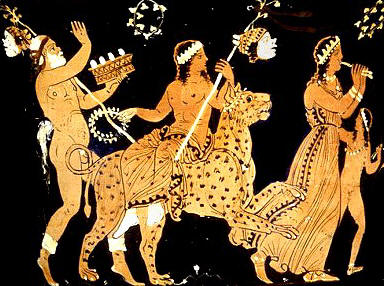
The attracted creatures are then consumed by the panther, and the entire cycle begins anew with another three-day sleep. This cyclical pattern was interpreted by medieval theologians as an allegory for Christ's resurrection drawing all believers to salvation, with only the devil (represented by the immune dragon) remaining hostile to the divine attraction. The ancient Greeks believed the panther was among the favored mounts of the god Dionysus (Bacchus in Roman mythology), the deity associated with wine, ecstasy, fertility, and wild nature.
This association linked the panther to divine mystery, transformation, and the untamed forces of nature that Dionysus embodied, and the panther frequently appears in classical Greek art accompanying Dionysus in his processions and revels. The legendary panther was known by various names across different languages and regional traditions, including pantera (Latin and Romance languages), pantere (Middle English and Old French variations), and love cervere, among other designations that reflected local linguistic adaptations and different manuscript traditions transmitting bestiary lore across medieval Europe. Although usually depicted as a type of large cat with distinctive multicolored spots or a dappled coat, the panther's appearance varied considerably across different artistic and textual traditions, and it was at times depicted in radically different forms that bore little resemblance to any actual feline.
Some medieval illustrations showed the panther as a donkey-like creature, while others portrayed it as a composite beast with a horned head, elongated neck, and horse's body, and still other representations gave it entirely different anatomical configurations combining features from multiple animals. The Greek word "panther" (πάνθηρ, panthēr) could be etymologically interpreted as deriving from "pan" (all, every) and "thēr" (wild beast), essentially meaning "every wild beast" or "all beasts," which some medieval scholars understood as supporting the notion that the panther was a composite creature incorporating elements from various animals rather than a single distinct species. These wildly varying depictions occurred primarily because medieval European artists and scribes genuinely did not know what a panther should actually look like, having never seen the real animals that lived in Africa and Asia, and were working from vague textual descriptions passed through multiple translations and cultural transmissions without access to direct observation or accurate illustrations.
However, in some instances, the unusual depictions resulted from deliberate cultural adaptations and heraldic conventions that transformed the legendary beast according to local artistic traditions and symbolic requirements. In Germany and Central European heraldic tradition particularly, the panther is characteristically depicted as a creature with four horns projecting from its head, cow-like ears, flames or fire emanating from its mouth and other orifices (representing the sweet-smelling breath of legend reinterpreted as visible flames), and a fiery red tongue. This distinctive Germanic heraldic panther became standardized in coats of arms and flags across German-speaking regions and their spheres of cultural influence.
An example of this heraldic tradition survives in the flag and coat of arms of the city of Cres in Croatia, which features a panther depicted according to Central European heraldic conventions rather than as a naturalistic feline, demonstrating how the legendary panther became embedded in civic identity and heraldic symbolism throughout medieval and early modern Europe, serving purposes far removed from zoological accuracy and instead functioning as a symbolic representation of power, divine favor, and cultural identity.