Omphalos of Delphi
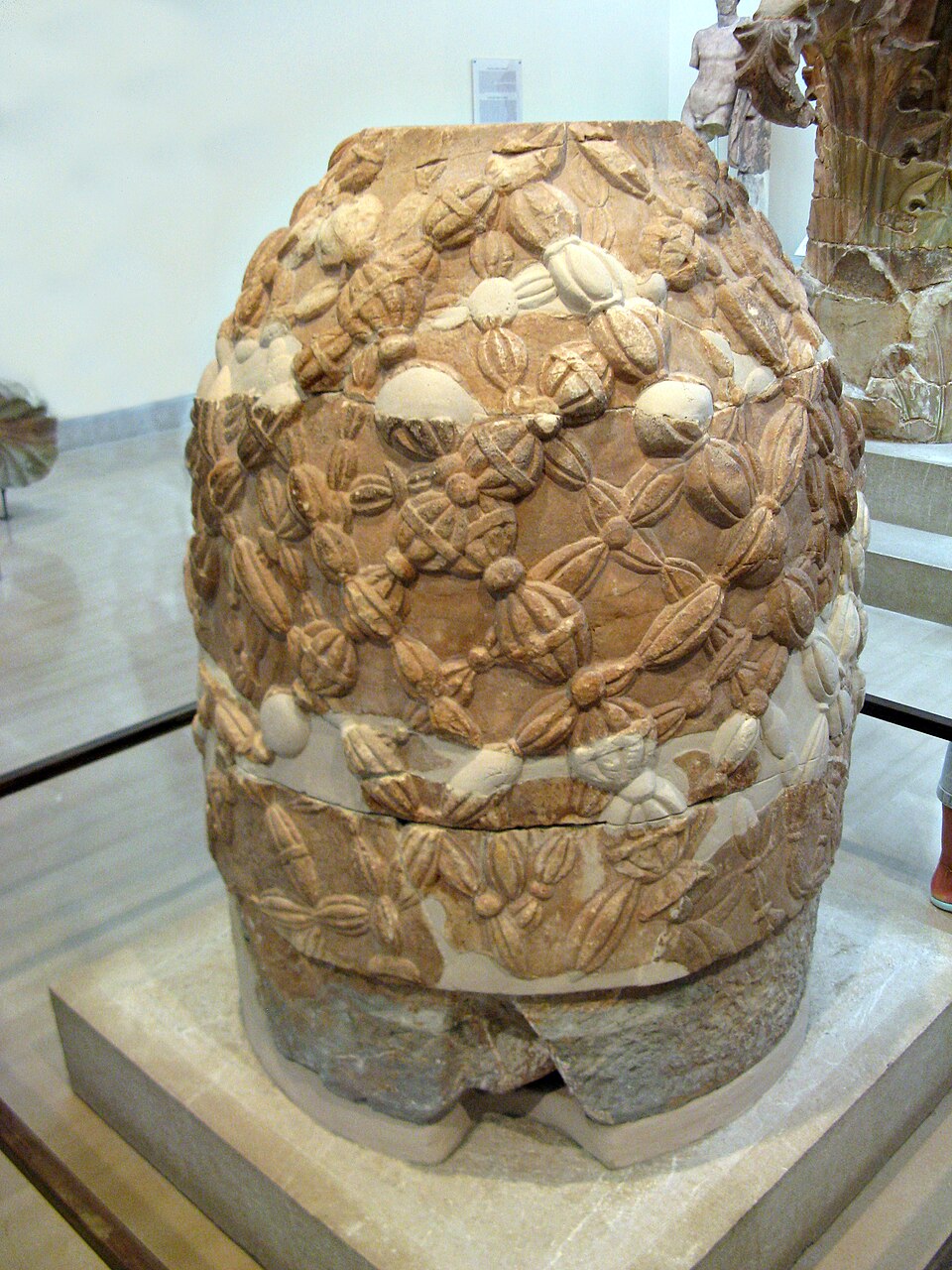
The Omphalos of Delphi is an ancient marble monument located at the archaeological site of Delphi in Greece, serving as a physical representation of the "navel of the Earth" and the cosmic center of the world. According to Ancient Greek mythology, Zeus discovered this location by releasing two eagles from opposite ends of the world and placing the stone at the exact point where their paths intersected. In his Theogony, the poet Hesiod identified this sacred object as the same stone that the goddess Rhea tricked Kronos into swallowing to save the infant Zeus, who later established it for veneration on the slopes of Mount Parnassus.
Historically kept in the adyton, or inner sanctum of the temple, the Omphalos was typically covered in a decorative woolen mesh and positioned alongside the god's other primary symbols: the sacred tripod and the daphne or bay leaves. Descriptions from the 2nd-century traveler Pausanias suggest the stone was an oval-shaped masterpiece decorated with high relief and crowned by two gilded eagles. Modern archaeological analysis by French researchers indicates that the Omphalos was likely interlocked with the Column of the Dancers, a significant Athenian votive offering where three priestess figures supported the stone atop a bronze tripod to honor the god of light.