Ninki Nanka
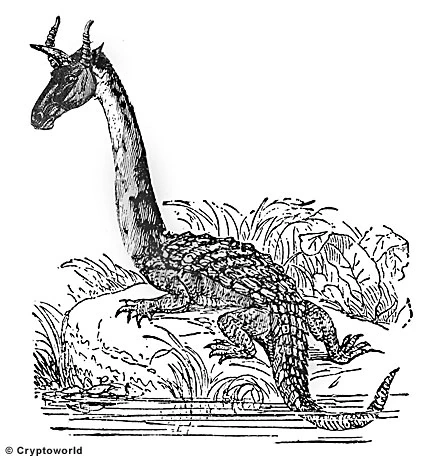
The Ninki Nanka was a formidable and preternaturally terrifying legendary creature of West African folklore, traditionally said to dwell within the swampy forests and fertile riverbanks of the lower Gambia. As a central figure in the spiritual landscape of the Mandinka (Mandingo) people, it was most famously depicted as a gargantuan, chimeric "Swamp Dragon" reaching lengths of nearly thirty feet, often rumored to possess the head of a crocodile, the long neck of a giraffe, and the body of a hippopotamus or horse. The origin of this monstrous entity is deeply rooted in the communal fears of the region; while its physical form is subject to tribal variation—sometimes described simply as a "crowned serpent" with three horns—the creature represents a "chief devil" whose very presence was believed to be a harbinger of approaching death.
This reputation was so pervasive that it effectively barred local residents from accessing vital resources in the marshes and creeks, as even a glimpse of the creature's body was said to invite dangerous sickness, while eye contact with its eyes or "crown" resulted in instantaneous demise.
According to local tradition, the Ninki Nanka possessed a fatal gaze akin to that of the classical Medusa, necessitating the use of mirrors to deflect its lethal sight and protect the traveler from the beast's "fatal stare." This supernatural power extended beyond individual harm to collective suffering, as the spirit was historically blamed for environmental catastrophes such as drought and famine, with many written records of historical disasters likely being interpreted through the lens of the Ninki Nanka's wrath. Within the framework of Mandingo belief, every village was seen as a site of tension between good and bad spirits, and the Ninki Nanka served as the ultimate personification of the "bad genie" inhabiting the thickest bush.
The enduring mystery of the creature led to a notable 2006 scientific expedition by the Centre for Fortean Zoology, where investigators gathered contemporary testimonies that likened the beast's appearance to that of a Chinese dragon, further complicating its morphological history. Whether viewed as a garbled account of undiscovered biological anomalies or a personification of the lethal dangers inherent in the West African wetlands, the Ninki Nanka persists as a primary example of the "deadly-gaze dragon" motif, representing the dangerous intersection of predatory wildlife and the ancient, chaotic spirits of the natural world.