Nguruvilu
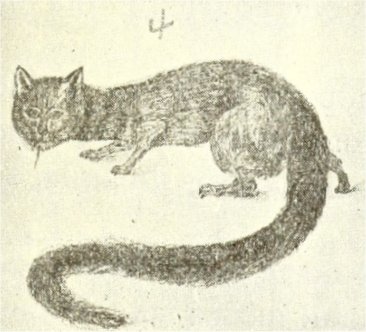
The Nguruvilu (also called Guruvilu, Guirivilu, Guirivilo, and other spellings, from Mapudungun ngürü “fox” and filu “snake”) is a mythical creature from the religion and folklore of the Mapuche people of Chile and Argentina. It is said to inhabit rivers and lakes, taking the form of a fox-headed serpent or sometimes a wildcat-headed beast with a long, fox-like body and serpent’s tail. The creature attacks people wading through water, snaring them with its long, clawed tail and dragging them beneath the surface, where it devours them or drinks their blood.
Early chroniclers reported conflicting descriptions. Some sources describe the Nguruvilu as a monster of enormous size, a serpent-bodied beast that terrified the Mapuche and made them avoid bathing in certain lakes. Others, like Joseph de La Porte (translated by Pedro Estala in 1798), suggested it resembled a swollen oxhide floating on the water, possibly confusing it with the “manta.” Juan Ignacio Molina later repeated this account, dismissing the creature as imaginary.
In contrast, ethnologist Tomás Guevara’s account (1908) describes the Nguruvilu as much smaller: a river beast with a cat-like head, a slender body, and an extremely long fox-like tail tipped with a sharp claw. It hid in still backwaters and channels, ambushing humans and animals and pulling them to the river bottom to feed.
Robert Lehmann-Nitsche (1902) recorded sayings and anecdotes about the “fox-viper” (zorro-víbora). One tale from Argentina tells of a man fording the Limay River who mocked the legend, only to lose his entire pack of horses to the creature, nearly dying himself. Informants compared its grip on victims to the way reins control a horse, sometimes killing the animal while sparing the rider, or vice versa. In some traditions, the Nguruvilu was thought to be a transformation of an evil spirit, a wekufe.
Stories place the Nguruvilu in many waters across southern Chile and Argentina. At Lake Aluminé in Neuquén Province, it was said to attack mounted travelers, coiling around the horse’s legs to drag both horse and rider under. Only a skilled swimmer armed with a knife could sever its grip.
Local lore also gave the creature other forms: in Coinco, villagers said it would retaliate violently if stoned; in Coihueco de Chillán, it was described with the body of a dog and a shivering habit whenever it left the water. Later sources depicted it with the face of a puma and a tail lined with claws. Folklorist Sperata R.
de Saunière noted that its life force resided in the tail, and in one tale a hero killed the monster by cutting off that vital appendage.
The Nguruvilu is also closely tied to whirlpools. Legends say the creature creates dangerous whirlpools that lure people to cross rivers at seemingly shallow points, only to pull them under. The only safe crossing is by boat. Rituals of worship and appeasement were sometimes performed to protect against the beast. Nahuelpi, an informant of Lehmann-Nitsche, described a ceremony involving the scattering of fermented wheat dough, the planting of spears, and even the sacrifice of a small white bull. To speak its name was taboo, so the creature was referred to as the “lord of the water.”
The Mapuche believed that only a powerful machi (shaman) or a benevolent kalku (sorcerer) could subdue the Nguruvilu. In these stories, the ritual specialist would dive into the whirlpool, wrestle the monster, and bring it to the surface. Holding a knife to its body, they would threaten to mutilate it unless it promised never to harm anyone again.
The Nguruvilu would then be released, and the waters would calm. The entire community was expected to witness the act, after which celebrations followed, and the river crossings became safe—at least until the creature moved downstream to trouble another people.
Some anthropologists believe the myth may have originated from sightings of real animals. Robert Lehmann-Nitsche suggested that the Nguruvilu was inspired by the marine otter (Lontra felina), whose elongated body and aquatic habits might easily have given rise to tales of a fox-serpent haunting rivers and lakes.