Mo’o
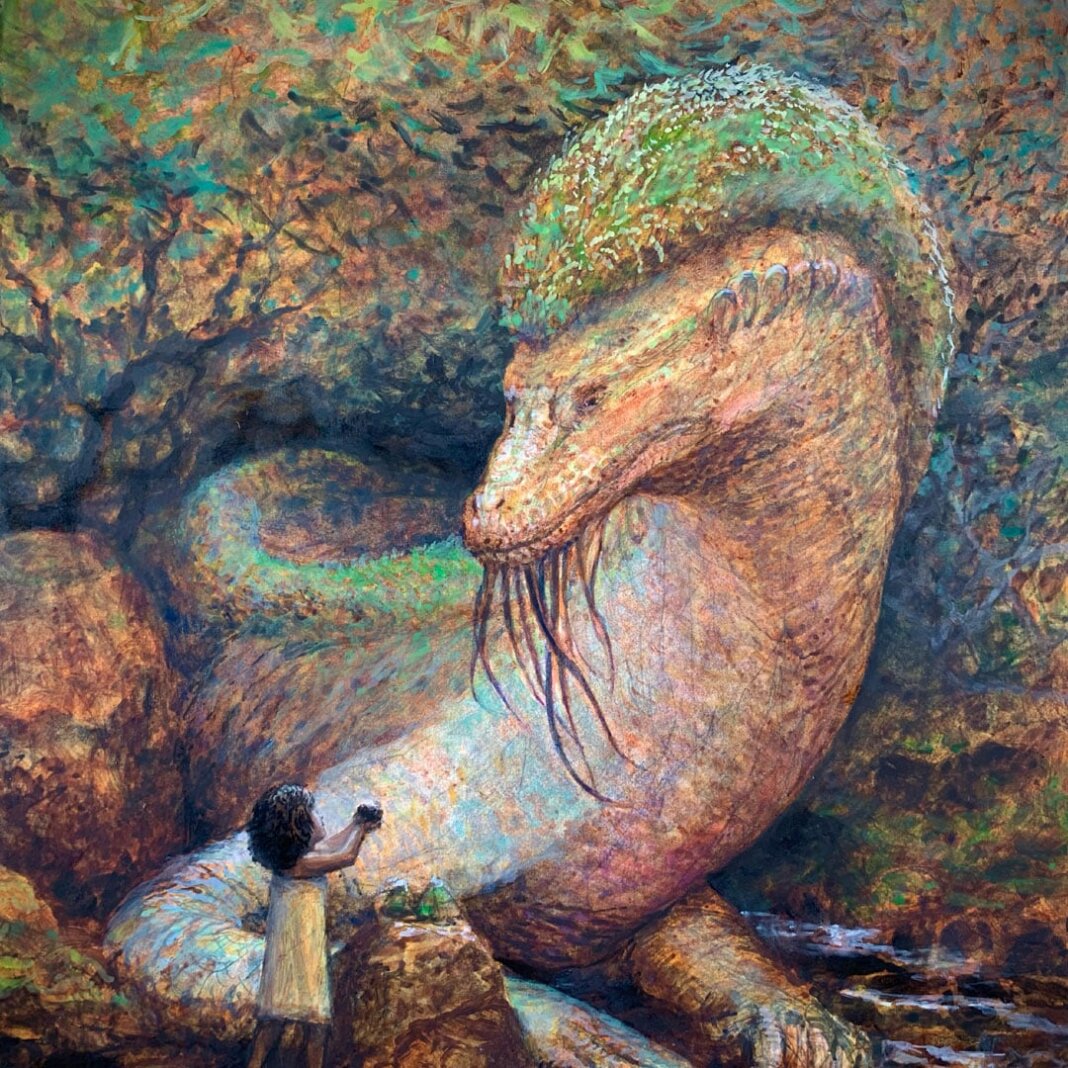
The Moʻo were formidable and revered shapeshifting lizard spirits of Hawaiian mythology, traditionally said to dwell within fishponds, deep pools, and the mist-shrouded valleys of the islands. As central figures in the spiritual landscape of Hawaii, they occupied a position of profound authority as ʻaumakua (ancestral guardians), possessing the power to control the weather and manipulate the flow of water. While predominantly depicted as female, the Moʻo were notorious for their mutability, capable of manifesting as tiny, inconspicuous geckos, beautiful human women, or gargantuan, monstrous reptiles.
The origin of these beings is deeply intertwined with the physical geography of the archipelago; legend maintains that when a Moʻo dies, its massive, petrified body is absorbed into the earth, forming the jagged ridges, cinder cones, and distinctive rock formations that define the Hawaiian landscape.
According to local tradition, the Moʻo served as both protective guardians and lethal predators, frequently testing the wits and spiritual power of the gods themselves. One of the most famous accounts involves Hiʻiaka, the younger sister of the volcano goddess Pele, who encountered the man-eating Moʻo Kikipua during her travels. In a primary example of the "deceptive bridge" motif, the creature transformed its long, slender tongue into a plank across an impassable ravine to lure travelers to their doom.
Hiʻiaka, recognizing the enchantment, used her magical pāʻū (skirt) to strike the spirit down, eventually petrifying the beast. Other legends, such as that of the moon goddess Hina and her battle with the giant serpent Moʻo Kuna, further emphasize this theme of petrification, as Hina utilized her divine power to turn her pursuer into the heavy stones that remain in the riverbeds to this day.
The influence of the Moʻo extended into the practical lives of the Hawaiian people, particularly through the figure of Kalamainuʻu. This spirit was said to have fallen in love with a young chief and subsequently used her powers to snare her treacherous cousins, who had transformed into hinalea (wrasse) fish to escape her. To this day, fishermen in Waialua, Oʻahu, continue to invoke her spirit to fill their woven traps, reflecting the enduring belief in the Moʻo as a patron of aquatic abundance.