Liu Bowen(劉基)
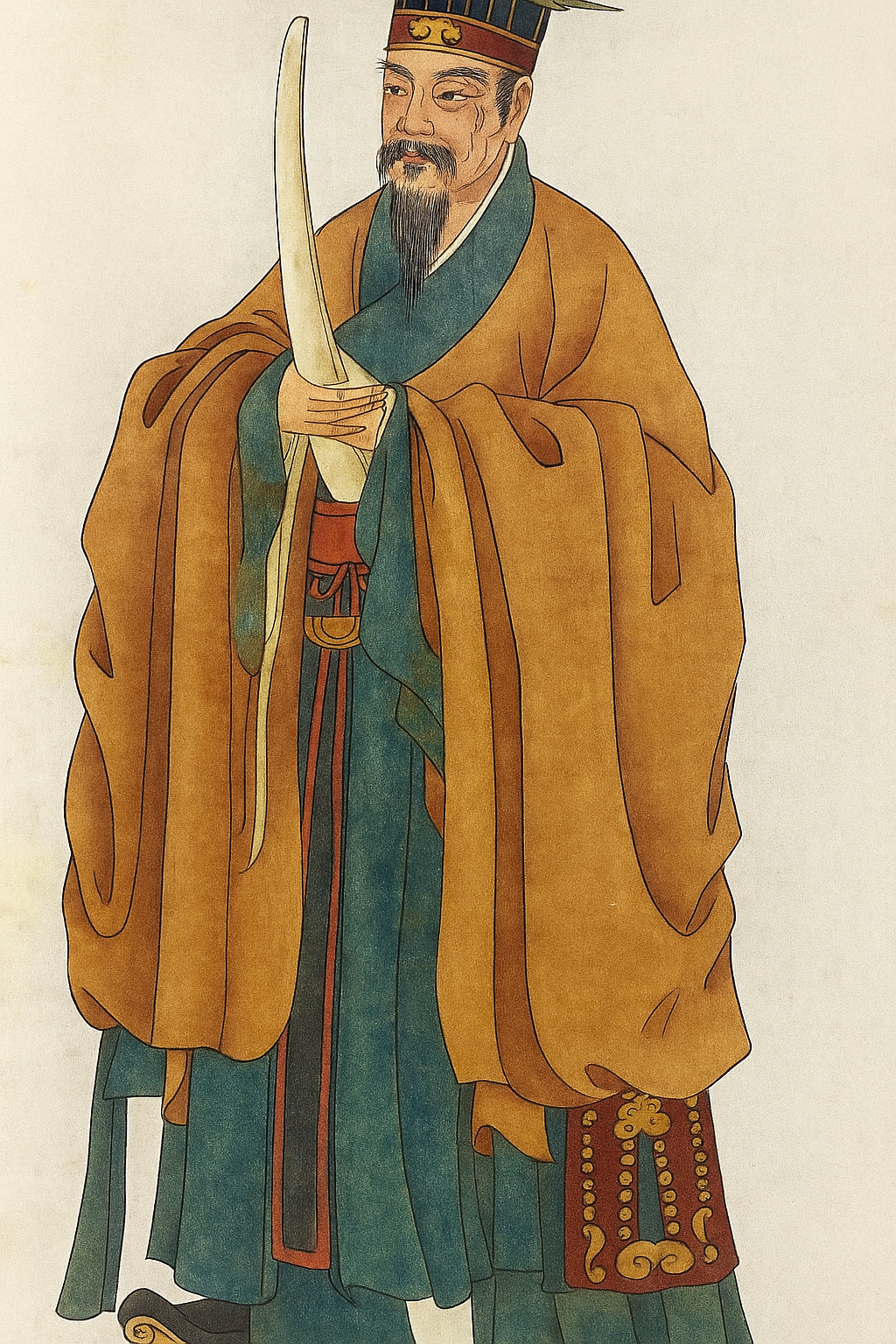
Liu Ji, born July 1, 1311, and deceased May 16, 1375, held the courtesy name Bowen and is more widely recognized as Liu Bowen. He served as a Chinese military strategist, philosopher, and politician during the transitional period between the late Yuan and early Ming dynasties. His birthplace was Qingtian County, located in present-day Wencheng County, Lishui, Zhejiang Province.
Liu functioned as a principal advisor to Zhu Yuanzhang, who became the Hongwu Emperor and founded the Ming dynasty. In this capacity, Liu played a crucial role in Zhu's campaign to overthrow the Yuan dynasty and consolidate control over China proper under unified rule. Beyond his military and political contributions, Liu gained renown for his prophetic writings and has been characterized as the "Divine Chinese Nostradamus" due to his alleged ability to foresee future events.
Additionally, he collaborated with Jiao Yu to co-edit the Huolongjing (Fire Dragon Manual), an important military treatise that documented gunpowder weapons and fire warfare techniques. During the early phase of Zhu Yuanzhang's rise to power, Liu Bowen provided essential strategic counsel that contributed significantly to the rebel leader's military successes and eventual establishment of the Ming dynasty. However, Liu's position at court became increasingly precarious due to political rivalries and factional conflicts.
He found himself embroiled in disputes with Li Shanchang and Hu Weiyong, two powerful figures in the early Ming administration who competed for influence and the emperor's favor. These adversaries worked to undermine Liu's standing, ultimately compelling him to resign from his official positions and withdraw from active political life. Before his departure from court, Liu issued a prescient warning to the Hongwu Emperor, cautioning that Hu Weiyong lacked the integrity and capability necessary for the position of prime minister and represented a potential threat to the dynasty's stability.
Liu Bowen died shortly after his resignation under circumstances that remain suspicious and have been the subject of historical speculation. Contemporary and later sources suggest he may have been poisoned, with suspicion falling on either the Hongwu Emperor himself or Hu Weiyong, or possibly both acting in concert. The political intrigue surrounding Liu's death became known as one of the Four Major Cases of the early Ming dynasty—a series of large-scale purges and political persecutions that characterized the Hongwu Emperor's increasingly paranoid and authoritarian rule.
These cases resulted in the execution of tens of thousands of officials and their associates as the emperor sought to eliminate perceived threats to his power. Liu's warnings about Hu Weiyong proved prophetic when Hu was later accused of treason and executed in 1380, five years after Liu's death, in what became the most extensive of the Four Major Cases. The circumstances of Liu Bowen's demise thus exemplify the dangerous political environment of the early Ming court, where even the most capable and loyal advisors could fall victim to imperial suspicion and factional rivalry.