Lion of Cithaeron
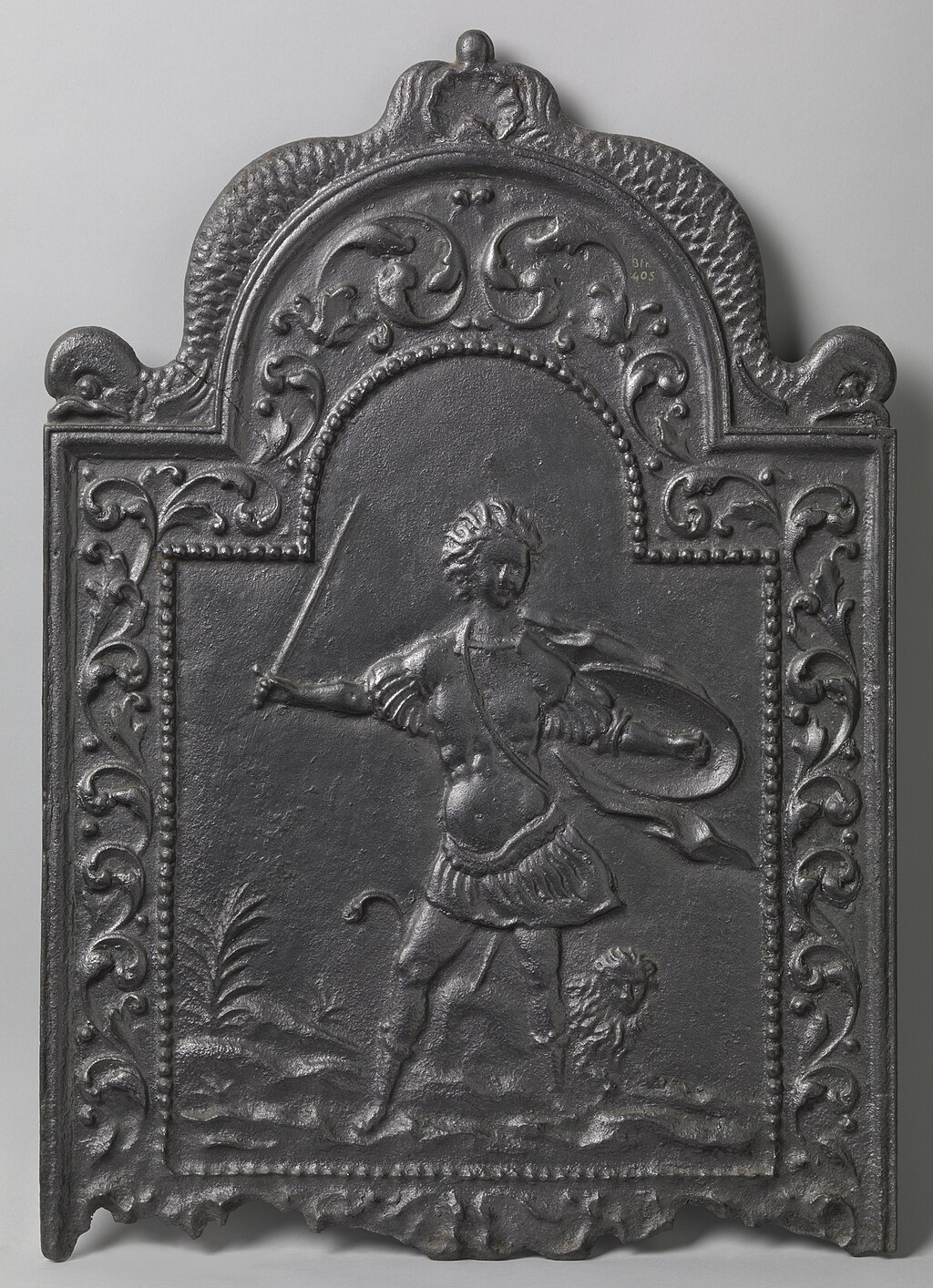
The Lion of Cithaeron (also called the Thespian Lion or the Ravine Lion) was a fearsome man-eating lion in Greek mythology that terrorized the lands ruled by King Amphitryon and King Thespius, or according to alternative traditions, the kingdom of King Megareus. Different mythological accounts attribute the lion's slaying to different heroes: some versions credit Heracles with killing the beast as one of his early exploits before achieving his greatest fame, while other traditions claim it was slain by Alcathous of Elis, demonstrating how Greek mythology often preserved competing local versions of the same story reflecting different regional pride in claiming heroic deeds for their own champions. According to the Suda, a massive tenth-century Byzantine encyclopedia preserving ancient Greek knowledge, the creature was known by several names including the Thespian Lion (after the city of Thespiae in its hunting territory) and the Ravine Lion (Ancient Greek: Χαραδραῖος λέων, Charadraios leōn).
This latter designation derived from the fact that the beast made its lair in a place called "Ravine" (Ancient Greek: χαράδρα, charadra)—a steep, narrow gorge or rocky defile that provided the lion with natural defensive advantages, allowing it to ambush prey and retreat to terrain where pursuers would struggle to follow, making the creature particularly difficult to hunt and explaining why it remained a menace for an extended period despite being actively hunted by the kingdoms it threatened. One detailed account of the myth, recorded by the Hellenistic scholar Apollodorus in his comprehensive mythological compendium the Bibliotheca (Library), states that the lion descended from Mount Cithaeron—a mountain range separating Boeotia from Attica and Megaris—to systematically hunt and devour the cattle belonging to King Amphitryon (the mortal stepfather who raised Heracles) and King Thespius of the city of Thespiae. These cattle raids represented not merely animal predation but serious economic and political threats, as livestock constituted major wealth in the ancient agrarian economy and the kings' inability to protect their herds from the lion undermined their authority and prestige.
When Heracles reached eighteen years of age—the threshold of manhood in Greek culture when young men were expected to prove themselves through martial exploits—King Thespius appealed to the young hero to undertake the dangerous task of hunting and killing the marauding lion, recognizing that Heracles possessed the extraordinary strength and courage necessary for such a formidable challenge. The hunt proved lengthy and arduous, requiring fifty days of tracking, stalking, and confronting the cunning and powerful beast before Heracles finally succeeded in killing it. Throughout this extended period, King Thespius hosted Heracles in his palace, providing hospitality that went beyond normal guest-friendship obligations: according to the myth (which contains obvious folkloric elements of wish-fulfillment and exaggeration), each night of the fifty-day hunt, Heracles slept with a different one of Thespius's fifty daughters, who the king deliberately sent to the hero's bed.
This arrangement served Thespius's dynastic interests, as he hoped that Heracles—already demonstrating heroic potential—would father grandsons who would inherit the demigod's supernatural strength and abilities. The resulting fifty sons born from these unions later accompanied Heracles on some of his adventures and established colonies, spreading Heraclean bloodlines across the Greek world. After Heracles finally slew the Cithaeronian Lion through his characteristic combination of strength, persistence, and direct confrontation, he performed an act that would become one of his most recognizable attributes: he skinned the dead lion and fashioned its hide into a cloak or mantle that he wore for the rest of his life, and he used the lion's scalp as a helmet, with the lion's head covering his own head and the jaw serving as a crest.
This lion-skin became Heracles' signature iconographic feature in Greek art and literature, immediately identifying him in visual representations and symbolizing both his victory over savage nature and his own semi-bestial, superhuman strength. According to the Suda's chronology, this exploit occurred near Thespiae before Heracles killed the even more famous Nemean Lion as his first canonical labor, establishing the Cithaeronian Lion as an early proving ground for the hero before he achieved full legendary status. However, an entirely different tradition preserved by the geographer and travel writer Pausanias, writing in the second century CE based on information he gathered during his extensive travels through Greece, records that the Megarians—inhabitants of the city-state of Megara—possessed their own competing version of the myth in which the hero was not Heracles but rather Alcathous.
According to this Megarian tradition, the Cithaeronian Lion had killed numerous people in their territory, including victims of particularly high status and emotional significance: among the dead was Euippus, the beloved son of King Megareus himself. The loss of the royal heir to this monstrous predator created both personal grief and political crisis, as it left the succession uncertain and demonstrated the king's inability to protect even his own family from the beast's depredations. In his desperation to rid his kingdom of this menace and his desire to find a worthy successor now that his son was dead, King Megareus made a public proclamation offering extraordinary rewards to whoever could accomplish what his own warriors had failed to do: he promised that the man who killed the Cithaeronian Lion would receive both his daughter's hand in marriage (making the hero son-in-law to the king) and the right to inherit the throne of Megara itself (making him the next king).
These combined incentives—royal marriage, political power, and the glory of slaying a notorious monster—attracted numerous ambitious heroes, but it was Alcathous of Elis who succeeded where others had failed. After tracking down and killing the lion in a feat that required courage, skill, and perhaps divine favor, Alcathous claimed his promised rewards, marrying Megareus's daughter and eventually inheriting the kingdom as the new king of Megara. As king, Alcathous demonstrated his piety and gratitude to the deities who had aided his victory by building temples dedicated to Artemis Agrotera (the Huntress) (Ancient Greek: Ἀγροτέραν Ἄρτεμιν) and Apollo Agraeus (the Hunter) (Ancient Greek: Ἀπόλλωνα Ἀγραῖον)—divine twins associated with hunting, archery, wilderness mastery, and the successful pursuit of dangerous prey.
These temples served multiple functions: they fulfilled religious obligations of thanksgiving to the gods whose assistance had enabled Alcathous's victory, they established his legitimacy as king through conspicuous displays of piety and proper relationship with the divine, and they commemorated his defining heroic deed that had won him the throne, ensuring that future generations of Megarians would remember their king as the lion-slayer who had saved the city from a terrible scourge. The existence of these two competing traditions—one crediting Heracles and preserved in pan-Hellenic sources, the other crediting Alcathous and maintained particularly in Megara—reflects the complex, localized nature of Greek mythology, where different city-states often claimed their own local heroes had performed deeds that other cities attributed to more famous pan-Hellenic figures like Heracles. Such competing claims represented assertions of civic pride and local identity, allowing smaller cities like Megara to maintain their own heroic traditions and resist the cultural hegemony of stories centered on heroes from more powerful city-states.
The Cithaeronian Lion thus served as a mythological site of contestation where different Greek communities negotiated their relationships to heroic tradition, each version of the story serving the ideological needs of the community that preserved it.