Laestrygonians
In Greek mythology, the Laestrygonians (Greek: Λαιστρυγόνες) were a tribe of cannibalistic giants believed to descend from Laestrygon, a son of Poseidon. Ancient sources disagree on their exact location. Thucydides and Polybius placed them in southeast Sicily, while Pliny the Elder situated them "in the very centre of the earth, in Italy and Sicily." Their name bears resemblance to the Lestriconi, a group within the Corsi people from northeastern Sardinia (modern-day Gallura).
The Laestrygonians appear in Homer's Odyssey during Odysseus's voyage home to Ithaca. His fleet of twelve ships arrived at their rocky stronghold of Telepylus, the city of Lamos. This land was peculiar—workers could earn double wages by laboring both day and night as herdsmen and shepherds.
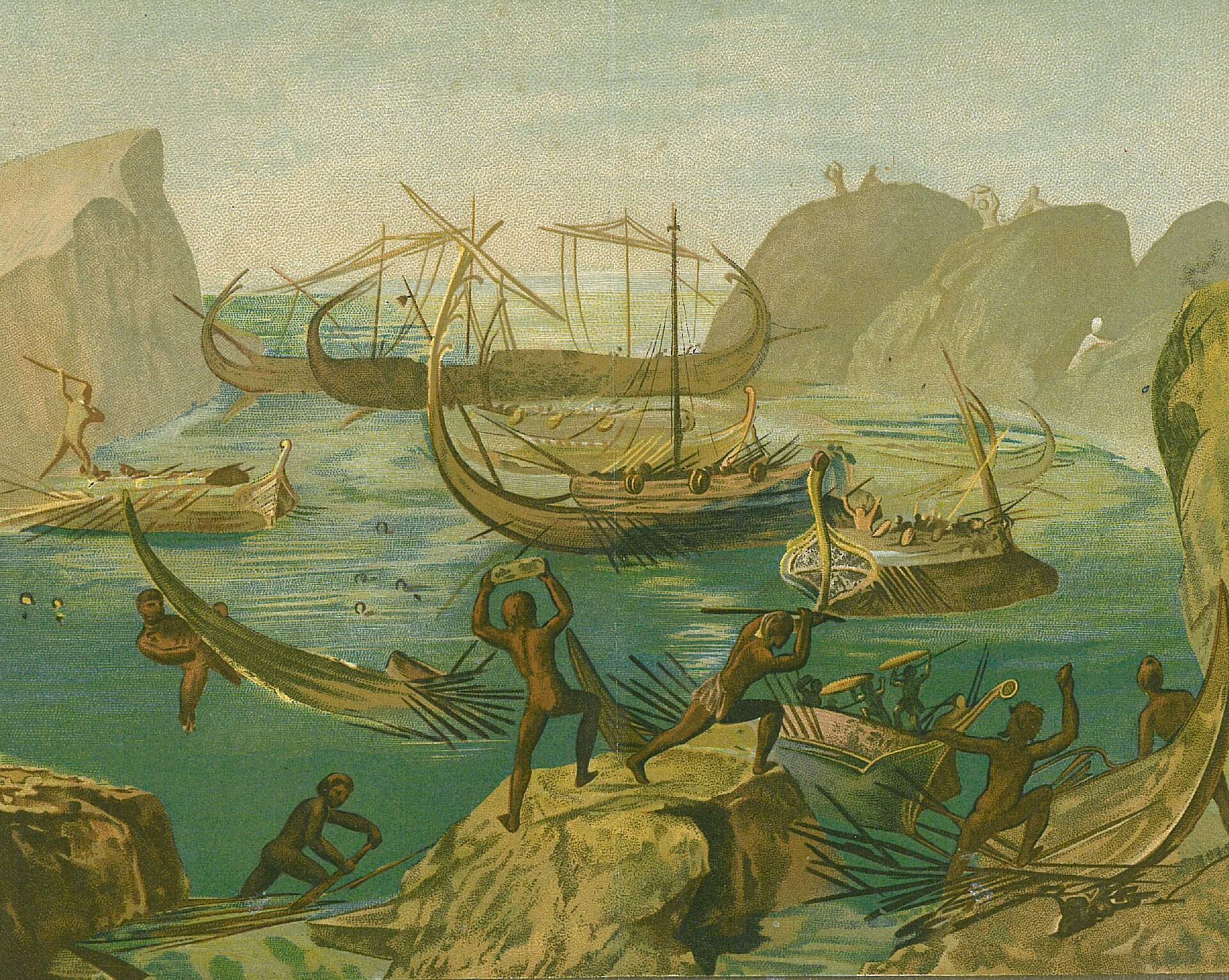
The fleet entered a harbor enclosed by steep cliffs with a narrow entrance between two headlands. Most captains moored their vessels close together in the calm waters inside, but Odysseus anchored his ship outside the harbor. After scouting from a high vantage point and seeing only smoke, he sent three men to investigate the inhabitants.
The scouting party met a young woman fetching water from the Fountain of Artakia, who identified herself as the daughter of King Antiphates and directed them to his dwelling. Inside, they encountered the king's wife, a woman of enormous size, who summoned her husband. Antiphates seized one of the men and devoured him immediately.
The survivors fled, but the king summoned his people—thousands of giant or extraordinarily large Laestrygonians—who hurled massive boulders from the cliffs, destroying eleven ships and spearing the sailors like fish. Only Odysseus's vessel escaped, as it remained outside the trapped harbor. The survivors then sailed to Aeaea, home of the sorceress Circe.
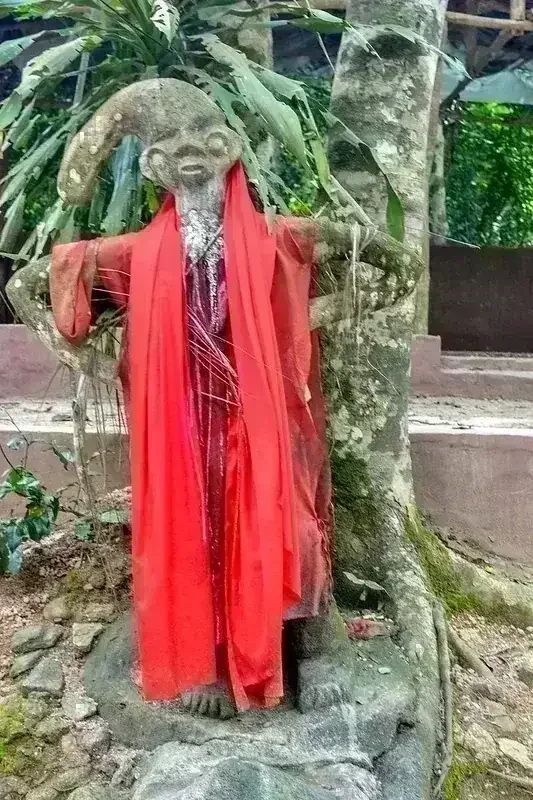
Historian Angelo Paratico has suggested the Laestrygonian legend may have originated from Greek sailors' encounters with the Giants of Mont'e Prama, monumental statues recently unearthed in Sardinia. Later Greek tradition held that both the Laestrygonians and Cyclopes once dwelt in Sicily.