Koxinga(鄭成功)
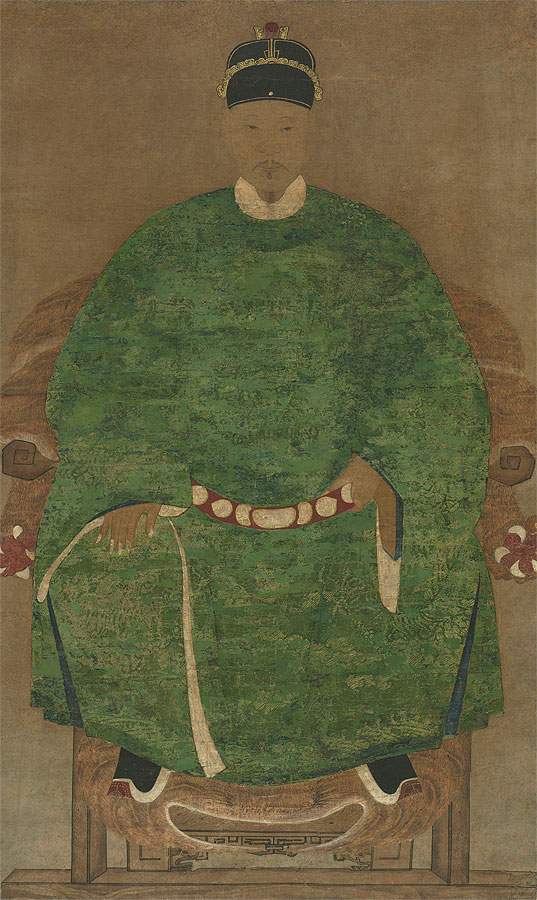
Zheng Chenggong (Chinese: 鄭成功; pinyin: Zhèng Chénggōng; Pe̍h-ōe-jī: Tēⁿ Sêng-kong; August 27, 1624 – June 23, 1662), born Zheng Sen (鄭森) and better known internationally by his honorific title Koxinga (國姓爺, literally "Lord of the Imperial Surname"), was a Southern Ming general and military leader who conducted determined resistance against the Qing conquest of China during the seventeenth century and achieved lasting fame by expelling the Dutch colonial forces from Taiwan, subsequently founding the Kingdom of Tungning. His achievements made him a legendary figure in Chinese history, revered as a symbol of loyalty to the fallen Ming dynasty and celebrated as the founder of sustained Chinese settlement and governance on Taiwan, fundamentally shaping the island's subsequent history and establishing the foundation for Chinese claims to Taiwan that persist to the present day. Born in Hirado, Japan, to a Chinese merchant-pirate father, Zheng Zhilong, and a Japanese mother, Tagawa Matsu, Zheng Chenggong embodied the cosmopolitan maritime culture of East Asian trade networks in the early modern period.
Despite his mixed heritage, he identified primarily with his Chinese ancestry and rose through the Ming imperial bureaucracy via the competitive examination system that had served as the empire's elite recruitment mechanism for centuries. He was serving as a Guozijian scholar (a student at the imperial academy) in Nanjing when the Ming capital Beijing fell to peasant rebels led by Li Zicheng in 1644, an event that precipitated the dynasty's collapse and the subsequent Manchu Qing conquest. In the chaos following Beijing's fall and the Manchu invasion from the north, several Ming princes established competing courts in southern China, attempting to preserve the dynasty and organize resistance against the Qing.
Zheng Chenggong swore allegiance to the Longwu Emperor, one of these Southern Ming claimants who established his court in Fujian Province. The Longwu Emperor, recognizing Zheng's capabilities, loyalty, and potential value as a military commander, bestowed exceptional favor upon him by granting him the imperial surname Zhu in 1645—an extraordinary honor that signified quasi-adoption into the imperial family and marked Zheng as someone the emperor viewed almost as a son. Zheng wore this honor proudly and insisted on using the granted surname Zhu rather than his native Zheng surname for the remainder of his life, which generated his famous honorific title "Koxinga" (Guoxingye, meaning "Lord of the Imperial Surname"), by which he became known throughout the maritime regions of East Asia and in European accounts.
As the Qing systematically conquered southern China and eliminated the various Southern Ming courts one by one, Zheng Chenggong emerged as one of the most formidable and persistent Ming loyalist commanders, refusing to submit to Qing authority despite the increasingly hopeless strategic situation. In recognition of his unwavering loyalty and his numerous military campaigns against Qing forces, the Yongli Emperor—another Southern Ming claimant who represented the last substantial Ming resistance—granted Zheng the noble title Prince of Yanping (延平王) in 1655, further elevating his status and authority within the remnant Ming political structure. Zheng Chenggong became best known to history for his decisive defeat of the Dutch East India Company (VOC), which had established a colonial presence on Taiwan beginning in 1624 and had built substantial fortifications, most notably Fort Zeelandia near present-day Tainan.
The Dutch had been interfering with and raiding Zheng's maritime supply lines—which were crucial to sustaining his military operations along the Chinese coast—and collecting customs duties that Zheng viewed as rightfully his. Moreover, Taiwan represented a strategically valuable base that could serve as a secure rear area for continued resistance against the Qing, who were consolidating control over the Chinese mainland. In 1661, Zheng launched a major amphibious invasion of Taiwan with a substantial fleet and army.
After a prolonged siege lasting nearly a year, he forced the surrender of Fort Zeelandia in February 1662, compelling the Dutch governor Frederick Coyett to capitulate and abandon the colony. This victory expelled European colonial power from Taiwan and established Zheng's control over the island. He promptly founded the Kingdom of Tungning, creating a Ming loyalist state on Taiwan that continued to exist as the last bastion of Ming resistance until 1683, when Zheng's grandson finally surrendered to Qing forces two decades after Koxinga's death.
Zheng's conquest of Taiwan had profound and lasting historical consequences. He brought substantial Chinese migration to the island, established Chinese administrative structures, and began the process of agricultural development and cultural sinification that would fundamentally transform Taiwan from a frontier region inhabited primarily by indigenous Austronesian peoples into a predominantly Chinese society. His actions established the foundation for all subsequent Chinese claims to sovereignty over Taiwan, making him a figure of enormous symbolic importance in modern political disputes regarding the island's status.
After defeating the Dutch, Zheng Chenggong began planning his next military venture: an invasion of Luzon in the Spanish-controlled Philippines. This campaign was motivated partly by strategic considerations—extending his maritime power throughout Southeast Asia—and partly by desires for retaliation against Spanish colonial authorities for the Fourth Sangley Massacre, in which Spanish forces in Manila had slaughtered thousands of ethnic Chinese residents (called "Sangleys" in Spanish colonial terminology) in 1662, one of several periodic massacres of the Chinese merchant community that characterized Spanish rule in the Philippines. However, Zheng died suddenly on June 23, 1662, at only thirty-seven years of age, before he could execute this planned invasion.
The exact cause of his death remains disputed by historians—some sources suggest illness (possibly malaria or another tropical disease), while others hint at possible poisoning or the stress and exhaustion from his relentless military campaigns. Despite his relatively short life and the ultimate failure of Ming restoration, Zheng Chenggong became one of the most celebrated heroes in Chinese history and culture. In mainland China, he is revered as a symbol of resistance against foreign conquest and unwavering loyalty to legitimate authority, embodying Confucian virtues of righteousness and devotion.
In Taiwan, he occupies an even more central position as the founding figure who established lasting Chinese settlement and governance on the island, with countless temples, statues, streets, and institutions bearing his name. His complex legacy—as Ming loyalist, anti-Qing resistance leader, pirate-merchant, defeater of European colonialism, and founder of Chinese Taiwan—continues to resonate across different political communities who claim his memory for various purposes, making him a contested historical figure whose significance extends far beyond his seventeenth-century military campaigns into contemporary debates about Chinese identity, legitimacy, and Taiwan's political status.