Kapre
Towering within the ancient canopies of the Philippine archipelago, the Kapre is a legendary tree giant characterized by its formidable height, dark complexion, and perpetual cigar smoking. Standing between 7 and 9 feet tall, this hairy and muscular entity is a staple of local folklore, often depicted perched atop the massive branches of acacia, mango, or balete (banyan) trees. Unlike the more predatory beings found in the aswang category of spirits, the Kapre is generally viewed as a neutral or even benevolent figure, though its presence is unmistakably marked by a pungent body odor and the lingering scent of burning tobacco.The term "Kapre" is deeply rooted in the colonial and linguistic history of the Philippines.
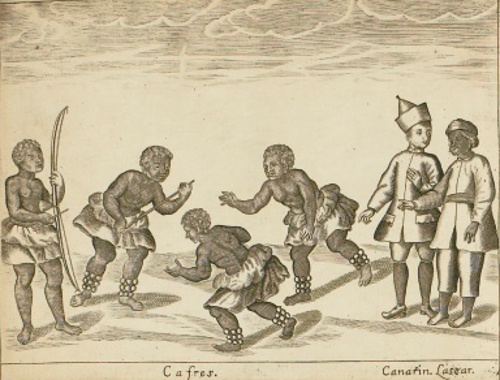
It is derived from the Arabic kafir (via the Spanish cafre), a term originally meaning "non-believer." During the Spanish colonial period, the term was utilized by colonizers to describe dark-skinned indigenous groups, specifically the Negrito ethnic groups like the Aeta, as well as Papuan slaves brought to the islands by the Portuguese. This historical connection is preserved in the synonym agtà, which remains another name for the Aeta people. Over centuries, these formerly racially prejudiced portrayals by lowland Christianized groups evolved into the modern mythical characterization of a supernatural tree-dweller.
Early historical attestations, such as those by Antonio Pigafetta during the Magellan expedition, described indigenous groups with features that would eventually be absorbed into Kapre lore, including dark skin, barkcloth attire, and gold-ornamented weapons.The Kapre is traditionally depicted wearing an indigenous Northern Philippine loincloth known as a bahag. In many accounts, the creature possesses a magical belt that allows it to remain invisible to human eyes at will. Central to its mythos is a magical white stone, slightly smaller than a quail egg, which the Kapre is said to hold.
Legend dictates that any individual who manages to obtain this stone will find the Kapre in their debt, forcing the giant to grant their wishes. While primarily nocturnal and omnivorous, the Kapre is not inherently evil; however, it is known to become vengeful and destructive if its home tree is cut down or disturbed.
Interactions between humans and Kapres are typically characterized by mischief and disorientation rather than violence. The creature is famous for playing pranks on travelers, causing them to become lost in the woods or even confused within their own gardens. Physical signs of a Kapre's presence include:
Rustling branches in the absence of wind.
Booming, unseen laughter echoing from the forest canopy.
Glowing red eyes visible high in the trees at night.
Abundant fireflies, which are often interpreted as the glowing embers from the Kapre's cigar or pipe.
On occasion, a Kapre may seek out human friendship or even develop a romantic attraction toward a woman. If a Kapre "befriends" a human, it may follow its interest throughout their life, though its overwhelming "negative aura" can make the experience taxing for the human involved. According to lore, those who are befriended by a Kapre gain the ability to see the entity clearly, and if they sit upon the giant's lap, that visibility is extended to any other onlookers as well.