John of Bohemia
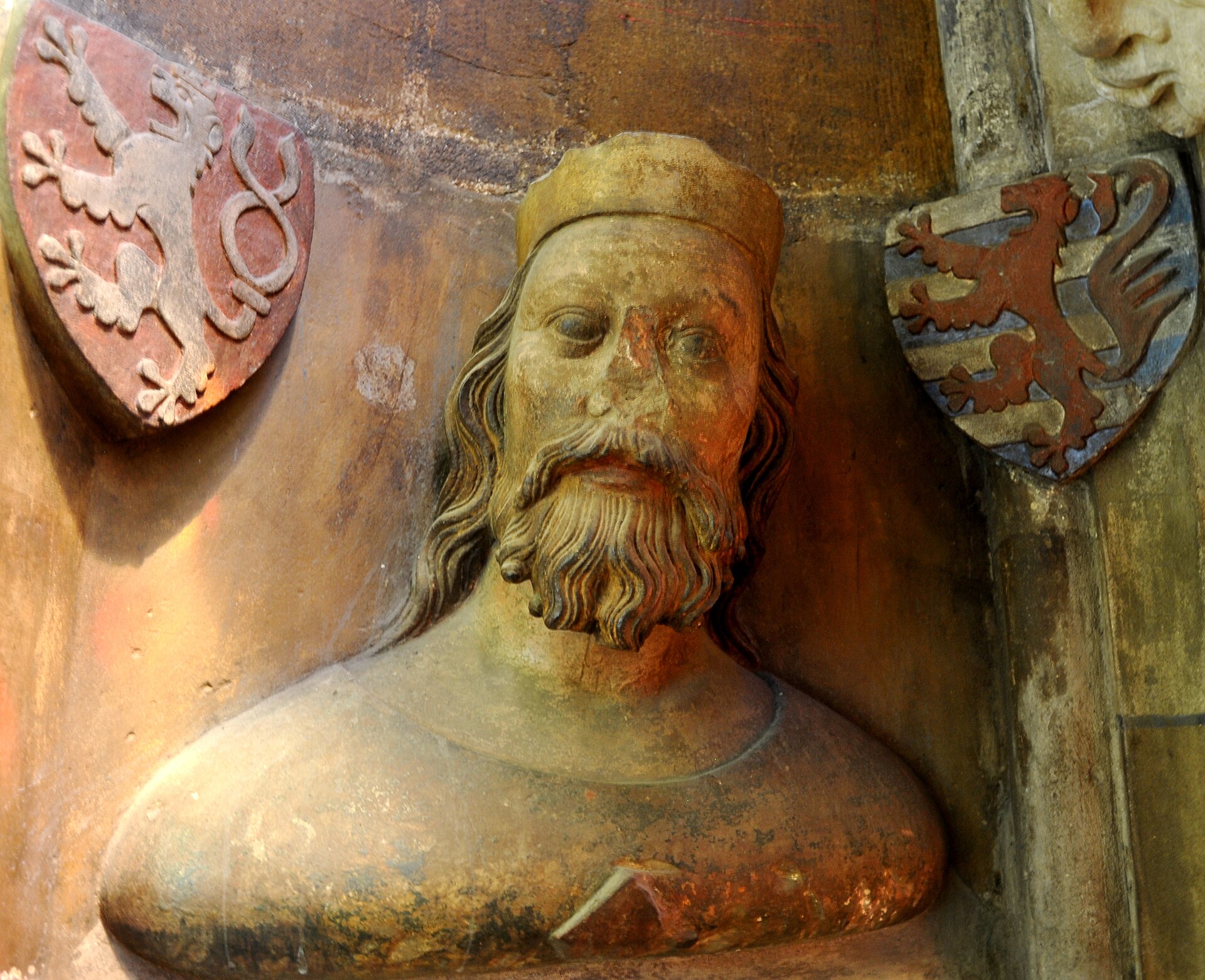
John of Bohemia, also known as John the Blind or John of Luxembourg (rendered in Luxembourgish as Jang de Blannen, German as Johann der Blinde, and Czech as Jan Lucemburský), was born on August 10, 1296, and died on August 26, 1346. He held the position of Count of Luxembourg from 1313 and ruled as King of Bohemia from 1310, while also claiming the titular kingship of Poland. His life concluded dramatically and heroically at the Battle of Crécy, where he perished in combat at age 50 despite having lost his sight a decade earlier.
This remarkable final act of valor has secured his legendary status, particularly in Luxembourg, where he is venerated as a national hero and remains deeply embedded in the country's historical consciousness and cultural identity. John's legacy varies significantly across the regions he governed. In Luxembourg, his reputation as a heroic figure stems not only from his courageous death at Crécy but also from his role in elevating Luxembourg's prominence during the medieval period.
His willingness to charge into battle despite his blindness exemplifies the chivalric ideals of medieval knighthood and has made him an enduring symbol of courage and devotion to duty. The circumstances of his death—whereby he reportedly instructed his knights to tie their horses to his so he could ride into combat one final time—have become the stuff of legend and continue to inspire admiration centuries later. In contrast, within the Czech Republic, which encompasses the historical Kingdom of Bohemia, John is frequently remembered less for his own accomplishments and more for his role as the father of Charles IV, who became Holy Roman Emperor.
Charles IV ranks among the most distinguished Kings of Bohemia and stands as one of the preeminent Holy Roman Emperors in history. Under Charles IV's reign, Prague flourished as a cultural and political center of medieval Europe, and he oversaw the founding of Charles University, the construction of the Charles Bridge, and the expansion of Prague Castle. While John of Bohemia's own reign in Bohemia was marked by frequent absences as he pursued military campaigns and political interests across Europe, his marriage and the resultant birth of Charles IV ensured that the Luxembourg dynasty would achieve its greatest heights through his son's remarkable achievements.
Thus, in Czech historical memory, John's significance often derives from his dynastic contribution rather than his direct governance of Bohemia.