Joan of Arc
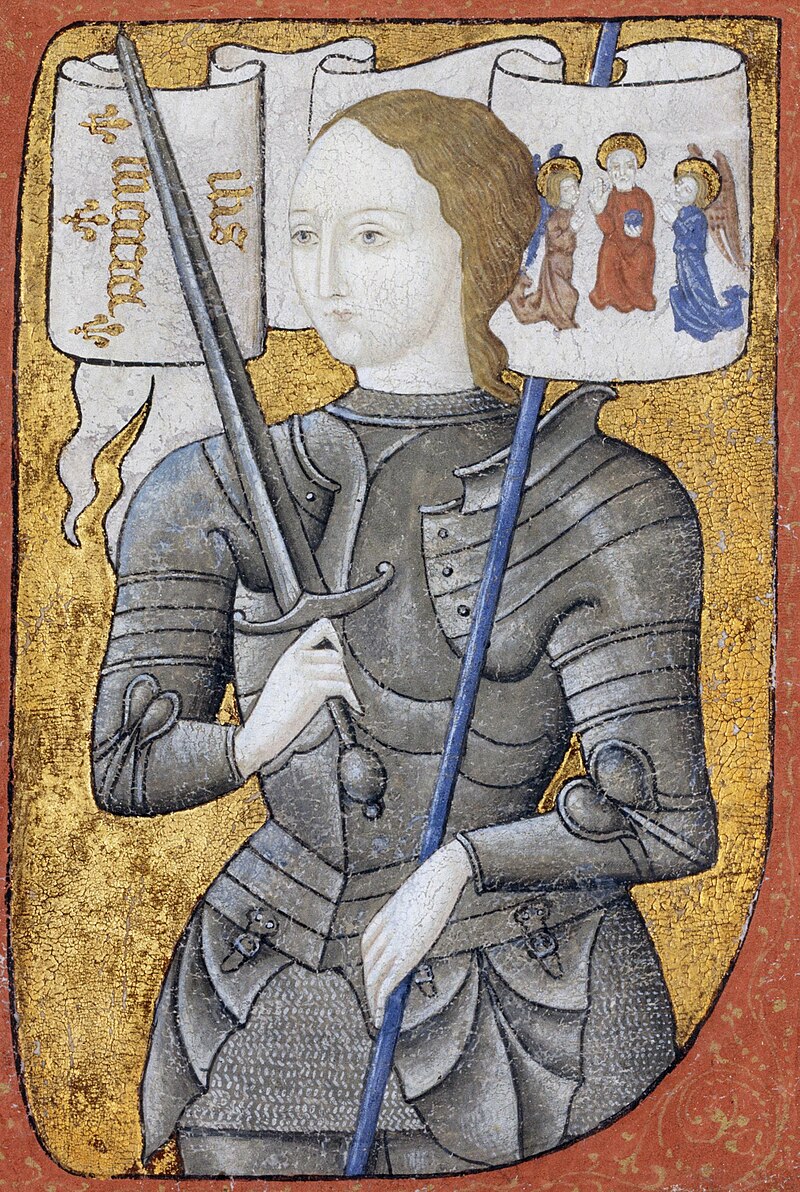
Joan of Arc (French: Jeanne d'Arc; Middle French: Jehanne Darc; c. 1412 – 30 May 1431) is one of the patron saints of France and is remembered as a national heroine for her pivotal role during the Hundred Years' War. She gained renown for lifting the siege of Orléans and for urging the coronation of Charles VII, actions that helped restore French confidence at a critical moment. Claiming divine guidance, she emerged as a military leader who defied the gender expectations of her time and was celebrated as a savior of France.
Born around 1412 in Domrémy, a small village in northeastern France, Joan was the daughter of a relatively prosperous peasant family. At the age of sixteen, she reported receiving visions from the archangel Michael, Saint Margaret, and Saint Catherine, commanding her to aid Charles VII and deliver France from English domination. In 1428, she petitioned to meet the dauphin, and her sincerity and piety convinced him of her mission.
By early 1429, Charles entrusted her, then about seventeen years old, with a role in the army sent to relieve Orléans. Joan’s arrival in April carried immense symbolic power: her presence, clad in armor and bearing a white banner, lifted the spirits of the demoralized French troops. Within nine days, the English abandoned the siege, marking a dramatic shift in the war.
Joan continued to inspire French forces during the Loire Campaign, pressing for bold attacks that culminated in victory at the Battle of Patay. This triumph cleared the path to Reims, where Charles VII was crowned king in July 1429 with Joan standing beside him. Her influence during these campaigns revitalized French morale and laid the groundwork for the kingdom’s eventual success in the war.
Despite these victories, her fortunes soon declined. She joined the failed siege of Paris in September 1429 and the unsuccessful attack on La Charité later that year, which weakened her standing at court. In May 1430, Joan raised a small force to defend Compiègne from the Burgundians, allies of the English, but she was captured during the fighting. Held prisoner for months, she was eventually sold to the English in November.
In 1431, Joan was placed on trial in Rouen under the supervision of Bishop Pierre Cauchon, a staunch supporter of the English. She faced charges of heresy, which included accusations of dressing in male attire, relying on visions judged to be demonic, and refusing to submit her actions to the authority of the church. Despite maintaining her steadfast faith, she was declared guilty and, on 30 May 1431, was burned at the stake at about nineteen years of age.
A quarter-century later, in 1456, a papal court of inquiry reviewed her case and overturned the original verdict, condemning the trial as corrupt and unjust. Over the centuries, Joan of Arc became an enduring symbol: of Catholic devotion, of defiance against oppression, of early feminist ideals, and of French national identity. She was celebrated as a martyr and, after the French Revolution, emerged as a unifying figure for the nation.
In 1920, Pope Benedict XV canonized her as a saint, and in 1922 she was officially declared one of the patron saints of France. Her legacy continues through countless works of art, literature, theater, and music that portray her as both a saintly warrior and a timeless icon of courage and conviction.