Jan Žižka
Jan Žižka z Trocnova a Kalicha (English: John Zizka of Trocnov and the Chalice; c. 1360 – October 11, 1424) was a Czech military leader and knight who served as a contemporary and devoted follower of the religious reformer Jan Hus and became the most prominent commander of the radical Hussite movement, leading the Taborite faction during the Hussite Wars. Renowned for his extraordinary military genius and tactical innovations that revolutionized medieval warfare, Žižka is celebrated as one of the greatest Czech national heroes and stands among history's most accomplished military commanders.
Remarkably, Žižka led Hussite forces to victory in every battle he fought, defending against three papal crusades and remaining undefeated throughout his entire military career despite frequently facing enemies with superior numbers, equipment, and resources—an achievement virtually unparalleled in military history. Žižka was born around 1360 in the village of Trocnov in the Kingdom of Bohemia to a family of lower Czech nobility, providing him with sufficient social status for military service while not guaranteeing the wealth and connections enjoyed by higher aristocracy. According to Aeneas Silvius Piccolomini's Historia Bohemica, Žižka maintained connections within the royal court during his youth and later served in the prestigious position of Chamberlain to Queen Sofia of Bavaria, indicating that he had gained favor and trust at the highest levels of Bohemian society before his later revolutionary activities.
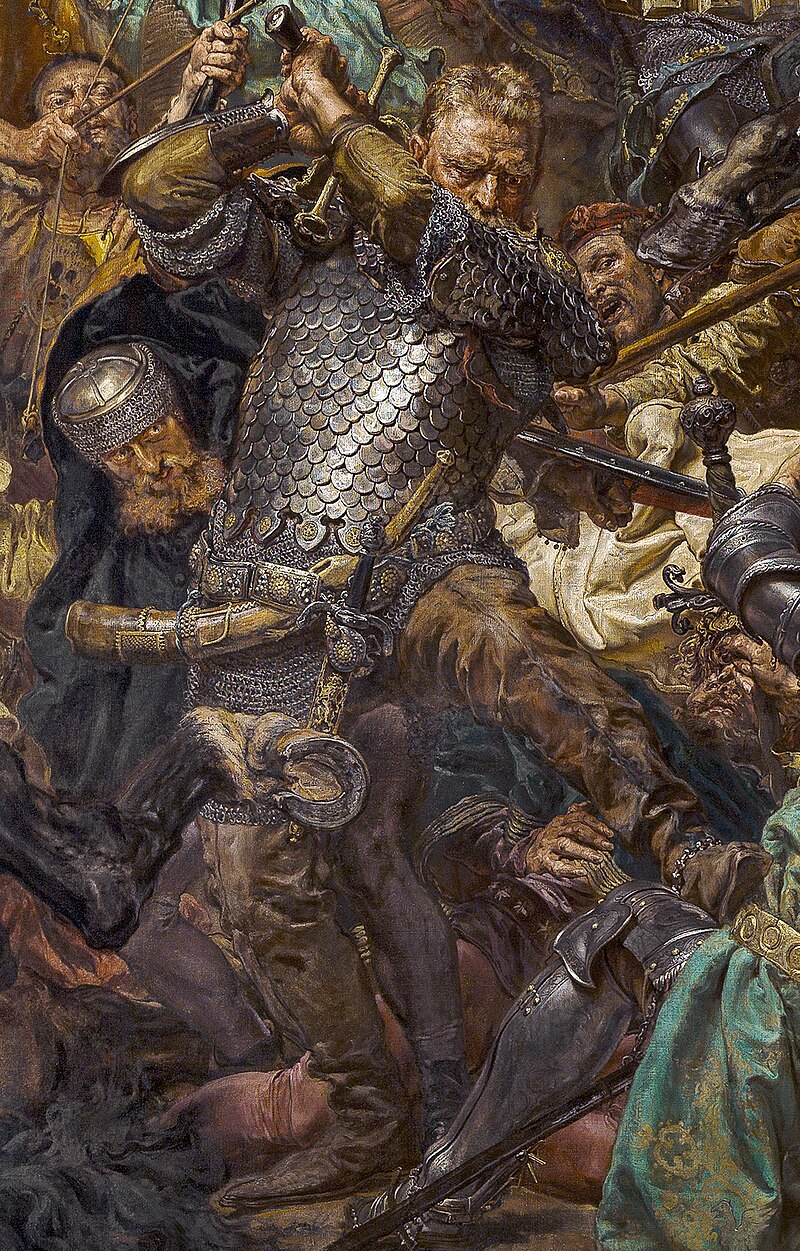
His military experience began well before the Hussite Wars. He fought at the Battle of Grunwald on July 15, 1410, one of medieval Europe's largest and most significant battles, where the combined Polish-Lithuanian forces decisively defeated the Teutonic Order. During this engagement, Žižka distinguished himself by defending Radzyń against Teutonic attacks, demonstrating the combat skills and tactical acumen that would later make him legendary.
When religious and social tensions in Bohemia erupted into open conflict following Jan Hus's execution for heresy in 1415, Žižka emerged as the military leader of the radical Hussite faction known as the Taborites, who advocated more thoroughgoing religious and social reforms than moderate Hussites. He played a decisive role in the initial clashes of the Hussite Wars, leading his forces to crucial victories at the Battle of Sudoměř in 1420 and the Battle of Vítkov Hill in 1420, where his outnumbered troops defended Prague against the first anti-Hussite crusade. These early successes established his reputation and demonstrated that determined commoners and lesser nobility, properly led and equipped, could defeat professional knights and crusading armies.
His greatest tactical triumph came at the Battle of Kutná Hora in 1421, where he decisively defeated the combined forces of the Holy Roman Empire and the Kingdom of Hungary despite being significantly outnumbered. The effectiveness of his field artillery against massed royal cavalry in this engagement proved revolutionary, establishing mobile artillery as a critical element of Hussite military doctrine and foreshadowing the declining dominance of heavy cavalry that had characterized medieval warfare for centuries. Žižka's tactics were profoundly unorthodox and innovative for his era, and modern military historians regard them as pioneering examples of early modern guerrilla warfare, asymmetric warfare, and combined-arms doctrine that would not become standard practice until centuries later.
He meticulously trained and equipped his forces according to their individual abilities and backgrounds, creating an army that integrated nobility, urban militias, and peasant recruits into a cohesive and disciplined fighting force—a remarkable achievement given the rigid social hierarchies of medieval society. His most famous innovation was the wagon fort (vozová hradba in Czech, or Wagenburg in German), which consisted of armored wagons arranged in defensive formations and fitted with small cannons and hand cannons. These mobile fortifications could be rapidly deployed to create instant defensive positions, protecting infantry and artillery from cavalry charges while providing firing platforms for gunpowder weapons.
This tactical system essentially created mobile fortresses that could maneuver on the battlefield and anticipated the concept of armored fighting vehicles—tanks—that would emerge five hundred years later during World War I. Beyond his technological innovations, Žižka exploited terrain and environmental factors to a degree unprecedented in medieval warfare, which typically emphasized cavalry charges and open-field battles where superior numbers and equipment determined outcomes. He employed systematic terrain reconnaissance to identify defensive positions, narrow approaches, and natural obstacles that would negate enemy advantages in cavalry and heavy armor.
He manipulated enemy movements through feints, ambushes, and strategic withdrawals that lured opponents into disadvantageous positions where his infantry and artillery could maximize their effectiveness. His defensive tactics prioritized choosing battlegrounds that favored his forces' strengths while neutralizing enemy advantages—hilltops, forests, marshy ground, and narrow passes that disrupted cavalry formations and forced enemies to attack prepared positions under artillery fire. Contemporary and later sources emphasize that Žižka's troops were exceptionally disciplined and loyal despite their diverse social origins, maintaining cohesion and morale even in desperate circumstances.
His ability to rapidly train new recruits—many of whom were peasants with no prior military experience—to face heavily armored professional soldiers and knights represented a remarkable achievement in military education and organization. According to later military writers analyzing his campaigns, Žižka rarely committed his forces to battle unless he had first established a strong tactical advantage through ambushes, disruption of enemy supply lines and communications, or occupation of fortified terrain. This cautious approach, combined with aggressive tactical execution once battle was joined, dramatically increased his odds of victory despite consistently facing numerically superior opponents.
His estimated kill-to-loss ratio and the fact that he never lost a battle despite these disadvantages mark him as one of history's most effective military commanders by any objective measure. For these reasons, Žižka is widely regarded among military historians as one of the greatest military commanders of all time, standing alongside figures such as Alexander the Great, Hannibal, Julius Caesar, Genghis Khan, and Napoleon Bonaparte. His tactics and strategic principles are studied in military academies worldwide as examples of how inferior forces can defeat superior opponents through innovation, discipline, terrain exploitation, and psychological warfare.
His influence on military theory extends far beyond his immediate historical context, contributing to the development of combined-arms doctrine, mobile warfare, and the integration of gunpowder weapons into tactical systems—developments that would fundamentally transform warfare in subsequent centuries. A monumental equestrian statue was erected on Vítkov Hill in Prague to honor Jan Žižka and commemorate his crucial victory at that location in 1420, when his forces defended the city against the first crusade. Completed in 1950, this bronze monument stands as the third-largest equestrian statue in the world, towering over the city as a permanent reminder of Žižka's military genius and his role in Czech national history.
The statue's imposing presence reflects the enduring reverence in which Žižka is held in Czech culture, where he represents not only military excellence but also resistance against foreign domination, defense of religious conviction, and the capacity of ordinary people to achieve extraordinary things under inspired leadership.