Icarus
Icarus is a tragic figure in Greek mythology, best known as the son of the master artisan Daedalus and for his fatal attempt to escape the island of Crete using artificial wings. His narrative serves as a seminal cautionary tale regarding the dangers of hubris—excessive pride or defiance toward the gods—and the human tendency to overreach the boundaries of mortal capability. Born to Daedalus and Naucrate, Icarus’s fate is inextricably linked to the architectural genius of his father and the labyrinthine politics of King Minos.The myth begins with the fallout from the construction of the Labyrinth, a complex maze designed by Daedalus to house the Minotaur.
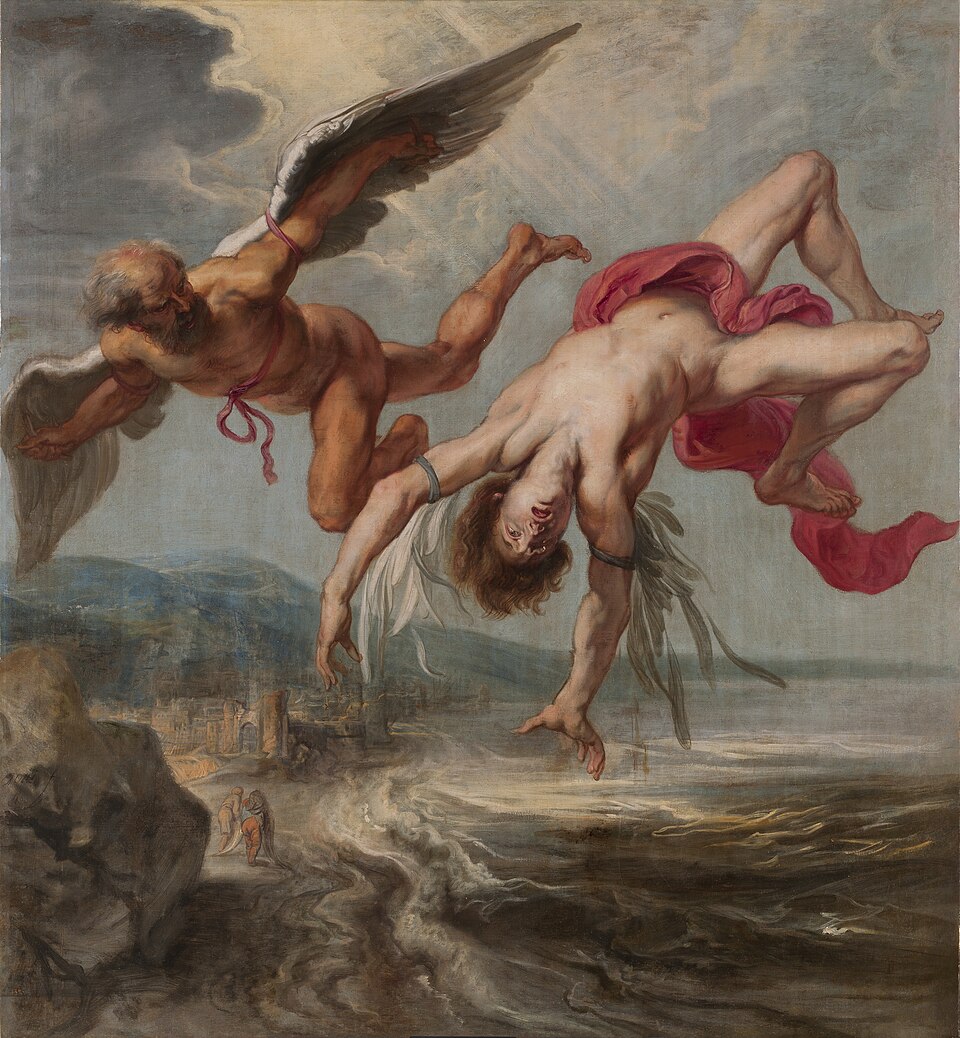
After the hero Theseus successfully navigated the maze and slew the monster—aided by a "clew" of string provided by Daedalus—King Minos imprisoned the architect and his son. Whether confined within a high tower or the Labyrinth itself, Daedalus realized that land and sea were guarded, but the sky remained open. Utilizing his unparalleled craftsmanship, he fashioned two pairs of wings from birds' molted feathers, leather straps, and beeswax.Before their ascent, Daedalus provided Icarus with two critical warnings to ensure a safe passage across the Aegean:The Sea: Do not fly too low, or the damp sea spray will soak the feathers, making them too heavy to stay aloft.The Sun: Do not fly too high, or the intense heat of the Sun will melt the beeswax holding the wings together.During the flight, Icarus was overcome by the exhilaration of flight and the giddiness of his newfound freedom.
In an act of classic mythological defiance, he ignored his father’s instructions and soared toward the heavens. As he approached the sun, the wax softened and liquefied; the feathers detached one by one, leaving Icarus flapping his bare arms in a desperate but futile attempt to remain airborne. He plunged into the sea and drowned, giving rise to the enduring idiom, "to fly too close to the sun."In his grief, Daedalus retrieved his son’s body and buried him on a nearby island, which he named Icaria.
The surrounding waters were subsequently called the Icarian Sea in memory of the fallen youth. Daedalus eventually reached Sicily, where he dedicated his own wings to the temple of Apollo and vowed never to fly again.