Guy Fawkes
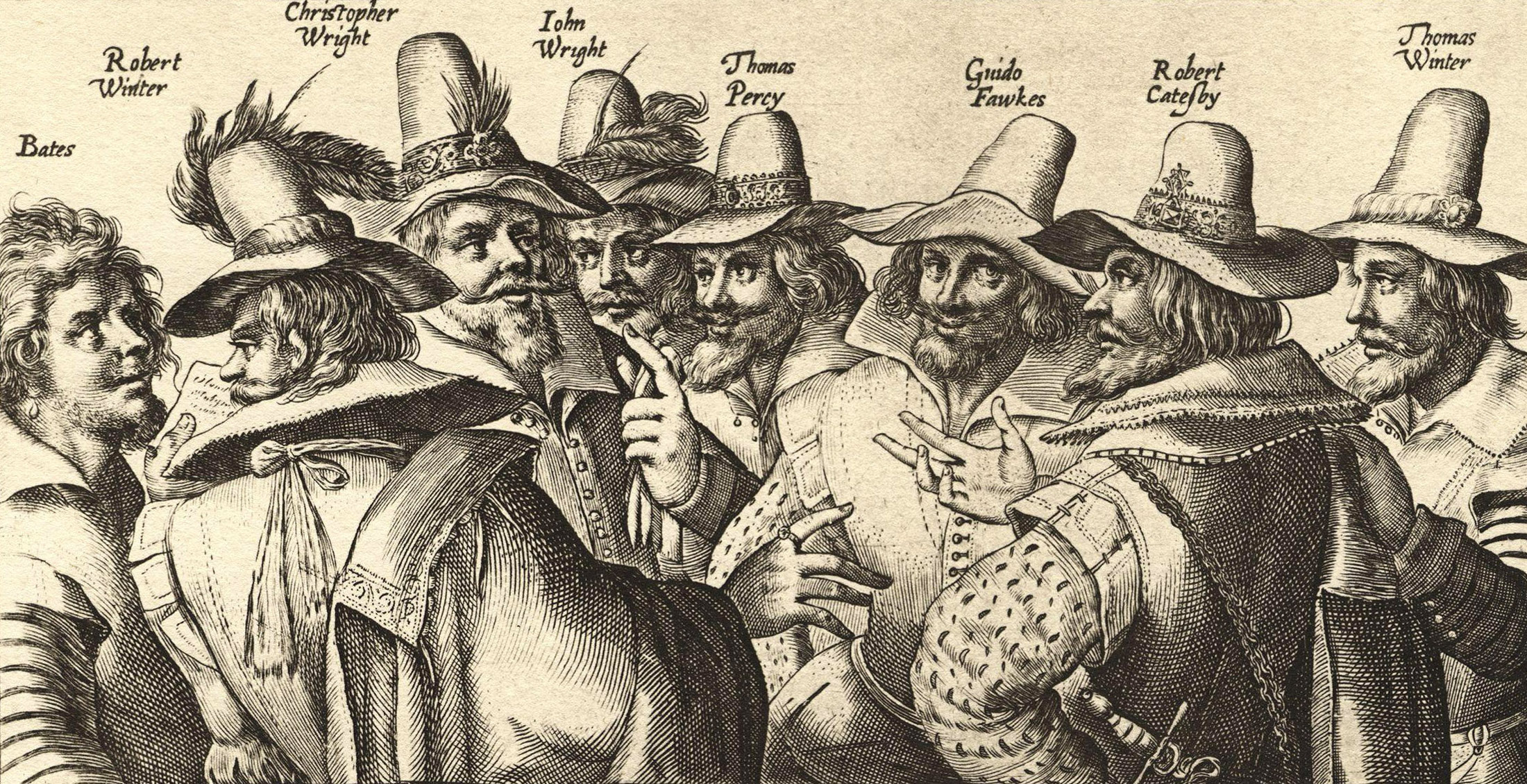
Guy Fawkes (13 April 1570 – 31 January 1606), also known as Guido Fawkes while serving in the Spanish military, was a member of a group of provincial English Catholics who orchestrated the failed Gunpowder Plot of 1605, one of the most infamous conspiracy attempts in English history. He was born and educated in York, experiencing a religiously divided upbringing that would profoundly shape his future. His father died when Fawkes was only eight years old, and his mother subsequently married a recusant Catholic—a term referring to those who refused to attend Church of England services and remained loyal to Roman Catholicism despite the legal penalties and social stigma this defiance entailed in post-Reformation England.
Fawkes converted to Catholicism, adopting the fervent religious convictions that would motivate his later revolutionary activities, and left England for mainland Europe to escape the religious persecution Catholics faced under Protestant rule. On the Continent, he joined the Spanish Army and fought for Catholic Spain during the Eighty Years' War against Protestant Dutch reformers in the Low Countries, gaining valuable military experience, particularly in the use of gunpowder and explosives—skills that would later prove central to the conspiracy. During his years abroad, he traveled to Spain seeking support and resources for a Catholic rebellion in England that would overthrow the Protestant monarchy and restore Catholicism as the state religion, but these diplomatic efforts proved unsuccessful as Spain, despite its Catholic sympathies, was unwilling to commit to such a risky venture.
Fawkes later encountered Thomas Wintour, a fellow English Catholic conspirator, and returned with him to England to pursue their shared goal through different means. Wintour introduced Fawkes to Robert Catesby, the charismatic leader and mastermind behind what would become the Gunpowder Plot. Catesby had devised an audacious plan to assassinate King James I and destroy the Protestant aristocracy by blowing up the House of Lords during the State Opening of Parliament, when the King, his heir, and most members of the government and nobility would be gathered in one place.
The conspirators hoped that this devastating attack would create chaos that would allow them to install a Catholic monarch and reverse England's Protestant course. To execute this plan, the plotters leased an undercroft (cellar) located directly beneath the House of Lords in Westminster Palace, providing ideal access to their target. Fawkes, with his military background and expertise with explosives, was placed in charge of guarding and preparing the substantial quantity of gunpowder that the conspirators secretly stockpiled in this underground chamber—enough explosive material to obliterate the entire building and everyone within it.
However, the conspiracy unraveled when the authorities received an anonymous warning letter, possibly sent by someone with divided loyalties or someone who feared the civilian casualties the explosion would cause. Acting on this intelligence, officials conducted a search of Westminster Palace during the early hours of November 5, 1605, and discovered Fawkes in the undercroft, guarding the barrels of gunpowder and preparing for the planned detonation that very day. Fawkes was immediately arrested and subjected to interrogation and torture over the following days in the Tower of London.
Initially, he refused to reveal the names of his co-conspirators or provide details of the plot, demonstrating remarkable fortitude under extreme duress. However, as the torture intensified—including the use of the rack, which stretched the body causing excruciating pain—he eventually confessed to his intention to blow up the House of Lords and kill the King, and he provided information about his fellow conspirators, though only after enduring days of brutal treatment that left him physically broken. Fawkes was sentenced to the horrific punishment reserved for traitors: to be hanged, drawn and quartered—a execution method designed to maximize suffering and public humiliation.
The condemned person would be hanged until nearly dead, then revived and subjected to disembowelment while still conscious, before finally being beheaded and having the body quartered into pieces for public display. However, at his execution on January 31, 1606, Fawkes managed to avoid at least some of this prolonged agony. When he was hanged, his neck broke immediately, causing instant death—with some historical sources claiming that he deliberately jumped from the gallows ladder to ensure this outcome, choosing a quicker death over the unspeakable torments that would have followed had he survived the hanging.
His body was then subjected to the remaining prescribed mutilations, but Fawkes himself was already beyond suffering. Although Fawkes was only one of several conspirators and not the plot's leader, he became synonymous with the Gunpowder Plot in popular memory, his name forever associated with this dramatic attempt to destroy the English government. The failure of the plot has been commemorated annually in the United Kingdom as Guy Fawkes Night (also called Bonfire Night) since November 5, 1605, when the conspiracy was foiled.
Traditional celebrations involve burning an effigy of Guy Fawkes on a bonfire, commonly accompanied by elaborate fireworks displays—ironically celebrating the prevention of an explosion through controlled explosions. This annual ritual has evolved over four centuries from an explicitly anti-Catholic celebration of Protestant deliverance into a more secular autumn festival, though it preserves the memory of Fawkes and his failed attempt to violently alter English history. In recent decades, Guy Fawkes has experienced a complex cultural resurrection, with his image—particularly the stylized mask based on his likeness—being adopted as a symbol of anti-establishment rebellion and resistance to authority by various protest movements worldwide, transforming the failed terrorist into an ambiguous icon whose meaning continues to evolve centuries after his death.