Guo Ziyi(郭子仪)
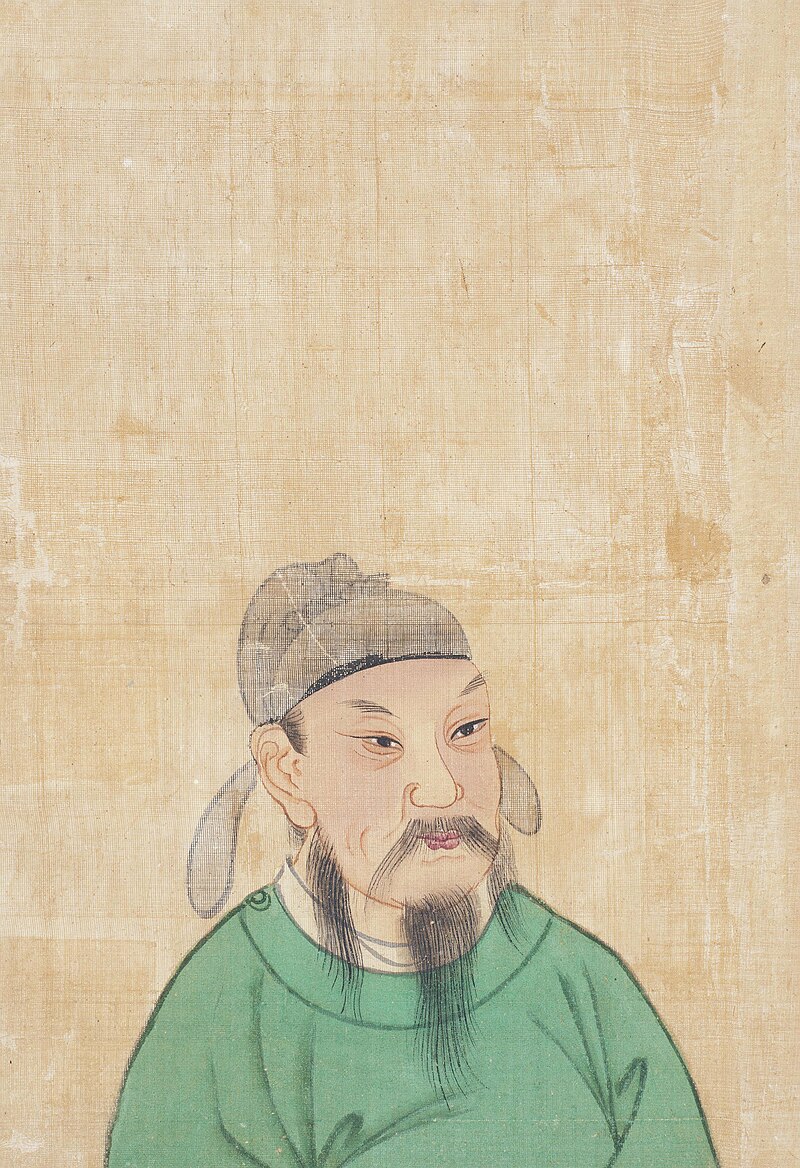
Guo Ziyi(郭子仪) is a legendary figure from Huazhou District, China, dated to ~697 AD (Middle Ages).
Guo Ziyi (Traditional Chinese: 郭子儀, Simplified Chinese: 郭子仪, Pinyin: Guō Zǐyí, Wade-Giles: Kuo Tzu-i) (697–9 July 781), posthumously titled Prince Zhōngwǔ of Fényáng (汾陽忠武王), was a Chinese military general and statesman who played a pivotal role in suppressing the An Lushan Rebellion and led campaigns against both the Uyghur Khaganate and the Tibetan Empire. He is recognized as one of the most accomplished and powerful Tang dynasty generals both before and after the Anshi Rebellion, a catastrophic civil war that nearly destroyed the dynasty. Guo Ziyi's military career spanned decades during one of the most turbulent periods in Chinese history.
When the An Lushan Rebellion erupted in 755, threatening to overthrow the Tang dynasty entirely, Guo Ziyi emerged as the dynasty's most effective military commander. His strategic brilliance and tactical skill proved instrumental in gradually turning the tide against the rebels. Over years of grueling campaigning, he orchestrated the recapture of key territories and coordinated complex military operations that eventually led to the rebellion's suppression, though the war left the Tang dynasty permanently weakened.
Beyond defeating internal rebels, Guo Ziyi managed the delicate and dangerous task of conducting diplomacy and warfare with powerful neighboring states. His campaigns against the Uyghur Khaganate and Tibetan Empire required not only military prowess but also sophisticated diplomatic maneuvering, as these external threats often exploited Tang China's internal vulnerabilities. His ability to negotiate with the Uyghurs while simultaneously defending against Tibetan incursions demonstrated remarkable political acumen alongside his martial capabilities.
Guo Ziyi's loyalty to the Tang imperial house remained steadfast despite possessing sufficient military power to potentially seize the throne himself. This unwavering loyalty, combined with his military achievements, made him an exemplary figure of Confucian virtue—the loyal general who serves rather than usurps. His political wisdom extended to knowing when to advance and when to withdraw from court politics, allowing him to navigate the treacherous factional struggles that consumed many of his contemporaries.
After his death, Guo Ziyi's reputation transcended historical memory and entered the realm of religious veneration. He was deified in Chinese folk religion as the God of Wealth and Happiness, identified with the Lu Star of the Fu Lu Shou trinity (the three stars of Fortune, Prosperity, and Longevity). This deification reflected popular recognition not only of his military achievements but also of the prosperity and stability his victories had secured for ordinary people.
His image appears in Jin Guliang's Wu Shuang Pu (Table of Peerless Heroes), a compilation celebrating history's most exceptional figures, cementing his place among China's legendary heroes whose influence extended far beyond their lifetimes.