Glawackus
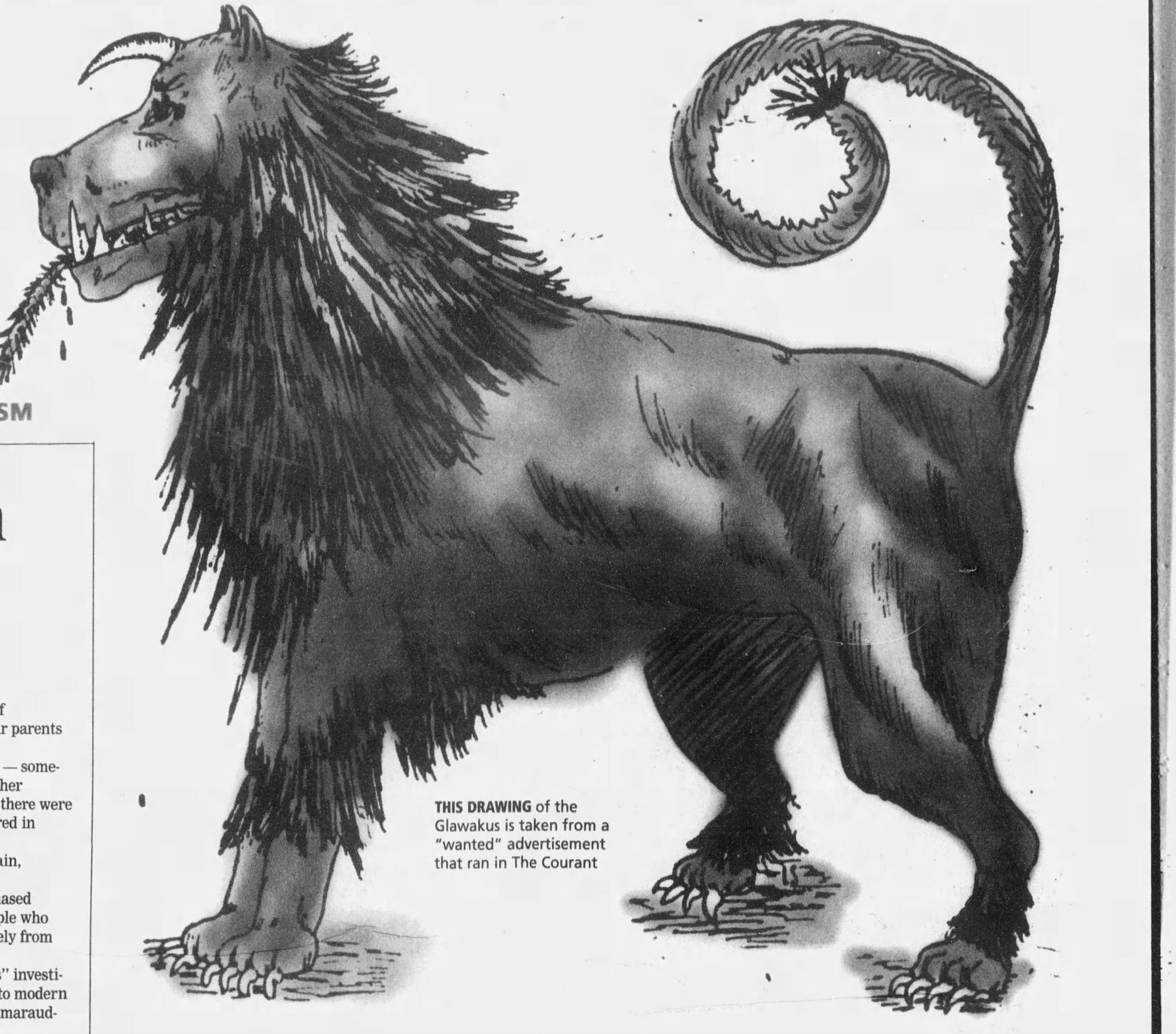
The glawackus is one of the "fearsome critters," a distinctive group of legendary creatures that flourished in the folklore and oral traditions of North American lumberjacks during the nineteenth and early twentieth centuries. These tall tales and mythical beasts—which also included such fantastical creatures as the hodag, the sidehill gouger, and the hoop snake—served as entertainment in isolated logging camps, tests of gullibility for newcomers, and expressions of the lumber workers' imaginative responses to the dark forests and wilderness they inhabited. The glawackus specifically is described as a chimeric creature appearing to be something between a bear, a panther, and a lion, combining fearsome characteristics of multiple apex predators into a single monstrous form.
It is also known by the evocative alternate name "northern devil cat," emphasizing its diabolical and feline nature. The creature is particularly notorious for its fearsome screech, which contemporary accounts compared to the unsettling cackle of a hyena—a sound that would be deeply alarming and unfamiliar in the forests of New England where no hyenas exist, adding to the creature's otherworldly quality. According to the legend, the glawackus is blind, navigating its environment instead through an acute sense of smell and the use of sound waves (possibly echolocation, though this detail seems anachronistic for folklore predating modern understanding of bat navigation).
One particularly ominous detail of the legend claims that looking directly into the creature's eyes—despite its blindness, suggesting perhaps that the eyes retain some supernatural power—will wipe the victim's memory, adding a psychological horror dimension to the physical threat the beast represents. The glawackus legend achieved its greatest prominence in 1939 when reported sightings occurred in Glastonbury, Connecticut, during a period when the town was gripped by genuine alarm about a mysterious predator. A cryptozoologist later recalled the events in an account published in The Cape Codder newspaper: "I was working as a young reporter on the Hartford Courant that year when World War II was in the wings.
But we were preoccupied with the developing story about this Glastonbury creature that howled at night, slipped in and out of view and caused dogs, cats and small farm animals to disappear. As the sightings grew in number, so did the variety of descriptions. First, it was a huge cat.
Then some people reported what looked like a dog in the back and a cat in front. Others saw it vice-versa. One man called to say he had seen a big animal in the pitch dark with eyes that glowed like embers." This account reveals the classic pattern of cryptid panics: an initial mysterious occurrence (disappearing pets and livestock and disturbing nocturnal howls) followed by escalating sightings with increasingly contradictory descriptions as mass hysteria and suggestion influenced witnesses' perceptions.
The wildly varying accounts—sometimes cat-like, sometimes dog-like, sometimes combining both in different configurations, sometimes merely glowing eyes in darkness—demonstrate how genuine fear and uncertainty can generate a proliferation of "evidence" that actually reveals more about human psychology than about any actual creature. As the phenomenon developed and media coverage intensified, journalists recognized that this bizarre, unidentified animal required a memorable name to capture public imagination and make the story more compelling. One Hartford Courant editor cleverly coined the portmanteau word "Glawackus" through a deliberate construction: "Gla" derived from Glastonbury, the location of the sightings; "wack" from "wacky," acknowledging the absurd and inexplicable nature of the reports; and "us" as a pseudo-Latin ending that gave the invented name a scientific or zoological veneer, mimicking the binomial nomenclature used in legitimate taxonomy.
This manufactured name "caught on like magic," as the reporter recalled, demonstrating the power of a catchy designation to transform a local mystery into a memorable cultural phenomenon. The story gained national attention when Lowell Thomas, a prominent radio network commentator whose broadcasts reached millions of Americans nationwide, reported on the glawackus, lending credibility to the story by claiming the creature had been named by a "Connecticut scientist"—a designation that was technically true if one generously categorized a newspaper editor as a scientist, but which deliberately implied a level of scientific legitimacy that the phenomenon certainly did not possess. This national publicity transformed a local Connecticut oddity into a widely known American cryptid legend.
The excitement eventually prompted the organization of a formal safari expedition equipped with two hounds that had been trained in the Ozarks (a region famous for its hunting traditions and skilled tracking dogs), representing a serious attempt to resolve the mystery by either capturing, killing, or definitively identifying the mysterious predator. The search party combed the woods around Glastonbury but came back entirely empty-handed, finding no physical evidence of the creature—no tracks, scat, hair, or any other trace that would confirm the existence of an unknown large predator in Connecticut's forests. The failure to find anything concrete strongly suggested that the glawackus was either a misidentified known animal (possibly a large dog, coyote, or even an escaped exotic pet), a hoax, or purely the product of collective hysteria and imagination.
However, the cultural impact of the episode outlasted the actual search, and the glawackus hunt was memorialized in humorous verse that captured the mock-heroic quality of the entire affair: "Say did the fearless hunters / Pick up the beastly spoor / While trekking through the jungle / With steps alert and sure?" This doggerel, with its deliberately inflated language comparing Connecticut woodlands to exotic jungle and portraying the searchers as intrepid safari hunters tracking dangerous game, perfectly captured the tongue-in-cheek spirit that ultimately surrounded the glawackus phenomenon—a mixture of genuine local concern, media sensationalism, public entertainment, and self-aware humor about the human tendency to see monsters in the darkness and to transform ordinary mysteries into extraordinary legends. The glawackus thus joined the ranks of American cryptids and fearsome critters whose existence remains unproven but whose cultural significance as expressions of folklore, regional identity, and the enduring appeal of the unknown and monstrous continues to fascinate those interested in how communities create and perpetuate legends.