Germanicus
Germanicus Julius Caesar, born May 24, 15 BC, and deceased October 10, AD 19, was a Roman general and politician most celebrated for his military campaigns against Arminius in Germania and widely regarded as one of the most promising leaders of his generation. The son of Nero Claudius Drusus and Antonia the Younger, Germanicus was born into an influential branch of the patrician gens Claudia, one of Rome's most distinguished aristocratic families. The agnomen (honorary surname) Germanicus was added to his full name in 9 BC when it was posthumously awarded to his father in recognition of his victories in Germania.
In AD 4, he was adopted by his paternal uncle Tiberius, who was himself the stepson and designated heir of Germanicus' great-uncle Augustus, Rome's first emperor. Ten years later, when Tiberius succeeded Augustus as Roman emperor in AD 14, Germanicus became heir apparent to the imperial throne. Through his adoption, Germanicus officially became a member of the gens Julia, another exceptionally prominent family to which he was already related through his mother's side.
His connection to the Julii Caesares was further strengthened through his marriage to Agrippina the Elder, a granddaughter of Augustus, which linked him directly to the imperial bloodline. Germanicus was also the father of Caligula (who would become emperor), the maternal grandfather of Nero (another future emperor), and the older brother of Claudius (who would also reign as emperor), making him a pivotal figure in the Julio-Claudian dynasty whose descendants would rule Rome for decades. During Augustus' reign, Germanicus enjoyed an accelerated political career that reflected both his aristocratic lineage and Augustus' favor.
He entered the office of quaestor in AD 7, five years before the minimum legal age required by Roman law—a privilege granted only to those whom the emperor wished to advance rapidly through the cursus honorum (sequence of public offices). He held the quaestorship until AD 11 and was elected consul for the first time in AD 12, again at an unusually young age. The following year, he was appointed proconsul of Germania Inferior, Germania Superior, and all of Gaul, receiving extraordinary command over one of Rome's most critical military frontiers.
From this position, he commanded eight legions—approximately one-third of the entire Roman army at the time—which he led in major campaigns against Germanic tribes from AD 14 to 16. These Germanic campaigns aimed to avenge one of Rome's most catastrophic military defeats: the Battle of the Teutoburg Forest in AD 9, where Germanic tribes led by Arminius had annihilated three Roman legions under Publius Quinctilius Varus. Germanicus conducted extensive military operations across the Rhine, engaging Arminius' forces in several major battles, inflicting significant defeats on the Germanic coalition, and successfully retrieving two of the three legionary eagles (standards) that had been lost during the Teutoburg disaster.
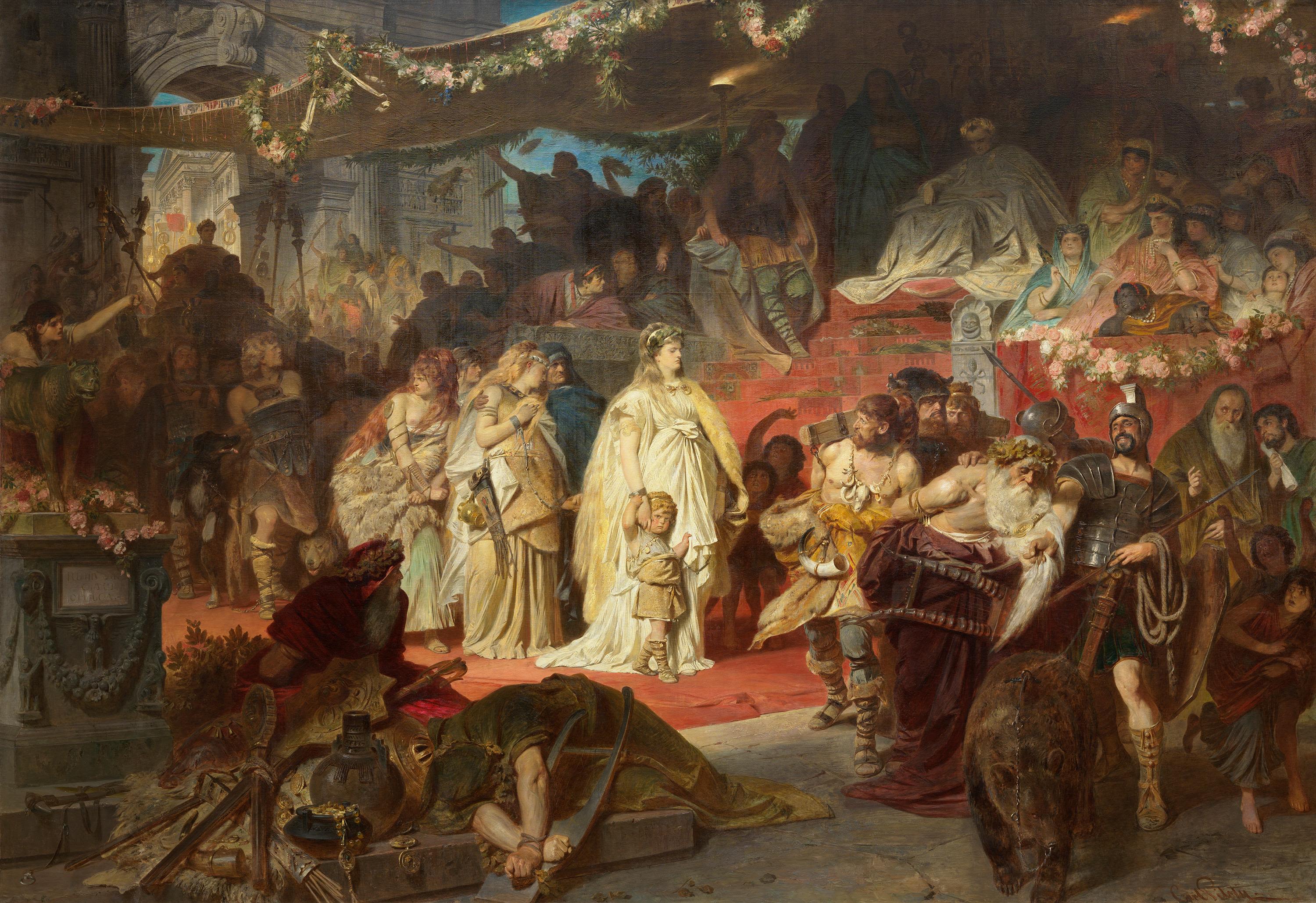
The recovery of these eagles carried immense symbolic importance, as the loss of legionary standards represented profound dishonor, while their recapture demonstrated Rome's resilience and military superiority. Although Germanicus' campaigns achieved notable tactical successes and restored Roman prestige, Tiberius recalled him in AD 16, possibly concerned about the enormous expense of continued Germanic wars or uncomfortable with his nephew's growing popularity and military reputation. In AD 17, Germanicus returned to Rome in triumph, receiving a magnificent celebratory procession through the city that showcased his military achievements and enhanced his already considerable popularity with the Roman people.
Shortly after this triumph, he departed to reorganize the eastern provinces of Asia Minor, where he was granted imperium maius (superior authority) over the region. During this eastern mission, he incorporated the client kingdoms of Cappadocia and Commagene as Roman provinces in AD 18, strengthening imperial control over strategically important territories bordering the Parthian Empire. While serving in the eastern provinces, Germanicus came into serious conflict with Gnaeus Calpurnius Piso, the governor of Syria whom Tiberius had appointed possibly to serve as a check on Germanicus' authority.
The dispute between the two men involved questions of jurisdiction, military command, and political authority, creating a bitter personal feud. During this conflict, Germanicus became seriously ill in Antioch and died on October 10, AD 19, at only thirty-three years of age. Ancient sources widely attributed his death to poisoning, with suspicion falling on Piso and even, in some accounts, on Emperor Tiberius himself, who may have viewed his popular nephew as a potential threat.
However, poison was never definitively proven, and modern scholars debate whether Germanicus died from natural illness, deliberate poisoning, or other causes. Piso was subsequently prosecuted for Germanicus' death but committed suicide before the trial concluded, leaving the question of culpability unresolved. As a renowned general who died young in suspicious circumstances, Germanicus became extraordinarily popular and was idealized as the embodiment of Roman virtue long after his death.
His military achievements, noble character, striking physical appearance, accessibility to common soldiers, and tragic early demise created a legendary reputation that subsequent emperors found both inspirational and threatening. To the Roman people, Germanicus represented the Roman equivalent of Alexander the Great—a brilliant young commander of royal lineage whose untimely death at the height of his powers prevented him from achieving even greater glory and suggested what might have been had he lived to inherit the empire. His memory was carefully cultivated by his widow Agrippina and his descendants, who used his legendary status to legitimize their own claims to power, ensuring that Germanicus remained a powerful symbol in Roman political culture for generations after his death.