Fish-man of Liérganes
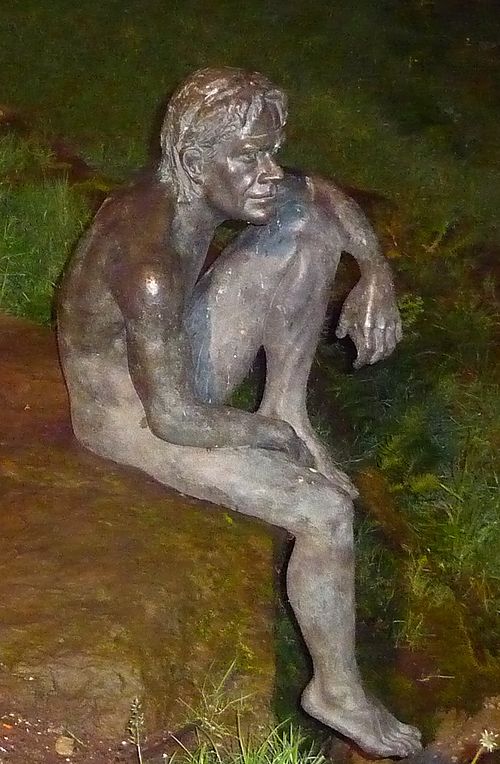
The fish-man of Liérganes (Spanish: El hombre pez) is a legendary entity from the mythology and folklore of Cantabria, the mountainous autonomous community located in northern Spain along the Bay of Biscay coast. The fish-man is described as an amphibious, human-looking being who appeared to be the result of a strange metamorphosis of an actual human being who had been lost at sea years earlier, transformed by unknown supernatural or natural forces into a creature that combined human and fish characteristics. This curious legend was notably examined and recorded by the prominent Enlightenment writer and Benedictine monk Benito Jerónimo Feijoo y Montenegro (1676-1764), one of Spain's most influential eighteenth-century intellectuals and skeptics, who unusually claimed that he believed the story was substantially true rather than pure folklore or superstition—a remarkable endorsement from a thinker who generally devoted his writings to debunking popular errors, superstitions, and false beliefs through rational analysis.
According to Feijoo's account, which he presented as based on documentary evidence and testimony that he considered credible, the legend recounts that around 1650 there lived in Liérganes—a small, picturesque village in Cantabria situated in a valley surrounded by mountains and crossed by rivers, typical of the region's rural settlements—a married couple named Francisco de la Vega and María del Casar. The couple had four sons, and when the father Francisco died, leaving the family in difficult economic circumstances, the widowed mother María found herself lacking sufficient means to support all four children adequately in their small village where economic opportunities were limited. Faced with this predicament, she made the difficult decision to send one of her sons away to the larger, more prosperous city of Bilbao (the principal city of the neighboring Basque Country and an important port and commercial center) so that he could learn a skilled trade and eventually support himself independently, hopefully also sending money back to help the family.
This son, who according to Feijoo's account was named Francisco de la Vega Casar after his deceased father, lived and worked in Bilbao as a carpenter apprentice and journeyman from his youth until 1674. On Saint John's Eve (the night of June 23, which in Spanish tradition is celebrated with bonfires, festivities, and ritual bathing in rivers and the sea to mark the summer solstice), the young Francisco went with some friends to swim in the Bilbao estuary where the Nervión River meets the Bay of Biscay. Although Francisco was reportedly a strong and confident swimmer, the powerful currents of the river—which in estuaries can be particularly treacherous due to tidal flows and the mixing of river and ocean waters—caught him and swept him away despite his efforts to reach shore.
He was last seen by his companions swimming desperately away toward the open sea, carried by currents beyond his ability to resist, and when he failed to return or wash ashore, it was naturally assumed that he had drowned and that his body had been carried out to sea, as frequently happened to unfortunate swimmers caught in dangerous waters. However, five years later in 1679—long after Francisco's family and acquaintances had mourned his death and moved on with their lives—a group of fishermen working in the Bay of Cádiz in southern Spain, hundreds of miles from Bilbao on the opposite end of the Iberian Peninsula, noticed that something strange had become entangled in their fishing nets and was struggling violently to free itself. When they attempted to haul in their catch to see what they had snared, they discovered to their astonishment that the creature caught in their nets appeared to be neither fish nor man but something disturbingly in between—a being that fought with intelligence and desperation unlike any marine animal they knew.
Although they tried urgently to secure and capture this bizarre creature, it managed through strength or cunning to set itself free from the nets and escape back into the depths before they could get it aboard their vessel. During the following weeks and months, several fishermen working the waters around Cádiz reported having glimpsed or encountered the strange creature on multiple occasions, creating growing local fascination and alarm about what manner of being inhabited these waters. Eventually, the fishermen devised a strategy to capture it by using loaves of bread as bait—suggesting the creature had enough human intelligence or retained enough human appetites to be attracted by human food rather than the fish or other marine prey that would attract ordinary sea creatures.
The ruse worked, and they successfully lured the creature close enough to capture it and bring it aboard their boat. When the fishermen finally got the creature on deck where they could examine it properly in daylight, they discovered to their profound shock and bewilderment that it possessed fundamentally human form and features: it looked essentially like a young man in his twenties or thirties, with pale white skin that had not been darkened by sun exposure as sailors' and fishermen's skin would be, and thin reddish or auburn hair on his head. However, interspersed with these recognizably human characteristics, the creature also displayed unmistakable fish-like or aquatic adaptations that marked it as something other than—or at least no longer entirely—human.
Most notably, a strip or band of scales ran down from his throat to his stomach, covering his chest and abdomen; another strip of scales covered the length of his spine on his back; and what appeared to be gills or gill-like structures were visible around his neck, presumably allowing him to extract oxygen from water and explaining how he could survive submerged for extended periods or perhaps indefinitely. Frightened and uncertain what they had captured—some kind of sea monster, a demon, or a human transformed by witchcraft or divine punishment—the fishermen decided to take the creature to the nearby Franciscan convent of Saint Francis, where they hoped the friars' religious authority and learning might help identify and deal with whatever supernatural or diabolical forces might be involved. At the convent, the creature was subjected to religious exorcism rituals designed to expel any demons that might be possessing or controlling it, and then to extensive interrogation conducted by educated friars who questioned it in several different languages including Spanish, Latin, and possibly Basque or other regional languages, attempting to determine its nature, origins, and intentions.
However, all these efforts to communicate with the creature initially failed completely—it remained mute or unresponsive, giving no indication that it understood questions posed to it or that it retained the capacity for human speech. After several frustrating days of fruitless questioning that seemed to confirm the creature was merely an animal or monster despite its human appearance, the interrogators finally achieved a breakthrough: the creature suddenly articulated a single word, speaking for the first time. The word it spoke was "Liérganes," pronounced clearly enough to be understood but meaning absolutely nothing to anyone present in Cádiz in southern Spain, where this small Cantabrian village's name was completely unknown.
The friars and fishermen had no idea whether "Liérganes" was a name, a place, a word in some foreign language, or merely a meaningless sound the creature had made, but the fact that it had spoken at all was sufficiently extraordinary to generate intense interest and discussion. News of this remarkable event—the capture of a fish-man who could speak a mysterious single word—spread rapidly throughout the Cádiz bay area and port community, where sailors, merchants, and travelers from throughout Spain and beyond gathered. People speculated endlessly about what "Liérganes" might mean, but nobody among Cádiz's cosmopolitan population could identify the word until, by fortunate chance, a sailor from northern Spain who happened to be in the port of Cádiz at that time heard about the creature and the mysterious word it had spoken.
This northern sailor mentioned that near his home region there was indeed a small village called Liérganes, providing the first potential clue to the creature's origins or identity. This information reached Domingo de la Cantolla, secretary of the Holy Office of the Inquisition, who confirmed from his own personal knowledge that there was definitely a place called Liérganes located in the mountains near the city of Santander, capital of Cantabria, from which he himself originally came. This confirmation that "Liérganes" referred to an actual place rather than being meaningless vocalization transformed the mystery and suggested the creature might have some genuine connection to that specific village despite being captured hundreds of miles away in southern waters.
The bishop of Cádiz, recognizing the potential significance of this development, officially sent word northward to the ecclesiastical and civil authorities in Santander and the Liérganes area, including a detailed physical description of the captured creature so that anyone who might be somehow related to or have knowledge of this being could potentially recognize it based on the description of its appearance, particularly its distinctive red hair and unusual pale skin. When this inquiry eventually reached Liérganes, the villagers' response indicated that no such fish-like creature had ever been seen in their area, either in local rivers or coming ashore from the sea. However, they did report one extraordinary and tragic event that had occurred several years earlier: a young man from their village named Francisco de la Vega, who indeed had red or auburn hair matching the creature's description, had gone to work in Bilbao and had drowned in the sea there approximately five years earlier, in 1674, which was precisely five years before the fish-man's capture in Cádiz.
A learned friar at the Franciscan convent where the creature was being kept, intrigued by this remarkable correspondence and willing to entertain the seemingly impossible hypothesis that the mute fish-man might somehow be the transformed Francisco de la Vega who had supposedly drowned, requested and was granted permission by his superiors to undertake a journey to escort the creature back to Liérganes to test whether it would show any signs of recognition or whether the family could identify it. This friar transported the fish-man northward on the long journey from Cádiz in Andalusia to Liérganes in Cantabria, and when they approached the vicinity of the village, he conducted an experiment: he released the fish-man from restraints and followed at a distance to observe what it would do when given freedom of movement in this area. Remarkably, according to the legend, the creature immediately oriented itself and began walking with apparent purpose and direction, demonstrating navigational ability that suggested retained memory and recognition of the area despite years of absence and its transformation.
The fish-man was able to guide itself directly and unerringly to Liérganes without hesitation or wandering, demonstrating knowledge of the local geography that a random sea creature could not possibly possess. Even more astonishingly, once in the village, the creature did not stop or wander aimlessly but walked directly to one specific house—the home of María del Casar, Francisco's mother—as if returning to a remembered home after a long absence. When María saw the creature and examined it closely despite its disturbing fish-like features and its transformation, she recognized and identified it as her son Francisco de la Vega Casar, who she had believed dead for five years, somehow returned to her in this strange, altered form.
The fish-man was then permitted to remain living with his family in Liérganes, where he spent the next nine years leading a tranquil but profoundly odd and unsettling existence that suggested he retained only fragments of human consciousness, habits, and identity. He habitually walked barefoot regardless of weather or terrain, never voluntarily wearing shoes despite his family's efforts to keep him properly shod as humans should be. Unless his family actively dressed him and insisted he keep clothes on, he would rather walk around completely nude, showing no human sense of modesty, shame, or social propriety regarding nakedness.
He almost never spoke—his capacity for language seemed almost entirely lost except that occasionally, very rarely, he would mutter single words such as "tobacco," "bread," or "wine," but critically, these utterances appeared to have no connection whatsoever to any actual desire for smoking, eating, or drinking, suggesting they were perhaps fragments of retained vocabulary spoken randomly without communicative intent or that he had lost the connection between words and their meanings. His eating habits were equally strange and inhuman: when food was placed before him, he would consume it with great avidity and appetite, eating quickly and greedily as if starving, but then afterward he could go for a week or even longer without eating anything at all and would show no signs of hunger or interest in food, displaying a metabolism or nutritional needs utterly unlike normal humans who require regular daily meals. His personality and behavior suggested someone profoundly changed or mentally absent: he was generally easygoing and even obliging in disposition, never aggressive or difficult, and whatever simple task he was asked to perform—whether carrying something, moving objects, or doing basic chores—he would do it promptly and obediently without resistance or complaint, but critically, he performed these tasks without any enthusiasm, interest, or apparent understanding of their purpose, executing them mechanically like an automaton following orders rather than a person consciously choosing actions.
After nine years of living in this peculiar, liminal state between human and animal, between his family's home and the sea that had transformed him, the fish-man one day went down to the ocean to swim as he occasionally did, and he never returned or was seen again. Whether he deliberately chose to return permanently to the sea that had become his true element, or whether he simply drowned or was carried away by currents, or whether he swam away to resume his aquatic existence in deeper waters, the account does not specify—he simply disappeared back into the ocean from which he had mysteriously emerged, leaving his family to mourn his loss for a second time and leaving the mystery of his transformation and nature forever unresolved. This legend of the fish-man of Liérganes combines elements of various folkloric and literary traditions: transformation or metamorphosis tales found across cultures; stories of people lost at sea who return changed or transformed; legends of merfolk, selkies, and other human-animal hybrids from maritime cultures; and possibly garbled accounts of individuals suffering from medical or psychological conditions that affected their behavior and appearance.
Feijoo's endorsement of the story's veracity, despite his usual skepticism, suggests either that he found the documentary evidence and testimony unusually compelling, or that he was willing to entertain the possibility of natural explanations for apparent transformation (perhaps theorizing that extreme hypothermia, near-drowning, and years living aquatically might physiologically alter a human), or possibly that even enlightened intellectuals of his era remained open to possibilities that modern scientific understanding would dismiss. The legend remains one of Cantabria's most famous folkloric traditions, commemorated in local culture, and representing the region's maritime heritage and the mysterious, transformative power that the sea held in the imagination of coastal and riverine communities whose lives and fates were intimately connected to waters that could take their loved ones and occasionally, mysteriously, return them—but changed, alien, no longer fully human or fully belonging to the terrestrial world they had left behind.