Everard t'Serclaes
Everard t'Serclaes, Lord of Kruikenburg, born approximately 1320 and deceased March 31, 1388, was a prominent citizen of Brussels who achieved lasting fame through his daring military action that liberated the city from Flemish occupation. His brother, Jean, served as bishop of Cambrai, indicating the family's prominent position in regional ecclesiastical and secular affairs. Following the death of John III of Brabant on December 5, 1355, his daughter Joanna and her husband Wenceslaus succeeded him as rulers of the Duchy of Brabant.
However, their succession faced immediate challenge from Louis de Male, the Count of Flanders, who disputed their claim to the duchy. Louis invaded Brabant with military force and rapidly seized control of Brussels, the duchy's principal city, threatening to permanently displace the legitimate rulers and incorporate Brabant into Flemish territory. On the night of October 24, 1356, Everard executed a bold plan to reclaim the city.
Leading a group of Brussels patriots loyal to Joanna and Wenceslaus, he scaled the city walls under cover of darkness and launched a surprise attack that successfully drove the Flemish garrison from Brussels. This dramatic action enabled Joanna and Wenceslaus to make their Joyous Entry into the city—the ceremonial procession through which medieval rulers formally took possession of their territories and received oaths of loyalty from their subjects. Everard's nighttime assault thus secured the legitimate succession and preserved Brabant's independence from Flemish domination.
In recognition of his service and demonstrated leadership, Everard was subsequently elected schepen (alderman) of Brussels five times, holding one of the city's highest municipal offices and participating in urban governance and judicial administration. As an old man, he led successful opposition to a controversial land transaction involving the sale of crown lands to Sweder of Abcoude, lord of Gaasbeek. This political conflict had fatal consequences.
A group led by Sweder's illegitimate son ambushed Everard on the road between Lennik and Brussels, brutally beating and mutilating him in retribution for his opposition. Everard died five days later from injuries sustained in the attack. The citizens of Brussels, outraged by this assassination of their hero and joined by allies from across Brabant, responded by razing Gaasbeek Castle in vengeful retaliation, demonstrating both the depth of popular affection for Everard and the political power of Brussels's urban community.
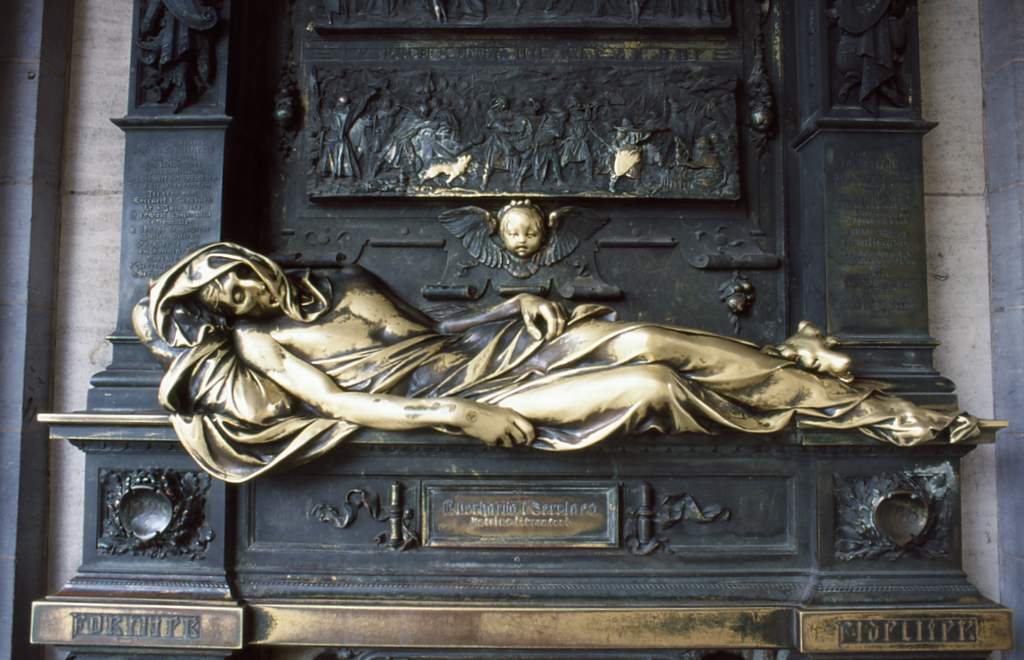
Everard is commemorated by a monument sculpted by artist Julien Dillens (1849–1904), located on Charles Buls Street in Brussels near the Grand-Place. Local tradition holds that the statue brings luck and grants wishes to those who touch it. The legend particularly claims that rubbing the statue's arm ensures one's return to Brussels, making this the most frequently touched portion.
Tourists also commonly rub the face of an angel, a dog, and one of the shields depicted in the sculpture. This constant touching has polished these sections to a bright shine, creating a striking visual contrast with the rest of the oxidized bronze sculpture and perpetuating Everard's memory through tactile interaction that connects modern visitors with medieval Brussels's greatest local hero.