Erymanthian boar
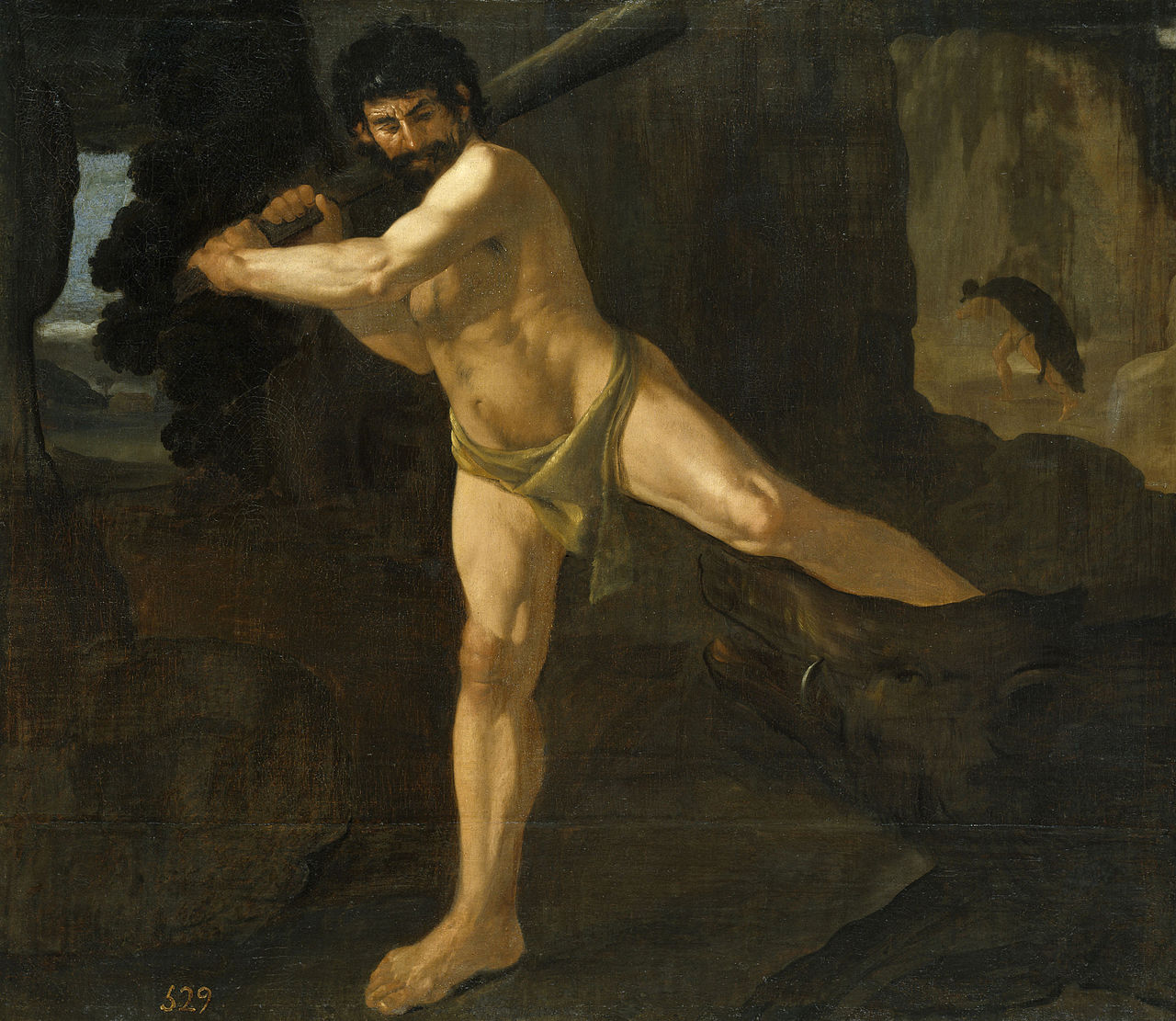
The Erymanthian Boar (Greek: ὁ Ἐρυμάνθιος κάπρος) was a massive, feral creature of Greek mythology, described as a "shaggy" and "tameless" beast of "vast weight" and "foaming jaws." It inhabited the cypress-clad heights of Mount Erymanthos and the glens of Lampeia in the primitive highlands of Arcadia. The boar frequently descended from its mountain haunt to ravage the groves of Arcady and the territory of Psophis. These highlands were traditionally associated with Artemis, the "Mistress of the Animals," who was known to dispatch such raging boars as instruments of divine wrath to lay waste to the fields of those who incurred her anger.
The capture of the boar alive was the fourth labour of Heracles, mandated by King Eurystheus. To secure the animal without killing it, Heracles flushed the boar from its thicket with loud shouts and pursued it until it was exhausted. He eventually drove the animal into deep snowdrifts, where its heavy mass hindered its escape. Heracles then trapped and bound the boar in chains. He returned to Mycenae with the beast slung across his left shoulder, still breathing and "staining his back with blood from the stricken wound."
Upon witnessing Heracles approach with the boar, King Eurystheus was overcome with terror and hid himself within a large bronze vessel (pithos). This specific confrontation became a recurring theme in classical art, emphasizing the contrast between the hero's strength and the king's cowardice. While local traditions in Cumae later claimed that the boar's tusks were preserved in their sanctuary of Apollo, ancient historians like Pausanias regarded these assertions as lacking probability.
The myth remains a primary example of the "heroic hunt" motif, representing the struggle to tame the dangerous forces of the ancient Greek wilderness.