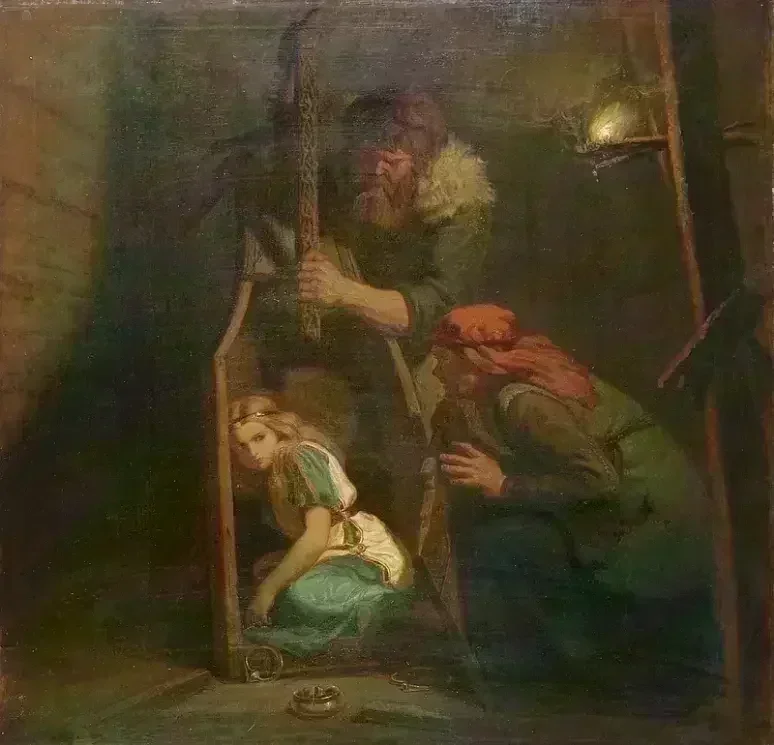
Erlking
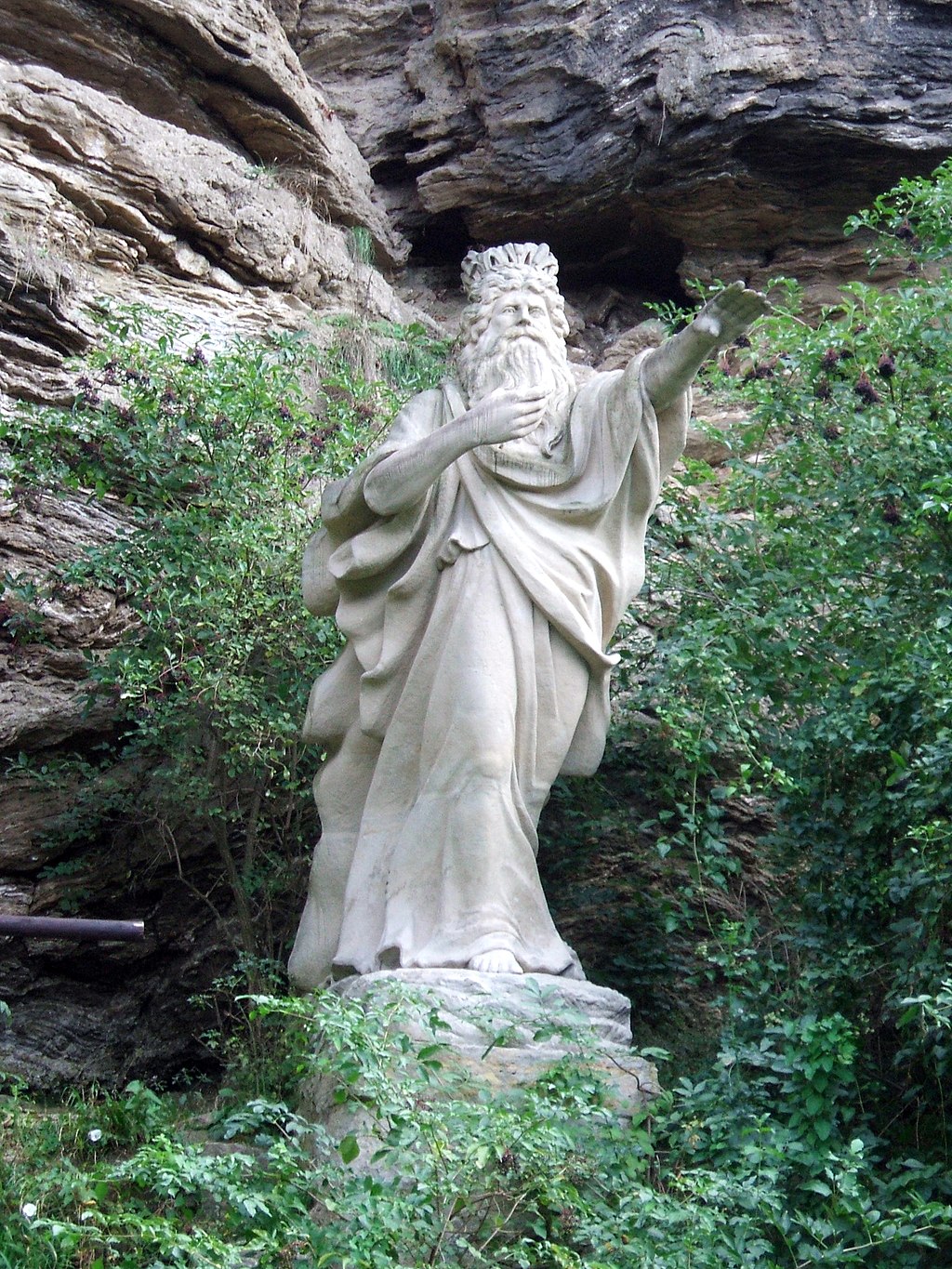
In European folklore, the Erlking is a sinister spirit who lingers in the woods and preys on children, killing them with a single touch.
The name "Erlking" (German: Erlkönig, meaning "alder-king") first appeared in the late 18th century. It originated with Johann Gottfried Herder, who introduced the figure in his ballad Erlkönigs Tochter (1778), a free adaptation of the Danish folk ballad Hr. Oluf han rider (1739).
In the original Danish legend, the elverkonge, or "elf king," lives in ancient burial mounds and his daughter lures men to their deaths. Herder, however, translated "elf maid" as "Erlking’s daughter," producing a mistranslation that connected the figure with the alder tree (Danish elletræ). Some argue this was a simple error, while others believe Herder deliberately reshaped the tale to match a woodland spirit of his own imagination.
Goethe expanded the legend in his poem Der Erlkönig (1782), which later inspired musical settings by Schubert and others. In Goethe’s version, the antagonist is not the elf king’s daughter but the Erlking himself. He stalks a young boy traveling with his father, whispering promises and threats until the child dies suddenly in his father’s arms.
The father insists that the boy merely sees fog and hears the wind, yet the boy’s coherent speech and fearful responses suggest the Erlking is real. Goethe’s Erlking preys on children rather than adults and represents an unseen force of death, echoing the darker roles of elves and valkyries in Germanic tradition.
The etymology of "Erlkönig" has been much debated. Jacob Grimm traced it to the Danish ellekonge ("king of the elves"), while the New Oxford American Dictionary describes him as a mistranslation by Herder of ellerkonge. Later writers such as Christoph Martin Wieland preferred the more accurate Elfenkönig ("elf king"). Others proposed distant connections, including a similarity to Erlik Khan, a death god in Turkic and Mongolian myth.
The story’s central theme of supernatural seduction and sudden death has remained powerful. In the Danish ballad, Sir Oluf refuses the advances of an elf maiden and is struck dead on the eve of his wedding. In Goethe’s rendering, a child perceives the deadly spirit while the parent remains blind, reflecting the folkloric belief that children are more sensitive to the supernatural. The Erlking’s ambiguity, whether as elf, spirit, or death-bringer, has kept him one of the most haunting figures of European myth and Romantic literature.