Epic of King Gesar
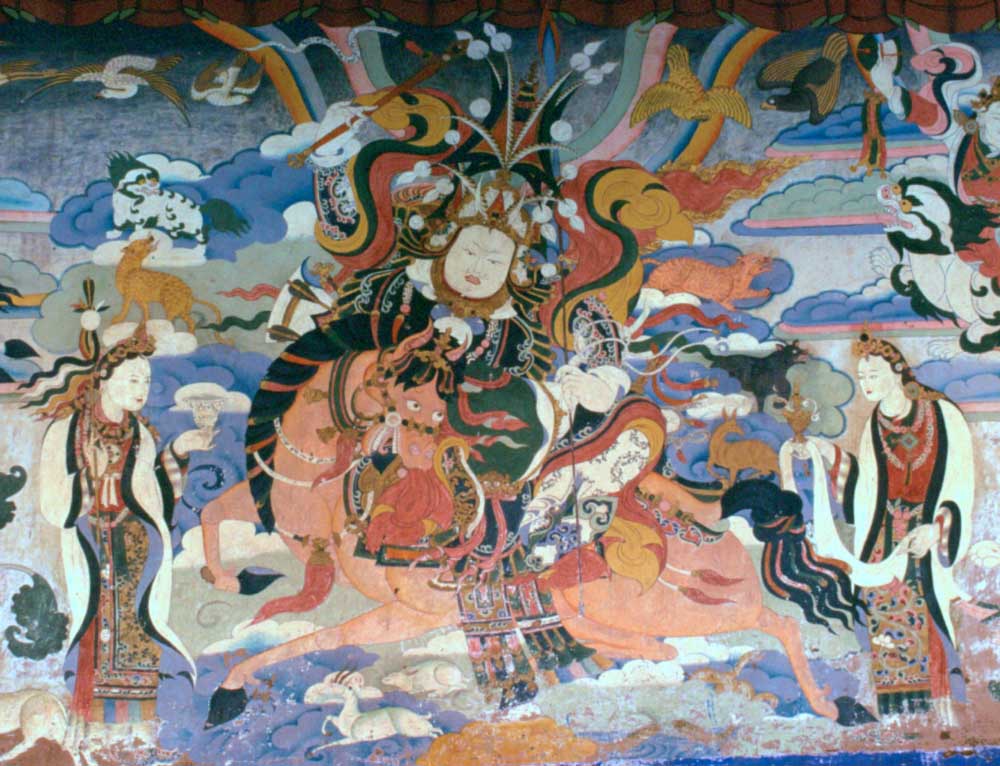
The Epic of King Gesar (Tibetan: གླིང་གེ་སར།, Wylie: gling ge sar), also spelled Kesar or Geser in Mongolian contexts, is a monumental epic from Tibet and Central Asia. For centuries, folk balladeers preserved the tale through oral tradition, enriching its plot and language with each retelling. It reached its most celebrated form and peak popularity in the early 12th century.
The narrative recounts the heroic exploits of Gesar, the fearless ruler of the legendary kingdom of Ling (Wylie: gling). It is recorded in both poetry and prose, performed through oral recitation, and sung across Central and South Asia, with the classic version originating in central Tibet.
Today, around one hundred bards (Wylie: sgrung, meaning “tale”) still perform the epic within the Gesar belt of China. The tradition is sustained by Tibetan, Mongolian, Buryat, Balti, Ladakhi, and Monguor singers, and remains a rare surviving oral epic still practiced as a living art form. Versions are also found among the Yugur, Salar, Balti of Baltistan, Burusho of Hunza and Gilgit, and the Kalmyk and Ladakhi peoples in Nepal, as well as various Altai, Turkic, and Tungus groups. The first printed edition appeared in 1716 as a Mongolian text published in Beijing.
The epic exists in numerous versions and countless variants, and is reputed by some to be the longest literary work in the world. While no single definitive text exists, the Chinese compilation of Tibetan versions currently spans about 120 volumes, containing more than one million verses divided into 29 chapters. Western estimates cite over 50 different published editions from China, India, and Tibet.