Engelbrekt Engelbrektsson
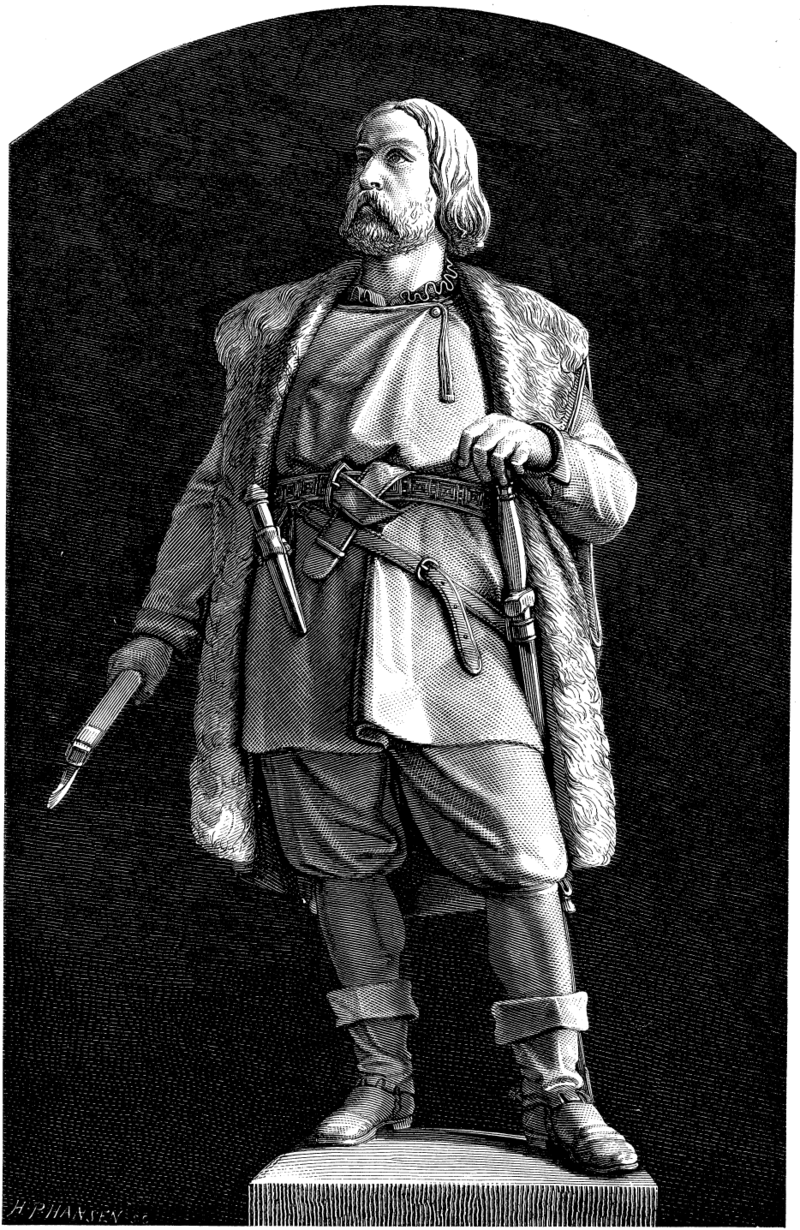
Engelbrekt Engelbrektsson (1390s–4 May 1436) was a Swedish nobleman, rebel leader, and military commander of German descent who led the Engelbrekt rebellion of 1434 against Eric of Pomerania, king of the Kalmar Union. Engelbrekt owned a mine and ironworks in Bergslagen, the historic mining region of Sweden, and came from the parish of Norberg in Västmanland. His family had migrated from Germany to Sweden in the 1360s, and their coat of arms displayed three half-lilies arranged in a triangle.
Growing discontent with the oppressive conduct of Danish bailiffs and crushing taxation drove Engelbrekt to action in 1434. He launched a rebellion with support from mine workers and peasants from his home region. The immediate catalyst was widespread anger against the king's bailiff in Västerås, Jösse Eriksson, whom mining communities blamed for their suffering under his administration.
Engelbrekt filed formal complaints on behalf of the miners, prompting an inquiry by Eric of Pomerania that ultimately found Jösse's actions criminal. Despite this finding, Jösse remained in his position, leading a large contingent of peasants to march on Västerås in protest. Though the Riksråd (royal council) intervened to defuse tensions peacefully, they took no action against the bailiff.
In spring 1433, the protests erupted into violence as Dalecarlians besieged the bailiff's castle. The Riksråd finally dismissed Jösse and replaced him with Hans von Eberstein, but Engelbrekt remained unsatisfied that Jösse faced no prosecution for his admitted crimes. A force of Dalecarlians and Västmanlanders destroyed the castles at Borganäs and Köpingshus.
At this juncture, numerous nobles joined the rebellion, which swelled into a massive movement sweeping across the country. The uprising unfolded against the backdrop of mounting tensions within the Kalmar Union. In 1435, a Riksdag convened in Arboga—often considered Sweden's first Riksdag—appointed Engelbrekt as Rikshövitsman, or Commander-in-Chief.
However, he proved unable to withstand pressure from the Swedish nobility, who sought to exploit the rebellion for their own advantage. Engelbrekt was gradually pushed into the background as the nobility and clergy threw their support behind Karl Knutsson Bonde, who replaced him as Rikshövitsman in 1436. Jösse Eriksson returned to Sweden that same year but was lynched by peasants in Motala after being presented to the local thing, which condemned him to death.
On 4 May 1436, Engelbrekt was murdered on Engelbrektsholmen, a small island in Lake Hjälmaren, by the aristocrat Måns Bengtsson Natt och Dag, who resided at nearby Göksholm Castle. Måns's father had been embroiled in a legal dispute with Engelbrekt over the illegal burning of a ship. Some historians regard the killing as a political assassination.
Engelbrekt was buried at Saint Nicholas Church in Örebro. Over subsequent decades, Engelbrekt was transformed into a national hero, portrayed as a champion of the people and opponent of the Kalmar Union. His rebellion came to be viewed as the beginning of Swedish national awakening, which would culminate in the following century with King Gustav Vasa's triumph (reigned 1523–1560).
Engelbrekt himself harbored no such nationalist ambitions, which would have been anachronistic for his time. Nevertheless, his rebellion gave peasants an enduring voice in Swedish politics that they never subsequently lost. The Engelbrekt rebellion undermined the unity of the Kalmar Union and led to the expulsion of Danish forces from Sweden.
Though later Danish kings would regain influence over Sweden, the rebellion established a precedent for Swedish assertions of sovereignty that would resonate for generations.