El Cuero
El Cuero (from Mapudungun trülke wekufü, meaning “pelt” or “hide” and “wekufe” or “evil spirit”) is an aquatic creature in Mapuche mythology that later spread into the folklore of Central and Southern Chile, including Chiloé, and parts of southwestern Argentina. It is also called cuero del agua (“water hide”), cuero vivo (“living hide”), manta or manta del diablo (“devil’s blanket”).
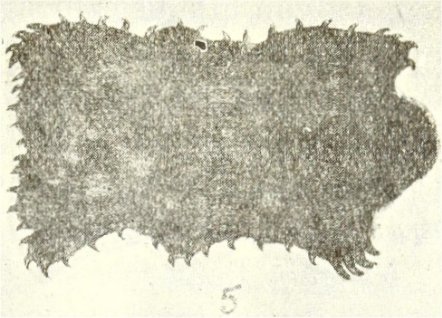
El Cuero is usually described as resembling an animal hide spread flat across the water, most often compared to a cowhide, calfskin, or donkey skin that has come to life. Many sources identify it with an octopus (pulpo) or cuttlefish (jibia). Reports vary, but descriptions often emphasize its hide-like body with claws, pincers, or tentacles around the edges, which it uses to seize prey.
Early accounts collected by Guevara describe two forms: the Trelquehuecuve (northern term), an octopus with nails at the ends of its arms, and the Trelquehuecufe (southern term), a hide with claws all around its rim. Other versions portray it as having countless eyes along its edge, with four large eyes in the center (a tradition from Talagante), or as a brown hide with white patches and many short legs ending in claws. Bernardo Quintana Mansilla (1972) described it with pincered tentacles, central eyes, and a suction cup at the core, while later sources added red, bulging eyes and a feeding mouth beneath its body.
In Chiloé, the creature is more often called La Manta. Locals describe it as an octopus-like being with expansive skin that folds back to trap its victims. Whatever the name, the creature drags humans or animals underwater, suffocating and devouring them.
El Cuero lurks in rivers, lagoons, and lakes throughout Chile and Argentina. Legends describe it contracting tightly around its victims to crush the life from them. In some traditions, the Trelquehuecuve even crawls onto riverbanks or lagoons to bask in the sun, returning to the water by raising whirlwinds or whirlpools that pull it back beneath the surface.
Folklore places it in many specific locations, including the lagoon of Viña del Mar (where it smothered prey like a sheet, as reported by Benjamín Vicuña Mackenna in 1877), Lake Lácar in Neuquén Province (where it disguises itself as a mossy log before rising to envelop victims), and the Lautaro Reservoir in the Atacama Region.
Traditional accounts describe two main methods of resisting El Cuero. One involves tricking it with a thorny bush, such as the Chilean cactus quisco (Echinopsis chiloensis) or the calafate bush (Berberis microphylla). The creature mistakes the spiny bundle for prey, latches onto it, and tears itself fatally.
In many stories, a machi (Mapuche shaman) is called upon to carry out this ritual. Several folktales recount battles with the creature. In one, a family camping by a lake witnesses the father dragged under by a whirlpool and attacked by a Trelke-wekufe.
His wife fashions a spiny cactus effigy to lure and kill the monster. In another tale, Ñanco, a young hero, fights the creature by strapping quisco cacti to his limbs. He ultimately defeats both the Cuero and its monstrous master, identified as an Invunche, rescuing captives and winning treasure.
Different regions give their own versions of the Cuero. In Talagante, it is said to have countless rim-eyes with four large central eyes. Around Lake Lácar, it takes the form of a mossy, sand-covered log that flips up its sides to reveal claws. In the Chiloé Islands, it is called La Manta and linked to rays and octopuses. In Viña del Mar it was once compared to Victor Hugo’s giant octopus, while in Pudahuel Lagoon near Santiago, it was blamed for dragging down an ox-carter who defied warnings on Good Friday.
Some scholars dismissed El Cuero as an invention inspired by marine octopuses misidentified in freshwater. Others suggest it reflects whirlpools or other natural water phenomena, while some link the figure of La Manta to manta rays, whose broad, blanket-like bodies recall the descriptions of this deadly water spirit.